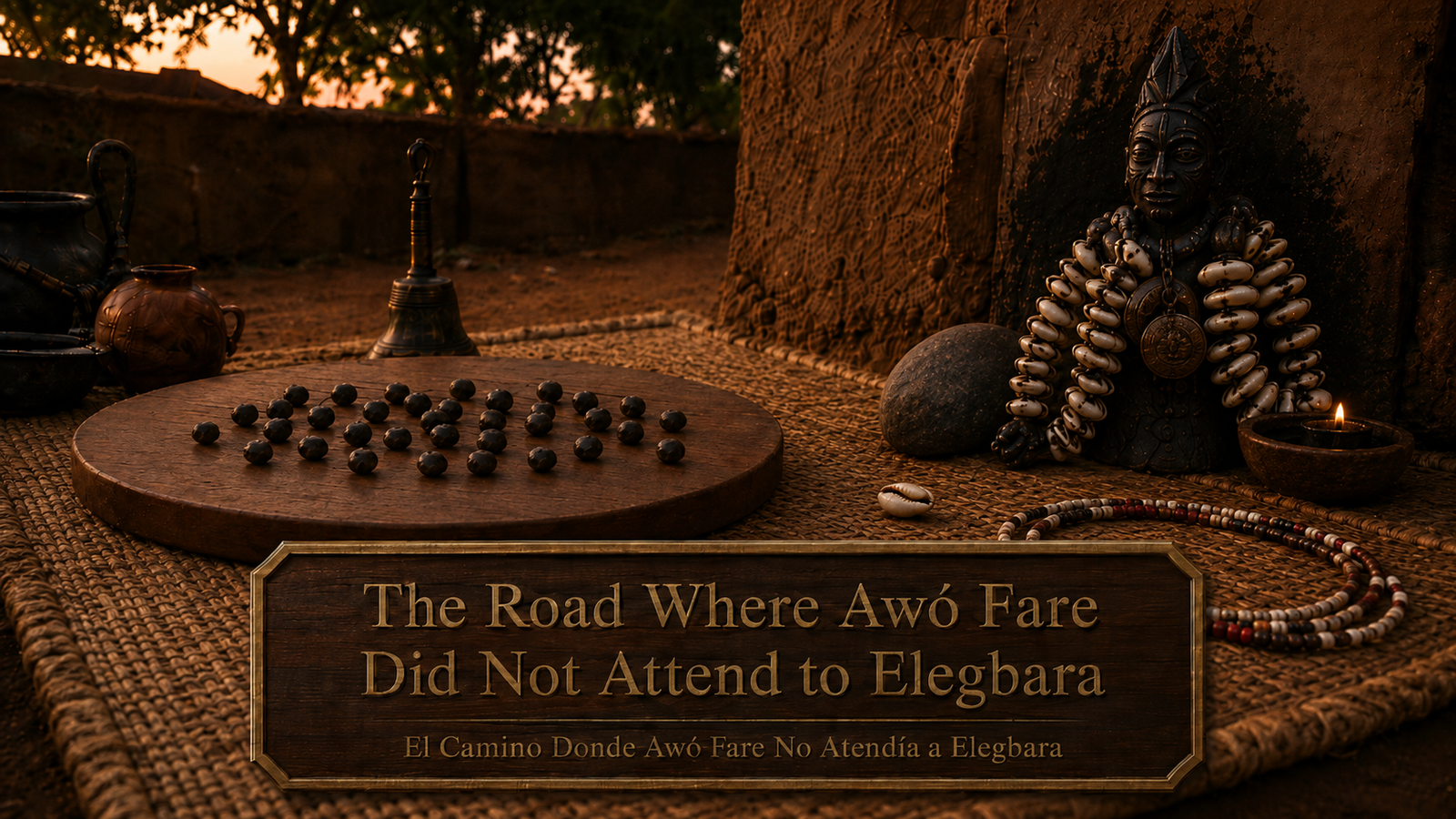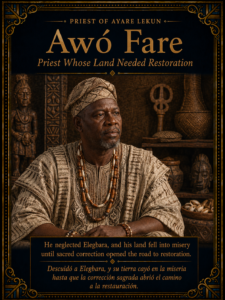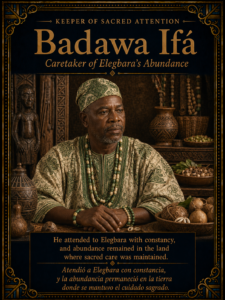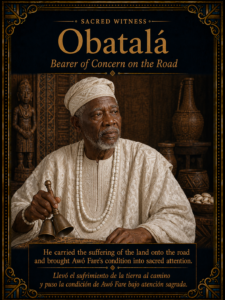
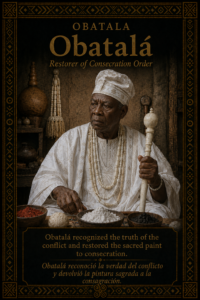
Category: Odu

  • The Path Where the Religious Preparation of the Paint Was Born

    The Path Where the Religious Preparation of the Paint Was Born


    1. TITLE

    Original Title:
    EL CAMINO DONDE NACIÓ LA PREPARACIÓN RELIGIOSA DE LA PINTURA

    This story is preserved in an Osha-Ifá source context connected to Ogbe Tua and Oyekun Peleka. The updated narration states that the religious preparation of the paint was known in Ogbe Tua but consecrated in Oyekun Peleka.


    2. INTRODUCTION

    There are stories where a sacred object disappears, and with it, the order of a whole land is interrupted.

    This is not only the story of paint that was stolen. It is the story of consecration halted, hidden colors revealed, sacred authority restored, and tranquility returned to the land of Odara Bi Osha. The updated narration frames the story in exactly this way: the loss of the paint interrupts the sacred work of the land.

    The paint in this story is not ordinary color. It is the sacred paint given to Awó Osha Ekún Oda by Obatalá and Shangó, by command of Olofin, for the consecrations of that land. When the paint disappears, no omó Osha can be consecrated. The crisis is therefore not private. It affects the religious life of the community.

    This article explains the story for public education. It preserves the Rezo, the sacred chants, the ritual logic, the color sequence, the character roles, and the ritual boundary. It does not teach ritual procedure.


    3. QUICK TAKEAWAY

    Sacred paint is not ordinary color. In this story, the paint must be recovered, acknowledged, consecrated, placed upon the floor, connected to the oddón, carried to the lérí, and closed properly before tranquility can return.


    4. THE STORY

    Rezo

    Before the story is told, the Rezo is preserved:

    “Odara Bi Osha Oye Awó Oshakunoda,
    Omó Osha Tiro Ofin Tokun Agba Eni Osha
    Eyé Ekún Shinayakua Babá Erin,
    Efún Kafun Tole Ayé,
    Ekún Obani Boshe Osun
    Kafun Tole Ileke Awó Laye Ekún,
    Niye Babá Erin Oké Enifa Osha Babá Osun Ashé Orí Bewa,
    Babá Nilefun Osha Orí Agbaniboshe Babanifa Olorun Efún Lowa,
    Orun Lowa,
    Osun Ayegbe Eni Osha Babá Olofin Lowa Ayegbe Eni Oboloyo Yemayá Lanire Shangó
    Bi Osun Babani Irawó Obatalá Babá Iroke Bowao
    Omó Oni Ayé Osha Ifá Ni Kaferefún Obatalá,
    Kaferefún Shangó, Yemayá, Osun,
    Lordafun Orunmila.”

    Interpretive Meaning for Narration

    In the land of Odara Bi Osha, Awó Oshakunoda is called. The omó Osha, the elders of Osha, the sacred order, and the power of the paint are invoked. Babá Erín Oké is remembered. Efún, Osun, the head, the world, the heavens, Olofin, Yemayá, Shangó, Obatalá, and Orunmila are all called into witness. Praise is given to Obatalá, Shangó, Yemayá, and Osun. Honor is given to Orunmila.

    The Narrative

    In the land of Odara Bi Osha, where the omó Osha lived, a misfortune had occurred.

    The sacred paint had been stolen from Awó Osha Ekún Oda.

    This paint had been given to him by Obatalá and Shangó, by command of Olofin, for the consecrations of that land.

    Because the paint was missing, no omó Osha could be consecrated anymore. Awó Osha Ekún Oda searched for the paint, but he could not find it. He became deeply worried.

    The paint had been taken by Yemayá and Oshún, who were the Oshas with the most omó in that land. They were not satisfied with the colors being used. They placed the paints inside a güiro and hid them in the forest.

    One day, while Awó Osha Ekún Oda was calling upon Obatalá and Shangó to tell them what had happened and ask for help, he saw Babá Erín Oké arrive.

    This was the name of Ayanakún, who was an omó of Oduduwa.

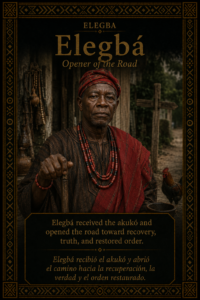
    Babá Erín Oké found Awó Osha Ekún Oda giving an akukó to Elegbá, so that Elegbá would go and see Shangó and Obatalá.

    As Awó Osha Ekún Oda gave the akukó to Elegbá, he sang:

    “Osha Ita Laroeye Sokuko
    Awó Elegbá Akukó Masokuko.”

    The interpretive meaning for narration is that Osha is called at the road. Awó calls Elegbá with the akukó. The road is opened so that what was lost may be found.

    Elegbá became very pleased and said that he would help find what had been lost.

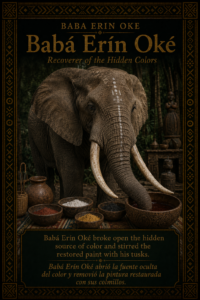
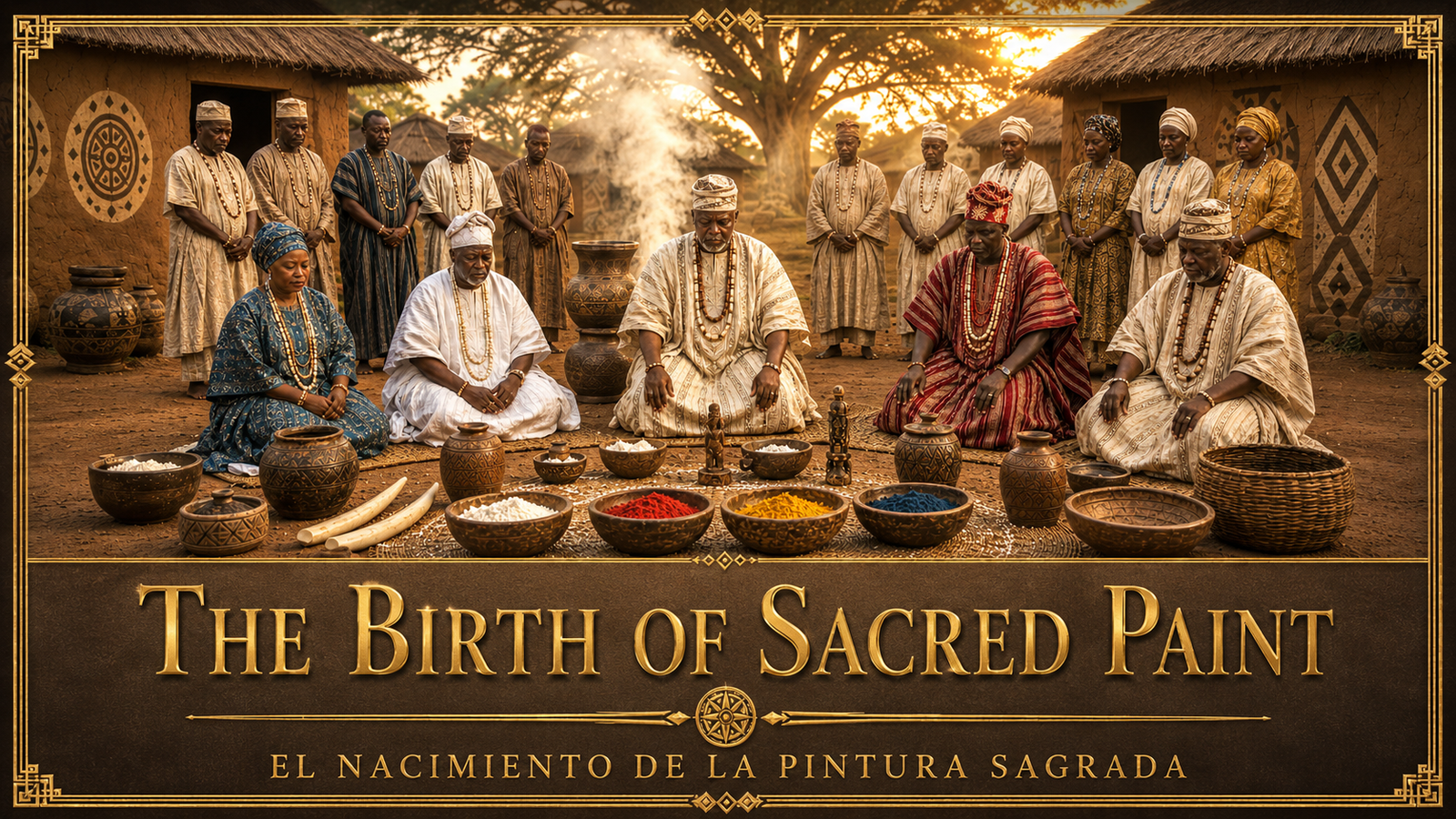
    When Babá Erín Oké learned what was happening, he took the ebbó and set out on the road. He carried it to the foot of the igüí of awé. When he arrived there, he found a very strange bird, taller than all the others, and many colors were coming out from it. With his tusks, Babá Erín Oké broke it open. From inside came the paint of the land of Odara Bi Osha, which had been lost.

    Babá Erín Oké became very happy.

    Elegbá, who had gone with him, ran back toward the house of Awó Osha Ekún Oda. But on the road, Oshún and Yemayá came out to meet him.

    They said:

    “We were the ones who hid the paints, because those colors are not enough in this land, and ours must also be added.”

    Then Elegbá said to them:

    “Let us all go find Obatalá and Shangó so they can settle this matter.”

    They set out on the road together.

    When they arrived at the house of Awó Osha Ekún Oda, he was speaking with Obatalá and Shangó about the problems that existed in that land because of the paint.

    As soon as Obatalá saw Elegbá arrive together with Yemayá and Oshún, he understood everything.

    Obatalá said:

    “Very well. We will also place your colors in this land, and Odua will give the judgment. But the paints must be consecrated.”

    At that moment, Babá Erín Oké arrived with the awé of the paint.

    Obatalá and Shangó said to Yemayá and Oshún:

    “Place yours down, each one separately.”

    Then they placed the paints on the floor, all separated from one another.

    Obatalá and Shangó sang:

    “Orun Bawa Agbani Boshe Orun Bawa.”

    The interpretive meaning for narration is that Heaven is called to come and assist. The sacred work is placed under heavenly witness. What has been separated must now be brought into proper order.

    Then Awó Osha Ekún Oda took an eyelé and gave it to the paints:

    “Eyé Eyelé Nile Agbani Bawa
    Eyé Eyelé Nile Eyé Agbani Bofun
    Eyé Eyelé Nile Eyé Agbani Boshe.”

    The interpretive meaning is that the eyelé is given upon the earth. The offering touches the paints. The colors are no longer only recovered; they are being prepared for sacred use.

    Then Babá Erín Oké began to stir each paint with his iní, his tusks.

    As he stirred the paints, Awó Osha Ekún Oda sang:

    “Orun Bawa Agbani Boshe
    Orun Onilayeo
    Ifá Onilayeo
    Odara Bi Osha Onilayeo
    Odduduwa Onilayeo.”

    The interpretive meaning is that Heaven is called. Ifá is called. Odara Bi Osha is called. Oduduwa is called. The recovered paint is joined again to the authority of heaven, Ifá, the land, and Oduduwa.

    After this, Obatalá said to Awó Osha Ekún Oda:

    “The paints are now ready again to consecrate this land.”

    Then the omó of the king of that land had to be consecrated.

    They began to prepare the throne.

    They began to paint osun on the floor.

    The colors came forward in sacred order:

    White.
    Red.
    Blue.
    Yellow.

    These colors were not decoration. White represented the creation of all things. Red symbolized blood and life. Blue symbolized creative work, and the life that creates. Yellow represented the trials and changing conditions of life — the obstacles, difficulties, and unexpected turns that every life must pass through.

    For white, they sang:

    “Inle Ayé Inle Ayé Layeo
    Inle Ayé Babá Osha Lofun
    Efún Lade Inle Layeo.”

    The interpretive meaning is that earth is called. The land receives the white osun. White represents the creation of all things, and efún enters the world as sacred whiteness and foundation.

    For red, they sang:

    “Inle Ayé Inle Ayé Layeo
    Osun Laye Shangó Osha Pukua
    Osha Lorun Inle Layeo.”

    The interpretive meaning is that earth is called again. The red osun of Shangó is placed in the world. Red symbolizes blood and life, the living force carried into the sacred order.

    For blue, they sang:

    “Inle Ayé Inle Ayé Layeo
    Osha Akoko, Akoko Iyana
    Osha Lofun Inle Layeo.”

    The interpretive meaning is that earth is called again. The blue osun is placed into the order of Osha. Blue symbolizes creative work, and the life that creates.

    For yellow, they sang:

    “Inle Ayé Inle Ayé Layeo
    Osha Akuerí Laye
    Iyá Lade Inle Layeo.”

    The interpretive meaning is that earth is called again. The yellow osun enters the world of Osha. Yellow represents the trials and changing conditions of life — the obstacles, difficulties, and unexpected turns that must also be held within sacred order.

    When they finished, they began to sing:

    “Iyá Okuo Ekauro
    Osha Ekún Yoko
    Osha Ekún Kale.”

    The interpretive meaning is that the mother is called. Osha is seated. The sacred placement is established upon the ground.

    Then they took ewé ikoko and covered the secret.

    As they presented the ewé to everyone, they sang:

    “Osain Orun Lolo
    Odara Bi Osha Ewé Ikoko Orun Lolo.”

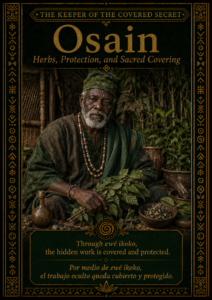
    The interpretive meaning is that Osain is called through the heavens. The ewé ikoko of Odara Bi Osha is presented. The leaf becomes part of the protection of the secret.

    As they covered the secret, they sang:

    “Oduduwa Ewé Osha Tete Layeo
    Agba Eni Osha Ewé Layeo.”

    The interpretive meaning is that Oduduwa is called with the ewé of Osha. The elders of Osha are called through the leaf. The secret is covered and protected.

    Then they placed the oddón that Shangó had brought.

    They prayed to it:

    “Oddón Shangó Agba Eni Osha Buyoko
    Omó Osha Oddón Dele Babá Ni Boshe
    Odara Bi Osha Bawao.”

    The interpretive meaning is that the oddón of Shangó is placed as a sacred seat of placement. The omó Osha is brought before the order of the oddón. Odara Bi Osha is called to receive the work. The oddón is not simply an object on the floor. It is the sacred seat.

    Through the oddón, the omó was seated upon a sacred foundation. The body was placed. The work was grounded. The order of the land was made stable before the lérí was marked. First the floor received the order of the colors. Then the oddón of Shangó was placed. Then the omó of the king was seated. Only after this did Awó Osha Ekún Oda paint osun lérí Osha lade upon him.

    The same color order that had been placed upon the floor now moved to the lérí of the omó.

    For white, he sang:

    “Omó Yoko Lodun Osun Osha Efún Bawaoo
    Osun Awa Orí, Awa Oma Epon Lasheo
    Efún Dewaoo Osun Naburú.”

    The interpretive meaning is that the omó is seated in the osun of Osha. White, the color of creation, is called to the head through efún and sacred marking.

    For red, he sang:

    “Omó Yoko Lodun Osun Osha Pukua Bawaoo
    Osun Agba Orí, Agbaona Epon Lasheo
    Epun Dewaoo Osun Naburú.”

    The interpretive meaning is that the omó is seated in the red osun of Osha. Red, the color of blood and life, enters the sacred marking of the lérí.

    For blue, he sang:

    “Omó Toko Lodun Osun Osha Akoko Bawaoo
    Osun Agba Orí Agba Oma Epon Lasheo
    Efún Dewaoo Osun Naburú.”

    The interpretive meaning is that the omó is seated in the blue osun of Osha. Blue, the color of creative work and life that creates, is placed in the sacred order of the lérí.

    For yellow, he sang:

    “Omó Yoko Lodun Osun Osha Akuerí Bawaoo
    Osun Agba Orí Agba Oma Epon Lasheo
    Efún Dewaoo Osun Naburú.”

    The interpretive meaning is that the omó is seated in the yellow osun of Osha. Yellow, the color of life’s trials and changing conditions, completes the sacred marking, showing that even the difficult roads of life must be held within the order of Osha.

    Then Obatalá said to Awó Osha Ekún Oda:

    “The secret for the consecrations in the land of Odara Bi Osha has now been restored. You must always give moforibale to Oduduwa and to Babá Erín Oké for the consecrations of the omó of this land.”

    Then they lifted up the omó of the king, who had been consecrated.

    They erased the kale from the floor.

    First, they erased it with otí, while they sang:

    “Otí Osha Ele Ele Lele Iyé
    Ayé Inle Layeo.”

    The interpretive meaning is that otí is used to close and clear the mark of Osha. The earth receives the closing. The work begins to return to calm.

    Afterward, they erased it with omiero:

    “Omí Osha Ele Ele Lele Iyé
    Ayé Inle Layeo.”

    The interpretive meaning is that omiero is used to complete the closing. The water of Osha clears the earth. The sacred work is sealed and brought to rest.

    Then tranquility came to the land of Odara Bi Osha.

    Yemayá and Oshún were satisfied with what Elegbá and Orunmila had done.

    The final note preserves the instruction for the future: the consecration paint must be stirred with an ivory irofá, or, if that is not available, with a piece of ivory. These paints must be prepared or consecrated by a Babalawo during the entrance ebbó.


    5. STORY STRUCTURE

    The Sacred Paint Is Lost

    The story begins with a sacred material removed from its proper place. The paint is missing, and the sacred work of the land stops.

    The Hidden Complaint Is Revealed

    Yemayá and Oshún reveal that they hid the paints because the colors being used were not enough. Their complaint exposes an incomplete color order.

    The Road Is Opened Through Elegbá

    Awó Osha Ekún Oda gives akukó to Elegbá. Elegbá becomes pleased and agrees to help find what was lost.

    Babá Erín Oké Recovers the Paint

    Babá Erín Oké carries the ebbó, reaches the igüí of awé, breaks open the strange bird or object with his tusks, and recovers the lost paint.

    The Paint Is Not Only Found — It Is Restored

    The story does not end when the paint is found. The paints are separated, consecrated, stirred, placed on the floor, connected to the oddón, carried to the lérí, and finally closed. The updated analysis explains the difference clearly: recovery means the paint is found; restoration means the paint is returned to sacred function.

    The Floor Receives the Order

    The colors are painted first on the floor. This matters because the land of Odara Bi Osha must receive the order before the person receives the mark. The floor becomes the first receiving place.

    The Oddón Holds the Placement

    The oddón of Shangó stands between the floor and the lérí. It gives the omó a sacred seat within the restored order. It stabilizes the body before the head receives the mark.

    The Lérí Receives the Mark

    Only after the floor receives the colors, the secret is covered, the oddón is placed, and the omó is seated does the lérí receive osun lérí Osha lade. The lérí becomes the point where the restored order enters the person.

    The Work Is Closed

    After the lérí is marked, the kale is erased with otí and omiero. The work is not left open. The floor marking has a beginning, a purpose, and a closing.


    6. MAIN CHARACTERS AND RELATIONSHIP ROLES

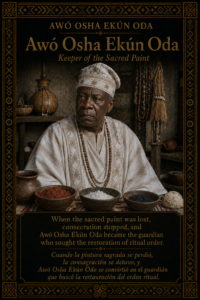
    Awó Osha Ekún Oda

    Awó Osha Ekún Oda holds responsibility for the sacred paint in Odara Bi Osha. When the paint disappears, the consecrations stop. He calls upon Obatalá and Shangó, gives akukó to Elegbá, gives eyelé to the paints, and applies the restored order.

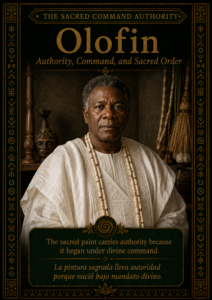
    Olofin

    Olofin is the original command authority behind the paint. The paint carries sacred authority because Obatalá and Shangó gave it by Olofin’s command.

    Obatalá

    Obatalá recognizes the disorder and corrects it. He does not simply punish the conflict. He allows Yemayá and Oshún’s colors to be included and requires the paints to be consecrated.

    Shangó

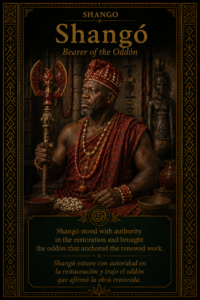
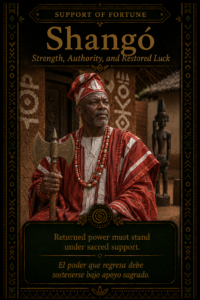
    Shangó is one of the original transmitters of the paint. He also brings the oddón. In this story, Shangó’s role is structural and stabilizing. He anchors the restored order through sacred placement, not violence or spectacle.

    Elegbá

    Elegbá opens the road. He receives the akukó, agrees to help find what was lost, and carries the matter from concealment toward resolution. Elegbá must not be treated as demonic or chaotic in this story.

    Yemayá and Oshún

    Yemayá and Oshún hide the paints, and their action creates the visible crisis. But the source does not say jealousy. Their complaint reveals that a missing element in the color order must be acknowledged.

    Babá Erín Oké / Ayanakún

    Babá Erín Oké physically recovers the hidden paint and later stirs it with his tusks. He is central because his tusks connect the recovery of the paint to the later instruction about ivory.

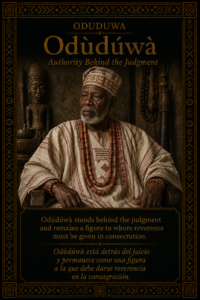
    Oduduwa / Odua / Odduduwa

    Oduduwa stands behind judgment, lineage, and future reverence. The story also uses the forms Odua and Odduduwa. These source spellings should be preserved until reviewed.

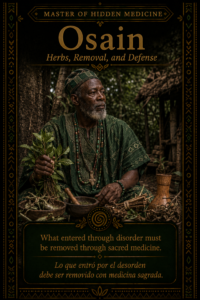
    Osain

    Osain appears through ewé ikoko. His role is connected to the covering and protection of the secret.

    Orunmila

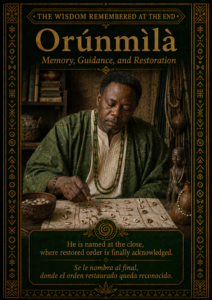
    Orunmila is remembered in the final restoration, when Yemayá and Oshún are satisfied with what Elegbá and Orunmila had done.

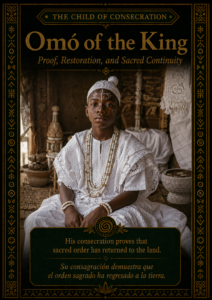
    The Omó of the King

    The omó of the king becomes the living proof that consecration can continue. After the paint is recovered and consecrated, the omó is seated and marked. Through him, restoration becomes visible.


    7. HUMAN CONDITIONS REVEALED

    Interruption

    The disappearance of the paint interrupts the sacred work of the land. This shows how the loss of one sacred material can affect a whole community.

    Hidden Complaint

    Yemayá and Oshún’s complaint is hidden at first. When it is revealed, the story shows that unresolved incompleteness can become a wider crisis.

    Responsibility

    Awó Osha Ekún Oda carries responsibility because the paint was entrusted to him. His worry is tied to the interruption of consecration, not merely personal loss.

    Mediation

    Elegbá mediates the movement from concealment to correction. He opens the road by which the hidden conflict reaches Obatalá and Shangó.

    Restoration

    The story shows that restoration is more than return. Something sacred must be returned to order, authority, placement, use, and completion.

    Protection

    The secret is covered with ewé ikoko. This shows that what is sacred must not remain exposed after it is restored.

    Completion

    The work is erased and closed with otí and omiero. The story teaches that sacred work must be completed, not left open.


    8. MORAL AND SPIRITUAL TEACHINGS

    The first teaching is that sacred paint is not ordinary pigment. It is one of the materials through which consecration becomes possible in the story.

    The second teaching is that sacred order must be complete. The missing colors of Yemayá and Oshún must be acknowledged before the paints can be properly restored.

    The third teaching is that recovery alone is not enough. Babá Erín Oké finds the paint, but the story continues through consecration, placement, marking, covering, and closing. The updated analysis states that finding returns the object, while restoring returns the object to sacred order.

    The fourth teaching is that sacred placement matters. The floor receives the colors first. The oddón holds the placement. The body is seated. The lérí receives the mark of Osha.

    The fifth teaching is that every sacred figure performs a different function. Olofin gives command. Obatalá corrects. Shangó anchors. Elegbá opens and mediates. Yemayá and Oshún reveal incompleteness. Babá Erín Oké recovers and stirs. Oduduwa receives reverence. Osain protects the secret through ewé. Orunmila is remembered in the final restoration.


    9. SYMBOLS AND SACRED ELEMENTS

    Paint

    The paint is the sacred medium of consecration. Its absence blocks consecration. Its recovery alone is not enough; it must be returned to sacred order.

    White

    White represents creation and sacred foundation in the updated narration. It is connected with efún and the first placement of the color sequence.

    Red

    Red symbolizes blood and life. It is connected with Shangó in the floor prayer and enters the restored order as living force.

    Blue

    Blue symbolizes creative work and the life that creates. It belongs to the restored Osha color order and later reaches the lérí.

    Yellow

    Yellow represents trials and changing conditions of life. Its placement shows that even obstacles and difficult roads must be held within sacred order.

    Floor

    The floor is the first receiving place. It receives the color order before the omó receives the mark.

    Oddón

    The oddón is the sacred seat of placement. It stands between the floor and the lérí, grounding the body of the omó within the restored order.

    Body

    The body must be seated before the lérí is marked. The body becomes the bridge between the floor and the ritual head.

    Lérí

    The lérí is the sacred receiving point where osun lérí Osha lade is painted. In this updated analysis, lérí is treated as the ritual location of marking, while orí appears in the prayers as the deeper receiving center.

    Ewé Ikoko

    Ewé ikoko covers the secret. It protects what has been restored.

    Otí and Omiero

    Otí begins the closing and clearing. Omiero completes the closing and brings the work to rest.

    Ivory Irofá

    The final instruction links the consecration paint to ivory. The paint must be stirred with an ivory irofá or a piece of ivory, and prepared or consecrated by a Babalawo during the entrance ebbó.


    10. RITUAL / CEREMONY PUBLIC EDUCATION LAYER

    This story preserves ritual importance, but it does not teach ritual procedure.

    It shows what the ritual, offering, ceremony, and sacred work mean within the story.

    It does not provide a complete ritual manual.

    Any practical ritual explanation would require source verification and practitioner review.

    The story contains many ritual elements: akukó, ebbó, eyelé, sacred paint, osun, ewé ikoko, oddón, lérí marking, kale, otí, omiero, ivory irofá, and Babalawo preparation.

    For public education, the safest explanation is to describe what these elements do in the narrative.

    The akukó to Elegbá opens the road.

    The ebbó carried by Babá Erín Oké leads to recovery.

    The eyelé touches the paints as they are prepared for sacred use.

    The tusks of Babá Erín Oké stir the recovered paints.

    The floor receives the color order.

    The oddón holds the placement.

    The lérí receives the mark.

    The kale is erased.

    The work is closed.

    This should not be converted into step-by-step instruction.


    11. PRAYER / REZO / CHANT / SACRED SPEECH STATUS

    This story contains a preserved Rezo and many sacred chants.

    Because these lines are preserved in Lucumí / ritual Yorùbá oral form, they should not be forced into strict modern dictionary translation. The safest method given in the updated analysis is to preserve the prayer exactly, give a working translation or interpretive rendering, and then explain word associations and ritual function separately.

    This article therefore treats the interpretive meanings as working narration meanings, not verified literal word-for-word translations.

    The updated analysis explains that prayer analysis should focus on:

    • what the prayer says,
    • where it occurs,
    • which color it belongs to,
    • what repeated words appear,
    • what sacred function it performs,
    • and how it moves the consecration from one stage to another.

    The chants are not decorative. They help carry the movement of the story.

    They call the road.

    They call Heaven.

    They touch the paints.

    They place color on the earth.

    They cover the secret.

    They pray to the oddón.

    They carry the color order to the lérí.

    They close the work.


    12. CULTURAL AND DIVINATORY CONTEXT

    This story belongs to an Osha-Ifá ritual context. It should not be treated as a simple folktale about stolen paint.

    The story preserves a ceremony-origin memory: the religious preparation of the paint is born here. The paint is known in Ogbe Tua and consecrated in Oyekun Peleka.

    The story also preserves a ritual system: divine command, ritual responsibility, complaint, recovery, consecration, color order, sacred placement, the floor, the oddón, the lérí, the omó, the secret, the closing, and the restoration of peace.

    The source’s final instruction is practitioner-facing. It names the ivory irofá or a piece of ivory, and it states that the paints must be prepared or consecrated by a Babalawo during the entrance ebbó. This should be preserved as ritual instruction in the story, not turned into public ritual procedure.


    13. WHEN THIS ODÙ APPEARS

    When this Odù appears, this story may point to a condition where sacred order has been interrupted because something necessary is missing, hidden, incomplete, or improperly placed.

    The story may warn about:

    • a sacred material removed from proper use,
    • a hidden complaint that must be heard,
    • missing elements in a ritual or communal order,
    • the need for proper authority,
    • the difference between finding something and restoring it,
    • the need to close sacred work correctly.

    Within this story, the paint must be recovered, but it must also be acknowledged, consecrated, placed, transferred, protected, and closed.

    A careful reading suggests that restoration requires more than return. Restoration requires sacred function.


    14. MODERN ETHICAL EXPLANATION

    The main modern ethical concern in this story is misreading.

    Yemayá and Oshún should not be reduced to jealous villains. The source says they were not satisfied with the colors being used and that their colors had to be added.

    Elegbá should not be demonized. In this story, Elegbá opens the road and carries the matter from concealment toward sacred resolution.

    Shangó should not be reduced to rage or violence. The updated analysis explains that his force in this story is structural: through the oddón, he anchors the work and stabilizes sacred placement.

    Babá Erín Oké should not be treated as fantasy. He is the recovery figure whose tusks bring the hidden paint back into the story and later stir the paints.

    The ritual material should not be turned into public instruction.

    This story may be taught publicly as sacred narrative, ritual meaning, and cultural education. But it does not teach the public how to perform the ceremony.


    15. WHAT MUST NOT BE MISUNDERSTOOD

    This story should not be reduced to “paint was stolen and returned.”

    It is about the interruption and restoration of sacred order.

    The colors should not be treated as decoration. In the updated narration, they carry specific story-based meanings: creation, blood and life, creative work, and the trials and changing conditions of life.

    The floor should not be treated as a background. It is the first receiving place.

    The oddón should not be treated as a random object. It is the sacred seat of placement.

    The lérí should not be treated only as physical head. It is the sacred receiving point where the restored color order is marked.

    The chants should not be treated as decoration. They carry the movement of the story.

    The secret should not be exposed. The story covers it.

    The ritual sequence should not be taught as a public procedure.


    16. REFLECTION QUESTIONS

    1. What changes when the missing paint is understood as a consecration crisis rather than ordinary stolen property?
    2. Why does the story continue after Babá Erín Oké recovers the paint?
    3. What is the difference between finding a sacred object and restoring it to sacred function?
    4. Why must the floor receive the color order before the lérí receives the mark?
    5. What role does the oddón play between the floor and the lérí?
    6. Why should Yemayá and Oshún not be reduced to jealous figures?
    7. How do the chants move the story from interruption to restoration?
    8. What does the closing with otí and omiero teach about sacred work?

    17. CONCLUSION

    The Path Where the Religious Preparation of the Paint Was Born teaches that sacred order must be complete before consecration can continue.

    The paint is lost, but the deeper issue is that the sacred color order of the land has become incomplete. Yemayá and Oshún reveal what is missing. Babá Erín Oké recovers what was hidden. Elegbá opens the road. Obatalá corrects the disorder. Shangó anchors the restored order through the oddón. Oduduwa receives future reverence. Osain protects the secret through ewé. Orunmila is remembered in the final restoration.

    The paint moves from recovery to consecration, from floor to lérí, from hidden disorder to restored peace.

    What is sacred must be complete.

    What is missing must be acknowledged.

    What is recovered must be consecrated.

    What is powerful must be placed.

    What is secret must be protected.

    What is opened must be closed.

    Only then can tranquility return.


    18. DOWNSTREAM SUMMARY BLOCK

    Core Story Tension:
    The sacred paint of Odara Bi Osha is stolen and hidden, causing consecrations to stop until the missing color order is restored.

    Core Ritual Dynamic:
    The paint moves from recovery to consecration, from separated colors to floor placement, from oddón to seated body, from body to lérí, and from open ritual work to closed tranquility.

    Core Character Dynamic:
    Awó Osha Ekún Oda carries responsibility; Yemayá and Oshún reveal missing colors; Elegbá opens the road; Babá Erín Oké recovers and stirs the paint; Obatalá corrects; Shangó anchors; Oduduwa receives future reverence; Osain protects the secret; Orunmila is remembered in the final restoration.

    Core Teaching:
    Sacred restoration is more than finding what was lost. What is recovered must be returned to sacred order, proper authority, correct placement, and proper closing.

    Core Divinatory Warning:
    When this Odù appears, this story may warn about hidden incompleteness, interrupted sacred work, missing ritual elements, or the need to restore order through proper authority and closure.

    Prayer / Sacred Speech Status:
    A Rezo and multiple chants are preserved. Their meanings are treated as working narration meanings or cautious interpretive glosses, not verified strict word-for-word translations.

    Ritual / Ceremony Boundary:
    This story preserves ritual importance and partial ritual materials/actions, but it does not provide a public ritual manual. Practical ritual explanation requires source verification and practitioner review.

    Modern Ethical Flag:
    Avoid reducing the story to theft, jealousy, punishment, fantasy, or ritual procedure. Do not demonize Elegbá, villainize Yemayá and Oshún, or reduce Shangó to violence.

    Terms Requiring Diacritic Review:
    Ogbe Tua, Oyekun Peleka, Awó Oshakunoda, Awó Osha Ekún Oda, Obatalá, Shangó, Olofin, Elegbá, Yemayá, Oshún, Osun, Babá Erín Oké, Ayanakún, Oduduwa, Odua, Odduduwa, Osain, Orunmila, osun, lérí, orí, awé, igüí, iní, oddón, kale, irofá, ebbó, akukó, eyelé, ewé ikoko, otí, omiero.

    IFAStories Website Story Article Complete
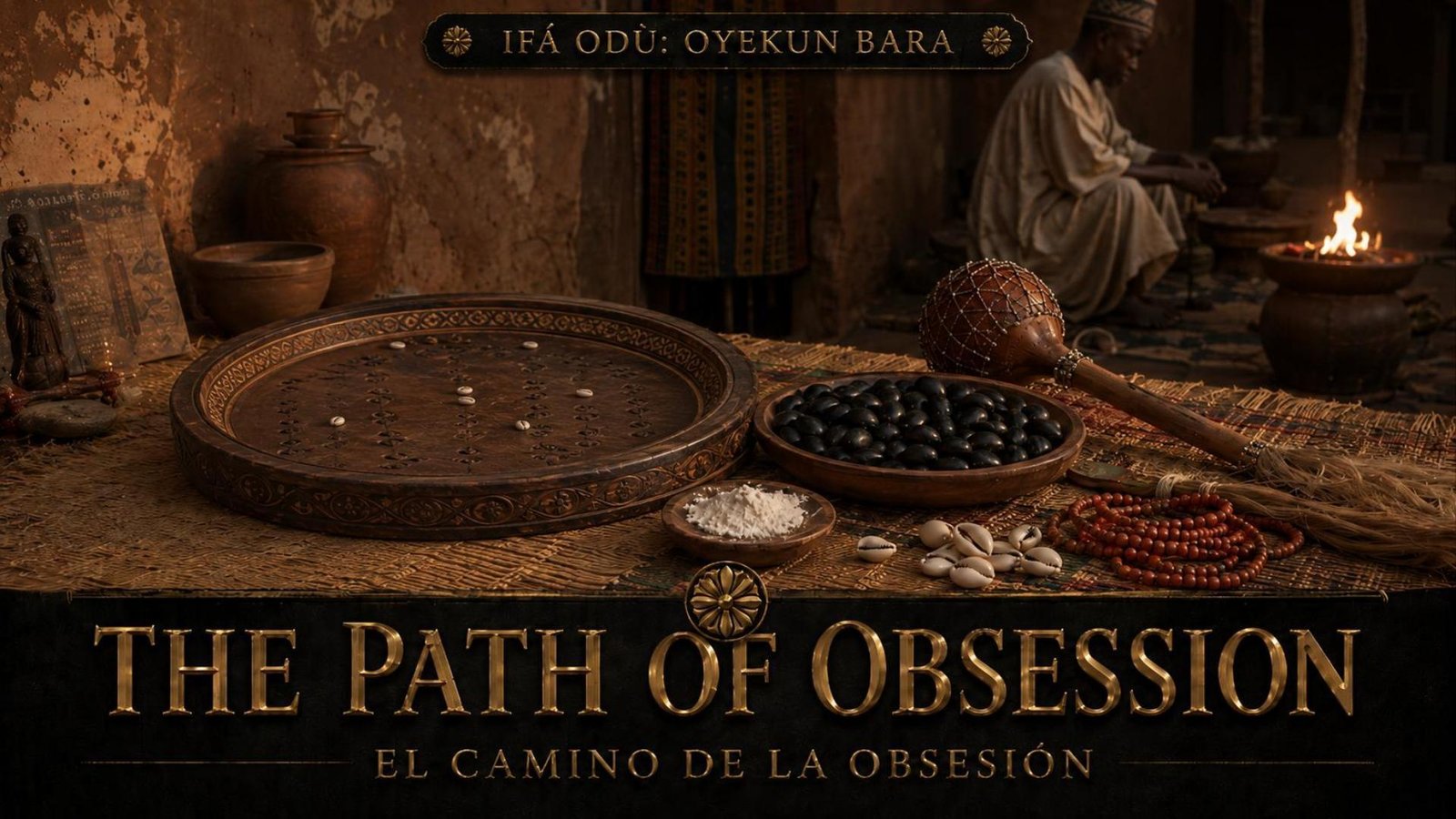
  • The Path of Obsession: Oyekun Bara and the Danger of Spiritual Power Without Balance

    The Path of Obsession: Oyekun Bara and the Danger of Spiritual Power Without Balance

    The Path of Obsession

    Introductory Note

    This retelling draws on a traditional account preserved in Caminos de Ifá, edited by Ernesto Valdés Jane under Proyecto Orunmila, a collaborative Cuban project dedicated to collecting, comparing, preserving, and publishing Osha-Ifá source materials.

    The narration, adaptation, educational framing, and commentary presented here are original to IFAStories.

    This article is offered as a public educational adaptation of the story under Oyekun Bara. It preserves the sacred narrative, ritual meaning, divinatory teaching, and spiritual warning while maintaining a clear boundary: the story explains the significance of the ritual and spiritual correction, but it does not teach ritual procedure.


    Introduction

    There are Ifá stories where power arrives before peace. A person may gain force, influence, spiritual capacity, and fortune, yet begin to lose the order that protects the head, the house, and the road.

    This sacred Ifá narrative of Oyekun Bara teaches through that danger. It tells of an Awó whose life became tied to Egun Inkan Buruku Intori Ogú: harmful, unsettled Egún connected through ogú. In the story, this connection becomes the object of Oyekun Bara’s obsession until his judgment, household, spiritual protection, and fortune begin to collapse.

    This story should not be treated as terror, fantasy, or spectacle. It is a sacred teaching about spiritual responsibility. It explains what can happen when an Awó moves away from the disciplined road of Ifá and becomes absorbed in another spiritual direction connected here to ogú, things of Ikú, unsettled Egún, and forces that disturb the lerí.

    At its deepest level, this story is about the relationship between power and order. It is about the head. It is about the house. It is about family. It is about the difference between honoring Egún in proper ancestral order and becoming attached to harmful Egún connected through ogú.


    Quick Takeaway

    The final lesson is not fear of Egún. The final lesson is respect for balance.

    Egún in proper ancestral order must be honored. Ogú-connected Egún must be approached with caution. The head must be protected, the house must be guarded, and an Awó must never confuse spiritual force with spiritual alignment.


    The Story

    Oyekun Bara was an Awó of great fortune in life. The source says he had luck with women and lived well. But in this story, that fortune is not shown only as personal success. It is shown through the life of a household.

    Oyekun Bara lived with his first wife, Abeyawo, and they had a son together. He was not only a man with luck. He was a husband, a father, and an Awó whose fortune was connected to a family structure.

    But something had already weakened inside the household. Oyekun Bara no longer had affection for Abeyawo. The relationship that should have been protected with care and responsibility was beginning to lose its place in his heart.

    At the same time, another disorder was growing around him.

    Oyekun Bara lived in Inle Tana, a land of Ikupa. There, he began to prefer ogú more than Ifá.

    In this passage, ogú is best understood as brujería: spiritual work performed through hidden force, manipulation, or operative power, especially as it appears here in connection with things of Ikú, negative Egún, and the cazuela de brujo.

    Here, ogú is not presented as disciplined Ifá work. It is connected to things of Ikú, negative Egún, and the cazuela de brujo. This means Oyekun Bara began moving away from the ordered road of Ifá and into another kind of spiritual work, one that brought him power but also opened the way for disturbance.

    He began keeping things of Ikú. Because of this work, death-related influence began to manifest inside his house. The source says Ikú began to pass through the house and wanted to dance with Awó Oyekun Bara.

    This should be heard as sacred narrative language. It does not need to be reduced to a literal image of Ikú as an ordinary person walking through the house. It shows that the energy and presence of Ikú were no longer distant from his life. Through the things he was keeping and the work he was doing, the influence of Ikú began to touch the house, the family, and the spiritual environment around him.

    Then Oyekun Bara began to become obsessed with Egun Inkan Buruku Intori Ogú.

    This means he became spiritually absorbed by negative Egún connected through ogú. The phrase does not mean that the Egún themselves were obsessed. Rather, the source says Oyekun Bara became obsessed with them. For public reading, these Egún can be understood as harmful, unsettled, or troubled spirits within the context of the story. They are not presented as honored ancestors in proper order.

    Oyekun Bara gave himself to working with the cazuela de brujo. This detail must be treated carefully. The source is not presenting this as normal Ifá practice. It is showing that Oyekun Bara, although he was an Awó, began working through another spiritual path, one connected in this story to ogú, things of Ikú, and negative Egún.

    His power increased. But his tranquility decreased.

    The more he worked with these negative and unsettled Egún influences, the more his inner peace began to fail. His lerí became vulnerable. His judgment began to weaken. His reasoning became clouded. His peace of mind began to break.

    This does not mean his head was damaged in a simple way. The better interpretation is that his lerí became easily influenced, unstable, and disturbed, while his orí — his deeper spiritual alignment, destiny, and true inner direction — became misaligned.

    The warning first appeared inside the house.

    His wife had power in her sight. She saw Ikú entering and leaving the house. His son also saw it. At night, the child cried out because of what he saw.

    This shows that the consequence of Oyekun Bara’s work did not remain private. It did not stay only in the ritual space. It entered the home. His wife perceived it. His child reacted to it. The house became the place where the disturbance around Oyekun Bara was revealed.

    But Oyekun Bara did not return to order. Instead, he threw his wife and his son out of the house.

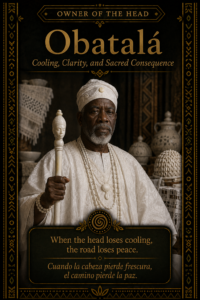
    This action carried sacred consequence because they were children of Obatalá. Obatalá is the owner of the head. He is associated with white cloth, calmness, peace, clarity, cooling, protection, and the order that helps a person’s head remain steady.

    Because Oyekun Bara’s wife and son were children of Obatalá, Obatalá had always given Oyekun Bara good fortune through them. So when Oyekun Bara rejected his wife and son, he was not only rejecting his family. He was rejecting the very relationship through which Obatalá had been supporting his luck, his peace, and the protection around his life.

    When Obatalá saw how Oyekun Bara had treated his children, Obatalá placed a curse upon him.

    From that moment, the decline became deeper. Things began to go badly for Oyekun Bara. His affairs became disturbed. His road turned against him. He began to suffer hunger. He could barely live. The blessing that had supported him was no longer holding him in the same way.

    The negative Egún work had already begun to weaken his tranquility. But after Obatalá’s curse, the condition became worse. Because Obatalá is connected to the head, peace, and cooling, the loss of Obatalá’s support left Oyekun Bara more vulnerable.

    The source says that he continued occupying himself only with the things of Ikú, and there his lerí began to become disturbed. His judgment became more vulnerable. His reasoning became more clouded. His inner peace became weaker. In spiritual interpretation, his lerí was no longer properly cooled or aligned with his orí.

    So his decline came through both sides: the spiritual work with negative Egún and things of Ikú, and the consequence from Obatalá after he mistreated Obatalá’s children. Together, these conditions brought down his luck, his peace, his protection, his household, and his well-being.

    One day, Eshu Mako passed through that land. When he saw that the land was populated by Egun Inkan Buruku, he became afraid.

    This fear is important. It shows that the condition of the land was serious. These were not peaceful Egún in proper order. They were negative, unsettled, or disturbed Egún whose presence had begun to affect the land itself.

    What began through Oyekun Bara’s private spiritual work had now spread beyond him. Because Oyekun Bara was the Awó of that place, his actions carried consequence beyond himself. His work should have helped guard spiritual balance. But because he had become absorbed in negative Egún, things of Ikú, and ogú, the land itself now required correction.

    So Eshu Mako went in search of Osain.

    Eshu Mako appears here as the path of Eshu connected to this Odù, the one who recognizes the danger and seeks the force needed for correction. Osain is the force of herbs, forest knowledge, spiritual medicine, cleansing, and hidden power. Osain is needed because the disorder is not ordinary. It requires removal, cleansing, spiritual medicine, and protection.

    Eshu Mako and Osain came together. Each one carried osiadié. And as they arrived, they sang:

    Egun Laboguede Labera Unlo Osain.
    Laboguede Ikú Unlo.
    Egun Buruku Unlo.

    A cautious prayer gloss may be heard this way:

    Egún, by the force and road of Osain, depart.
    The influence joined to Ikú, depart.
    Harmful Egún, go away.

    These words are not decorative language. They belong to the moment of removal. They call for the harmful Egún influence to leave. They invoke Osain as the sacred force of cleansing and separation.

    Eshu Mako and Osain performed sarayeye. The story does not give this as a public procedural manual. It does not teach the listener how to perform the work. It shows what the work means inside the story.

    The ceremony begins to displace the negative Egún from the land. It exposes the influence that had been occupying the place. It moves against the spiritual disturbance that had gathered through Oyekun Bara’s actions.

    And all the Egun Inkan Buruku began to foam at the mouth. This image shows the Egún being disturbed, exposed, and forced out. Their foaming reveals that the influence being removed was not peaceful. It resisted correction.

    Then Eshu Mako and Osain came beside Oyekun Bara. The correction now had to move from the land to the person. They performed sarayeye over him with the osiadié. The osiadié were given to Osain. And as this ritual action continued, they sang again:

    Egun Baloku Lole.
    Egun Baloku Lole.
    Unlo Unlo.
    Egun Buruku Abeye Ni Ikú.
    Osain Lele Ikú Olokun.
    Egun Buruku Unlo.

    A cautious prayer gloss may be heard this way:

    Egún bound to death, leave this place.
    Go away, go away.
    Harmful Egún, affliction of Ikú, withdraw.
    By the force of Osain, Ikú Olokun, harmful Egún, depart.

    This second chant continues the work of removal. It commands the harmful Egún to leave. It calls the influence of Ikú away from Oyekun Bara. It places the correction under the force of Osain.

    When the influence of the Egún left Oyekun Bara, Eshu Mako and Osain bathed him with ewefá. They rogated his lerí with eyelé meyi funfún. Then they gave those two white pigeons to Obatalá.

    This moment is important. The story does not only cleanse the land. It cleanses the person. It does not only confront the negative Egún. It restores attention to the head.

    The lerí had become disturbed. The head had lost peace. The reasoning had become clouded. So the correction had to reach the head. The rogation of the lerí shows that Oyekun Bara needed more than power. He needed calm, cooling, restored judgment, and renewed alignment with orí.

    After this, they placed Oyekun Bara to sleep. While he slept, Oyekun Bara dreamed of his wife. Then he woke because Obatalá had given him instruction. He had to make ebó with what he had of Ikú. And he had to ask forgiveness from his wife and his son.

    This dream reveals the full correction. The ritual work addressed the spiritual condition. But the apology had to address the household rupture. The negative Egún influence had to be removed. But the wound against his wife and son also had to be repaired.

    Oyekun Bara woke startled. He performed osorde. In the osorde, the sign Oyekun Bara appeared, and this was his Ifá. Then he made ebó with what he had of Ikú. He had to separate himself from the things that had disturbed his peace, his household, and his fortune.

    After that, he went toward the land of Obatalá to ask forgiveness. On the road, Oyekun Bara met his wife and his son. He asked them for forgiveness. He gave them owó.

    The story does not treat this as a small detail. The correction had to reach the human relationship that had been broken. It was not enough for Oyekun Bara to be cleansed. It was not enough for the negative Egún to be removed. It was not enough for his head to be cooled. He also had to face the people he had wounded.

    When Oyekun Bara arrived at his house, Obatalá was waiting for him. With Obatalá were Elegbá, Shangó, and Osain.

    Oyekun Bara knelt before Obatalá. He asked forgiveness. He repented of everything he had done.

    Then Obatalá spoke:

    In English, Obatalá’s words mean:

    You will always have, as a memory of this in your life, stages of poverty and stages of wealth, and you will always have to rely on me and on Shangó for your fortune. Also, you will always have to defend yourself from your enemies with Osain, and Eshu Mako will live with you, guarding the door of your house.

    Obatalá’s words establish the final condition of the story. Oyekun Bara would not simply return to power as if nothing had happened. His life would carry memory. He would experience stages of poverty and stages of wealth. He would have to rely on Obatalá and Shangó for his fortune. He would have to defend himself from enemies with Osain. And Eshu Mako would live with him, guarding the door of his house.

    There, Osain swore Oyekun Bara in his secret. And Oyekun Bara returned to being an Awó of great power. He returned to fortune.

    But the ending was not simple. The memory remained. The conditions remained. The obligation remained. Oyekun Bara remembered that he could not leave his wife and his son from his hand.

    The road that began through attachment to negative Egún ended only through cleansing, humility, apology, ebó, and divine correction. The correction did not erase what had happened. It restored power under sacred order.


    Story Structure

    The Fortune Before the Fall

    The story begins with Oyekun Bara as an Awó of great fortune. He has luck, influence, a wife, a son, and a household. His life appears strong, but the story soon reveals that his spiritual and domestic order has already begun to weaken.

    The Turn Toward Ogú

    Oyekun Bara begins to prefer ogú more than Ifá. He keeps things of Ikú and works with the cazuela de brujo. This movement does not appear as ordinary Ifá discipline. It appears as a turn toward hidden force, negative Egún, and death-related influence.

    The Disturbance of the Head

    His power increases, but his tranquility decreases. His lerí becomes disturbed. His judgment weakens. His reasoning becomes clouded. This is the inner collapse beneath the outer events.

    The Household Reveals the Disorder

    Abeyawo and the son see what is passing through the house. Their perception shows that the disturbance has entered the family space. They are not the cause of the disorder. They are witnesses to it.

    The Sacred Rupture

    Oyekun Bara throws out his wife and son. Because they are children of Obatalá, this action becomes more than domestic rejection. It becomes a sacred rupture with the force that had supported his luck, cooling, peace, and protection.

    Eshu Mako and Osain Enter

    Eshu Mako sees the land populated by Egun Inkan Buruku and becomes afraid. He seeks Osain. Together, they begin the correction through removal, cleansing, sacred speech, and spiritual medicine.

    Correction of the Land and the Person

    The harmful Egún influence is removed from the land and from Oyekun Bara. His lerí is rogated. He is bathed with ewefá. The story returns to the head because the head had become disturbed.

    Apology and Final Condition

    Oyekun Bara must make ebó with what he has of Ikú and ask forgiveness from his wife and son. He kneels before Obatalá, repents, and is restored. But his restoration comes with conditions: memory, alternating poverty and wealth, reliance on Obatalá and Shangó, defense through Osain, and Eshu Mako guarding the doorway.


    Main Characters and Relationship Roles

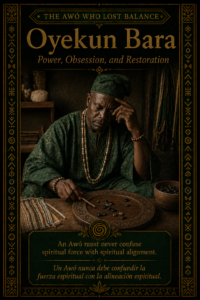
    Oyekun Bara

    Oyekun Bara is the central Awó of the story. He begins with fortune, household, and influence, but becomes absorbed in Egun Inkan Buruku Intori Ogú. His path shows how spiritual force can become dangerous when it loses order, cooling, and responsibility.

    His role is not simply that of a fallen man. He is the one through whom the story teaches the danger of confusing power with alignment.

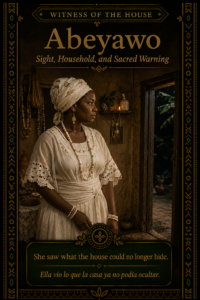
    Abeyawo

    Abeyawo is Oyekun Bara’s first wife. She sees Ikú entering and leaving the house. Her sight reveals that the disorder has reached the household.

    She should not be blamed for the collapse. She is affected by what Oyekun Bara has allowed into the house. Her rejection by Oyekun Bara becomes one of the central ruptures that must be repaired.

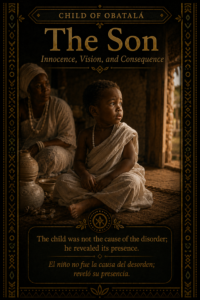
    The Son

    The son also sees the disturbance and cries at night because of what he perceives. He is innocent in the story. He is not the cause of the disorder. His suffering shows that spiritual imbalance can reach those who did not create it.

    Because he is a child of Obatalá, his rejection deepens the sacred consequence of Oyekun Bara’s action.

    Obatalá

    Obatalá is owner of the head and the sacred force of cooling, clarity, steadiness, and white calmness. In this story, Obatalá’s children are mistreated, and his support withdraws from Oyekun Bara.

    Obatalá is also part of the restoration. The rogation of the lerí, the white pigeons, the dream instruction, and the final declaration all return the story to Obatalá’s authority over the head and spiritual steadiness.

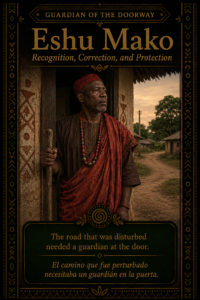
    Eshu Mako

    Eshu Mako is the path of Eshu connected to this Odù. He recognizes the danger in the land, sees the presence of Egun Inkan Buruku, and seeks Osain for correction.

    In this story, Eshu Mako is not demonic, evil, random chaos, or a fantasy trickster. He is the Eshu of this road: witness, opener, corrector, and protector of the doorway.

    At the end, he remains with Oyekun Bara to guard the door of the house. This means the doorway that once allowed disorder to enter now requires sacred protection.

    Osain

    Osain carries the force of herbs, forest knowledge, spiritual medicine, hidden power, removal, cleansing, and defense. He is needed because the disorder is not ordinary.

    Osain helps remove the harmful Egún influence, cleanse the land, cleanse Oyekun Bara, and later becomes part of Oyekun Bara’s ongoing protection against enemies.

    Shangó

    Shangó appears in the final condition given by Obatalá. Oyekun Bara must rely on Obatalá and Shangó for his fortune. Shangó’s presence shows that restored fortune requires sacred support and continued alignment.

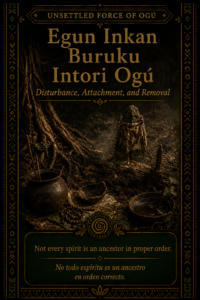
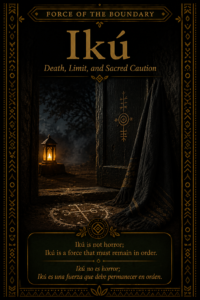
    Ikú and Egun Inkan Buruku Intori Ogú

    Ikú should not be turned into horror. Ikú has a place in the order of Olódùmarè. But attachment to death-related forces, unresolved spirits, or harmful spiritual work becomes dangerous when it pulls a person away from orí, household responsibility, and sacred order.

    Egun Inkan Buruku Intori Ogú are presented here as negative and unsettled Egún connected through ogú. They are not honored ancestors in proper order.


    Human Conditions Revealed

    Obsession

    The root condition is obsession. Oyekun Bara does not merely show interest in spiritual work. He becomes absorbed in harmful Egún connected through ogú. His attention becomes attachment.

    Power Without Peace

    The story shows that power can increase while peace decreases. Oyekun Bara gains force, but his tranquility weakens. This is one of the most important warnings of the story.

    Disturbed Judgment

    As Oyekun Bara continues with things of Ikú, his lerí becomes disturbed. His judgment weakens. His reasoning becomes clouded. His decisions no longer come from a cooled and aligned place.

    Household Rupture

    The disorder reaches the house. Abeyawo and the son perceive what Oyekun Bara does not correct. When he rejects them, the spiritual problem becomes a family rupture.

    Sacred Accountability

    Oyekun Bara must answer for what he has done. The story does not reduce everything to punishment. It shows that spiritual imbalance, mistreatment of Obatalá’s children, and broken responsibility all require correction.

    Restoration with Memory

    Oyekun Bara is restored, but not as if nothing happened. His future carries memory. He will know stages of poverty and wealth. He will rely on Obatalá and Shangó. He will defend himself with Osain. Eshu Mako will guard his door.


    Moral and Spiritual Teachings

    This story teaches that spiritual power must remain under sacred order. Power by itself is not enough. Force by itself is not alignment. An Awó may possess knowledge and still become vulnerable if the head is not cooled, the house is not protected, and the work is not governed by Ifá.

    The source names Oyekun Bara’s obsession with Egun Inkan Buruku Intori Ogú. The story’s unfolding shows how that obsession affects his peace, judgment, household, land, and fortune.

    The story also teaches the difference between Egún in proper ancestral order and harmful Egún connected through ogú. It does not teach fear of all Egún. It does not reject ancestral reverence. It warns against dangerous attachment to unsettled forces outside proper order.

    Another teaching is that spiritual correction must also become human correction. Oyekun Bara cannot only be cleansed. He must ask forgiveness. He must face his wife and son. He must repair the relationship he broke.

    Finally, the story teaches that restoration may come with conditions. Oyekun Bara returns to power, but his life carries the memory of what happened. His fortune is restored, but it must remain supported by Obatalá, Shangó, Osain, and Eshu Mako.


    Symbols and Sacred Elements

    The Head: Lerí and Orí

    The lerí is the head. In this story, it is connected to judgment, reasoning, spiritual steadiness, and the ability to remain clear.

    The orí is the deeper spiritual head, the destiny-bearing center and inner alignment that guides the road of a person’s life. When the lerí becomes disturbed, the person may still have power, but the power may no longer be guided by clarity.

    The House

    The house is not only a physical home. It is the place where Oyekun Bara’s spiritual disorder becomes visible. His wife and son see what he does not correct. The house becomes a measure of his imbalance.

    The Doorway

    The doorway becomes central through Eshu Mako. At the end of the story, Eshu Mako lives with Oyekun Bara and guards the door. This shows that the entrance must be protected after disorder has entered.

    Ewefá

    Ewefá appears in the cleansing of Oyekun Bara. It belongs to the story’s healing and removal work, but the article does not teach how to use it.

    Eyelé Meyi Funfún

    The two white pigeons are connected to the rogation of Oyekun Bara’s lerí and are given to Obatalá. Their whiteness belongs to the story’s return to cooling, clarity, and Obatalá’s authority over the head.

    Osiadié

    The osiadié are carried by Eshu Mako and Osain and used in the correction. They are ritual elements within the story, not decorative details.

    Cazuela de Brujo

    The cazuela de brujo marks the path of work into which Oyekun Bara has entered. In this story, it is connected to ogú, things of Ikú, and harmful Egún influence. It must be handled as source-specific and not generalized against every spirit-working tradition.

    Owó

    Owó appears when Oyekun Bara asks forgiveness from his wife and son. It marks the human side of correction. He must not only speak repentance; he must act toward repair.


    Ritual / Ceremony Public Education Layer

    This story contains ritual material, but it does not provide a public ritual manual.

    It names things of Ikú, cazuela de brujo, sarayeye, osiadié, ewefá, rogation of the lerí, eyelé meyi funfún, osorde, ebó, Osain’s secret, and Eshu Mako’s protection of the doorway.

    For public education, the important point is not procedure. The important point is what the ritual work does inside the story.

    The ritual work removes harmful influence. It cleanses the land. It cleanses Oyekun Bara. It cools the head. It restores relationship with Obatalá. It addresses the things of Ikú. It creates the condition for apology, repentance, and renewed protection.

    This story preserves ritual importance, but it does not teach ritual procedure.

    It shows what the ritual, offering, ceremony, or sacred work means within the story.

    It does not provide a complete ritual manual.

    Any practical ritual explanation would require source verification and practitioner review.


    Prayer / Rezo / Chant / Sacred Speech Status

    This story preserves two chants connected to the ritual moment of removal.

    The first chant appears when Eshu Mako and Osain arrive to confront the harmful Egún influence in the land:

    Egun Laboguede Labera Unlo Osain.
    Laboguede Ikú Unlo.
    Egun Buruku Unlo.

    A cautious prayer gloss may be heard as:

    Egún, by the force and road of Osain, depart.
    The influence joined to Ikú, depart.
    Harmful Egún, go away.

    The second chant appears when Eshu Mako and Osain perform sarayeye over Oyekun Bara:

    Egun Baloku Lole.
    Egun Baloku Lole.
    Unlo Unlo.
    Egun Buruku Abeye Ni Ikú.
    Osain Lele Ikú Olokun.
    Egun Buruku Unlo.

    A cautious prayer gloss may be heard as:

    Egún bound to death, leave this place.
    Go away, go away.
    Harmful Egún, affliction of Ikú, withdraw.
    By the force of Osain, Ikú Olokun, harmful Egún, depart.

    Because these lines are preserved in liturgical and source-based spelling, their meanings should be heard as cautious prayer glosses, not strict word-for-word translations, unless a verified literal translation is provided.

    The chants are not poetic decoration. They belong to the moment of removal, cleansing, separation, and correction.


    Cultural and Divinatory Context

    This story operates within a divinatory world where spiritual work, Egún, household responsibility, the head, sacred protection, and ritual correction are linked.

    It should not be read as a general rejection of Egún. In Afro-Cuban Ifá practice, Egún are not automatically negative. Ancestors are honored, remembered, and approached with respect. They belong to religious life, lineage, household memory, and spiritual foundation.

    The warning here is more precise. The story speaks about harmful or unsettled Egún connected through ogú, not honored ancestors in proper order.

    This distinction matters. The story does not say that Ifá has no relationship with Egún. It shows why Ifá requires order, protection, offering, ceremony, and discipline when dealing with spiritual forces connected to the dead.

    The story also preserves the religious function of Eshu Mako in this Odù. Eshu Mako recognizes dangerous imbalance, opens the road toward Osain’s corrective force, helps remove harmful Egún influence, and remains at the doorway as protection.

    This story also requires care when terms like ogú, cazuela de brujo, and things of Ikú appear. These terms should not be used to condemn every spirit-working tradition or every religious system that works with the dead. The article remains inside the specific logic of this Ifá narrative and this Odù.


    When This Odù Appears

    When Oyekun Bara appears in relation to this story, it may warn about spiritual force that has lost balance.

    It may point to obsession, disturbed judgment, dangerous attachment to harmful forces, or a condition where the head is no longer cooled and aligned.

    It may also point to a household affected by something the central person has not corrected. The story shows that spiritual disorder does not always remain private. It can move into the house, affect family members, touch the land, and damage fortune.

    Within this Odù and story frame, the counsel may involve returning to disciplined Ifá order, correcting harmful spiritual attachment, cooling the head, repairing the household, and seeking proper guidance for ritual correction.

    This should not become rigid fortune-telling. The story does not say every household problem comes from Egún or ogú. It shows one specific sacred road in which Oyekun Bara’s obsession, his mistreatment of Obatalá’s children, and his continued occupation with things of Ikú lead to collapse and correction.

    Because the story contains ritual material, any practical application must remain under proper source verification and practitioner review.


    Modern Ethical Explanation

    Modern readers should hear this story responsibly.

    It contains family rupture, the rejection of a wife and child, spiritual obsession, death-related influence, poverty, loss of judgment, and sacred consequence. Because of this, the story should not be used carelessly.

    It should not be used to blame a wife. It should not be used to blame a child. It should not be used to silence people who perceive danger in a household.

    Abeyawo and the son are not guilty because they see what is happening. They are affected by the disorder. They are witnesses to it. The responsibility belongs to Oyekun Bara.

    He is the one who allows his balance with the spiritual world to become disturbed. He is the one who becomes attached to harmful Egún connected through ogú. He is the one who keeps things of Ikú. He is the one who rejects the wife and child connected to Obatalá’s protection.

    A modern listener should hear this as a warning about responsibility. When spiritual work begins to disturb the lerí, affect the household, and weaken judgment, correction is required. Obsession that clouds judgment must not be mistaken for wisdom. Power that disturbs the house must not be mistaken for spiritual authority.

    At the same time, this story should not be turned into a universal rule for every modern relationship. It belongs to this Odù, this sacred Ifá narrative, and this specific condition.

    The traditional warning remains serious, but it must be heard with care. When safety is involved, safety must come first. When harm is present, harm should not be hidden. When family members are affected by spiritual disorder, they should not be blamed for revealing what the disorder has done.


    What Must Not Be Misunderstood

    This story should not be reduced to fear of Egún.

    It should not be used to say all ancestors are dangerous.

    It should not be used to condemn every tradition that works with spirits.

    It should not be used to blame Abeyawo or the child.

    It should not be used to excuse harm inside a household.

    It should not be used to turn spiritual power into spectacle.

    It should not present Èṣù or Eshu Mako as demonic, evil, random chaos, or a fantasy trickster.

    It should not present Ikú as horror. Ikú has a place in the order of Olódùmarè, but attachment to death-related forces becomes dangerous when it pulls a person away from orí, family, and sacred responsibility.

    It should not turn the ritual details into public procedure.

    It should not treat the prayer glosses as verified literal translations unless they are reviewed by qualified practitioners and language authorities.


    Reflection Questions

    1. What is the difference between spiritual force and spiritual alignment in this story?
    2. How does Oyekun Bara’s obsession affect his lerí, his judgment, and his household?
    3. Why is it important to distinguish Egún in proper ancestral order from harmful Egún connected through ogú?
    4. What does Abeyawo’s sight reveal about the condition of the house?
    5. Why should the wife and child not be blamed for the disorder?
    6. How does Obatalá’s role connect the head, the household, and fortune?
    7. Why does Eshu Mako seek Osain instead of correcting the condition alone?
    8. What does the doorway mean at the end of the story?
    9. How does Oyekun Bara’s restoration remain connected to memory and obligation?
    10. How can this story be taught without turning ritual material into public ritual instruction?

    Conclusion

    The Path of Obsession teaches that power without order can disturb the head. Spiritual force without balance can enter the house. And restoration requires both sacred correction and human responsibility.

    Oyekun Bara’s power returns, but it returns with conditions. His fortune returns, but it returns with memory. His road reopens, but it reopens under the protection of Obatalá, Shangó, Osain, and Eshu Mako.

    The story does not teach fear of Egún. It teaches discernment. It teaches that Egún in proper ancestral order must be honored, while ogú-connected Egún must be approached with caution.

    The head must be cooled. The house must be repaired. The road must return to sacred order.


    Downstream Summary Block

    Core Story Tension:
    Oyekun Bara becomes obsessed with Egun Inkan Buruku Intori Ogú, and this obsession disturbs his head, household, land, protection, and fortune.

    Core Ritual Dynamic:
    Harmful Egún influence is removed through the corrective work of Eshu Mako and Osain, followed by cleansing, rogation of the lerí, ebó, apology, and restored sacred protection.

    Core Character Dynamic:
    Oyekun Bara loses balance through ogú-connected Egún and things of Ikú. Abeyawo and the son reveal the household consequence. Obatalá withdraws and later restores under condition. Eshu Mako recognizes the danger and guards the doorway. Osain removes and protects. Shangó supports future fortune.

    Core Teaching:
    Spiritual power must remain governed by Ifá, cooled through the head, protected in the house, and corrected through responsibility when harm has occurred.

    Core Divinatory Warning:
    This story may warn about obsession, disturbed judgment, harmful spiritual attachment, household disorder, weakened fortune, and the need for proper correction under the guidance of qualified elders.

    Prayer / Sacred Speech Status:
    Two chants are preserved. English meanings are cautious prayer glosses, not verified literal translations.

    Ritual / Ceremony Boundary:
    The story preserves ritual importance but does not teach ritual procedure. Practical ritual explanation requires source verification and practitioner review.

    Modern Ethical Flag:
    Do not blame Abeyawo or the child. Do not use the story to silence household danger or harm. Do not universalize this Odù-specific warning into a rule for every modern relationship.

    Terms Requiring Diacritic Review:
    Oyekun Bara, Abeyawo, Inle Tana, Ikupa, Egun Inkan Buruku Intori Ogú, ogú, Ikú, cazuela de brujo, lerí, orí, Obatalá, Eshu Mako, Osain, sarayeye, osiadié, ewefá, eyelé meyi funfún, osorde, ebó, owó, Elegbá, Shangó, Ikú Olokun, Egun Laboguede Labera, Laboguede Ikú, Egun Baloku Lole, Egun Buruku Abeye Ni Ikú, Osain Lele Ikú Olokun.

    IFAStories Website Story Article Complete
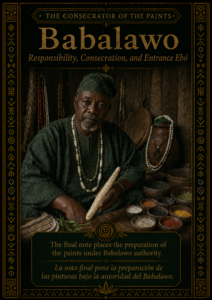
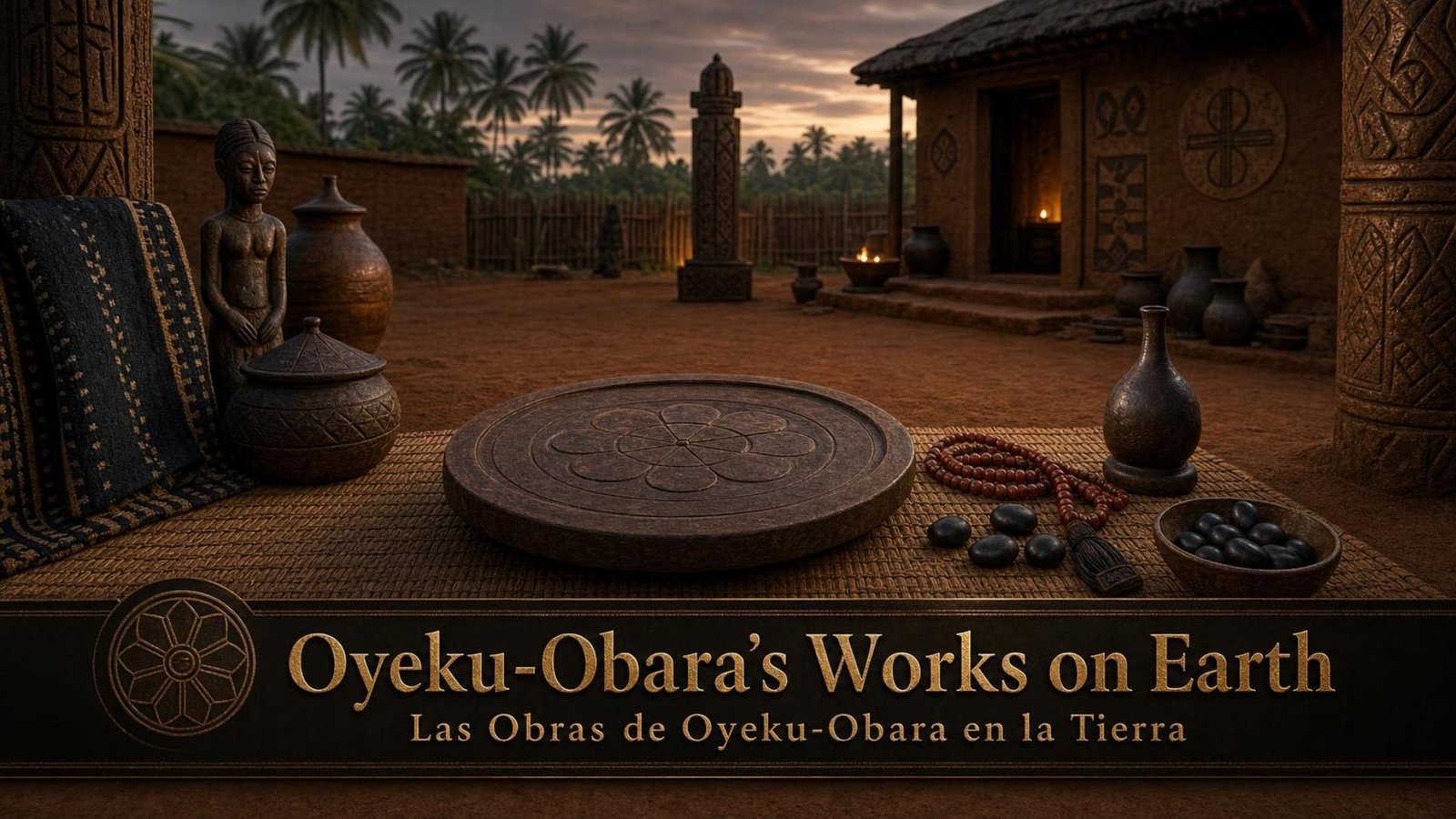
  • Oyeku-Obara’s Works on Earth

    Oyeku-Obara’s Works on Earth


    1. TITLE

    Oyeku-Obara’s Works on Earth

    Alternate source-name variants preserved for review:

    • Oyeku-Obara
    • Oyeku-kpalaba
    • Oyeku-kpo-bara
    • Ifa Oyeku Kpalaba

    These forms are preserved because the source uses more than one spelling. Final orthography, diacritics, and canonical placement require later review.


    2. STORY REFERENCE

    This article is respectfully adapted from a traditional Ifá story attributed to C. Osamaro Ibie in:

    IFISM, Volume Three: The Complete Works of Òrúnmìlà — The Odù of Òyèkú Méjì
    by C. Osamaro Ibie.

    Within IFAStories, this account is presented as a sacred Ifá narrative for spiritual education, cultural preservation, and reflective study. The narration and commentary are original to IFAStories, while the article preserves the ritual boundaries, divinatory frame, sacred character functions, and source-based story structure.

    This website adaptation does not present ritual procedure. It explains the story’s meaning, teaching, and divinatory importance while leaving practical ritual matters under verified source guidance and practitioner review.


    3. INTRODUCTION

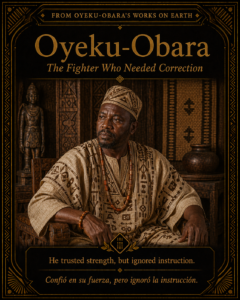
    This traditional Ifá story follows Oyeku-Obara, an Ifá priest whose road begins with conflict and ends with correction. He is a person who carries sacred knowledge, but he also carries a strong fighting nature. The story does not present that fighting nature as something to admire. It presents it as something that must be disciplined and brought back under Ifá’s instruction.

    Before Oyeku-Obara travels toward Ògún, he consults Ifá. He receives a clear warning: he should not proceed unless he first serves his head and Èṣù. But he dismisses the sacrifice because he trusts his past strength in combat. He has fought before. He has not been overcome before. So he places confidence in past success instead of present divinatory guidance.

    The story then carries him through disorder, hiding, the wisdom of a Boa, smoke, capture, public authority, the hidden power of Uja, renewed consultation, and final ritual correction. Its deepest lesson is not that a fighter proves himself stronger than others. Its deepest lesson is that sacred instruction remains unfinished until the required obligation is fulfilled.


    4. QUICK TAKEAWAY

    Sacred instruction is not complete because it has been heard. It becomes complete when the required obligation is fulfilled.

    Oyeku-Obara’s story teaches that strength without restraint can lead to exposure, while correction, humility, and obedience to Ifá restore the road.


    5. THE STORY

    Oyeku-Obara was an Ifá priest known for a combative nature. He often fought those who crossed his path. One day, he decided to travel to the land of Ògún in order to fight him.

    Before beginning the journey, Oyeku-Obara consulted Ifá. Ifá advised him not to proceed unless he first served his head and Èṣù. Oyeku-Obara did not perform the sacrifice. He considered it unnecessary because no previous battle had overcome his fighting ability.

    When he reached the town, he found it in great disorder. After asking what had caused the commotion, he learned that someone had just been murdered there. He then hid beside a palm tree.

    While hiding, he removed his ìkín from his waist and asked what he should do. His own Odù, Ifá Oyeku Kpalaba, appeared. He was told that the side of the palm tree would not give sufficient protection and that he should hide inside a hole.

    Oyeku-Obara entered a concealed hole. Unknown to him, a Boa was already inside. He sat on the Boa’s head. The Boa complained that battle had driven it into the hole and questioned who had dared to sit on its head.

    Oyeku-Obara answered that he had entered the hole for refuge because the people of the town were searching for a stranger who had come into their territory. The Boa told him that the people were watchful and would soon search for both of them inside the hole.

    Soon afterward, smoke began to enter the hole. The smoke forced Oyeku-kpalaba out. The Boa refused to leave, saying:

    “a snake never dies in the hole”

    The Boa then dug further inside the hole and placed its head there to protect itself from the smoke.

    When Oyeku-kpalaba came out of the hole, he was apprehended. He warned those who seized him not to arrest, molest, imprison, or kill him because he was an Ifá priest. The source states that it is forbidden to arrest, manhandle, or jail an Ifá priest. Even so, his captors insisted on taking him to the Ọba’s palace.

    At the palace, the Ọba asked him to identify himself. He said that he was an Ifá priest and that his name was Oyeku-kpo-bara. The Ọba ordered that a house be prepared for him and that he be persuaded to explain why he had come to the town.

    Oyeku-kpo-bara then revealed that he had come to fight Ògún. He was told that the place was not Ògún’s town. It was the town of Uja, the wife of Ògún, who was described as the force and power behind him.

    The people then urged Oyeku-kpo-bara to remain in the town and practice Ifá there.

    Oyeku-kpo-bara prospered in the town. However, he still did not perform the sacrifice to his head and Èṣù.

    Later, he arranged for a wife to be sent to him from his own town. He was told that a bride could not be brought into the town unless he went to another town to marry her. Because of this matter, he consulted Ifá again.

    When he consulted Ifá, he was reminded of the sacrifices he had earlier been instructed to perform. He then served his head with a cock and served Èṣù with a he-goat.

    After this correction, Oyeku-kpo-bara prospered greatly.

    The source then gives further divinatory instructions connected to this Odù. When this Odù appears at Ugbodu, the person should serve Ifá with another goat because of an impending catastrophe. The person should also be told that there is a sick person in the house where the Ifá initiation ceremony is taking place. The initiate should be told never to arrange a wife for anyone because his Ifá forbids it. At ordinary divination, the person should serve Èṣù with a he-goat without delay in order to avoid the danger of attack by robbers.

    These instructions belong to the divinatory frame of this Odù. They should not be turned into public ritual procedure or broad modern rules.


    6. STORY STRUCTURE

    Initial Desire or Condition

    The story begins with Oyeku-Obara’s fighting nature. He is an Ifá priest, but he is also described as someone who often fights those who cross his path. His desire to fight Ògún moves the story forward.

    Divination Before Movement

    Before traveling, he consults Ifá. This places the journey under divinatory authority before it becomes physical movement.

    Sacrifice and Warning

    Ifá tells him not to proceed unless he first serves his head and Èṣù. This instruction addresses both the person and the road. The head points to inner alignment, judgment, and destiny. Èṣù points to boundary, movement, consequence, and the correct order of action.

    Forgotten Obligation

    Oyeku-Obara ignores the instruction. He trusts past victories more than the warning he has received. This is the first major fracture in the story.

    Exposure and Testing

    He enters a town already marked by disorder. Someone has been murdered. He hides beside a palm tree, consults through his ìkín, enters a hole, encounters the Boa, is driven out by smoke, and is apprehended.

    Recognition Before Authority

    When taken to the Ọba, he identifies himself as an Ifá priest. The Ọba receives him, orders that a house be prepared for him, and asks why he came. Capture becomes a doorway to recognition and accountability.

    Redirection

    Oyeku-kpo-bara learns that he has not entered Ògún’s town. He has entered Uja’s town. His journey toward conflict is redirected into settlement and Ifá practice.

    Ritual Correction

    Even after prospering, the original sacrifice remains unfinished. A later marriage-related restriction sends him back to Ifá. He is reminded of the neglected instruction, serves his head and Èṣù, and then prospers greatly.


    7. MAIN CHARACTERS AND RELATIONSHIP ROLES

    Oyeku-Obara / Oyeku-kpalaba / Oyeku-kpo-bara

    Oyeku-Obara is the main figure of the story. He is an Ifá priest with a combative nature. His journey shows the danger of carrying sacred responsibility while still being ruled by pride, aggression, or overconfidence.

    The different name forms appear at different points in the story. Oyeku-kpalaba appears during the danger and capture sequence. Oyeku-kpo-bara is the name he gives before the Ọba. These variants are preserved because they appear in the source and require later review.

    Ifá

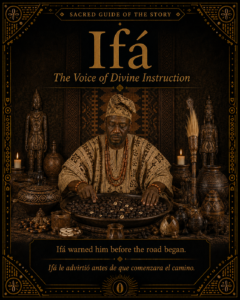
    Ifá is the sacred authority that warns, guides, and later reminds Oyeku-Obara of his unfinished obligation. Ifá does not disappear after the first warning is ignored. The instruction remains active until it is completed.

    Èṣù

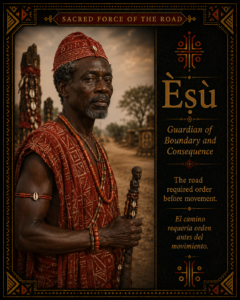
    Èṣù is named as a required ritual recipient. In this story, Èṣù is connected to movement, boundary, consequence, and the correct ordering of the road. Èṣù must not be treated as demonic or villainous.

    Ògún

    Ògún is the figure Oyeku-Obara intends to fight. The expected confrontation never becomes the final purpose of the story. Instead, the road toward Ògún reveals Oyeku-Obara’s lack of preparation and redirects him elsewhere.

    Uja

    Uja is described as the wife of Ògún and the force and power behind him. She should not be reduced to a passive spouse. In the story, Uja reveals hidden authority and the deeper power behind visible force.

    The Boa

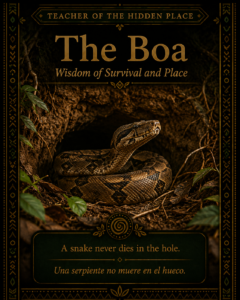
    The Boa is the animal inside the hole. It is not a monster. It is a teacher through nature. The Boa knows the hidden place in a way Oyeku-Obara does not. Its line, “a snake never dies in the hole,” teaches survival through nature, place, depth, and restraint.

    The Ọba

    The Ọba is the ruler who receives Oyeku-kpo-bara after his capture. His palace becomes the place where danger is reordered into recognition and accountability.

    The People of the Town

    The people first appear as a force of suspicion and apprehension. Later, they become part of the reordering of the story by explaining the town’s identity and persuading Oyeku-kpo-bara to remain and practice Ifá.


    8. HUMAN CONDITIONS REVEALED

    Combativeness

    Oyeku-Obara is known for fighting. His desire to fight Ògún reveals a pattern of confrontation. The story warns that power without discipline can lead a person into danger.

    Overconfidence

    He trusts his past victories more than Ifá’s present instruction. This shows the danger of believing that previous success cancels the need for sacred preparation.

    Ritual Neglect

    He hears the instruction but does not fulfill it. The story carefully separates hearing from completion. What is neglected at the beginning returns later.

    Vulnerability

    The one who came to fight becomes the one who hides. He hides beside a palm tree, then inside a hole, and is finally driven out by smoke. His vulnerability exposes the weakness of unprepared movement.

    Environmental Ignorance

    Oyeku-Obara enters both the town and the hole without understanding what is already there. He does not know the town’s crisis. He does not know the Boa is in the hole. The story teaches that not every place can be entered through force.

    Accountability

    When he is captured, he cannot simply disappear. He must stand before the Ọba, identify himself, and explain why he came. This makes his sacred identity a responsibility, not an escape.

    Delayed Correction

    Even after he prospers, the sacrifice remains unfinished. The story shows that success is not the same as completion.


    9. MORAL AND SPIRITUAL TEACHINGS

    The first major teaching is that sacred instruction must be fulfilled, not merely heard. Oyeku-Obara consults Ifá, but consultation alone does not settle the matter. Ifá’s instruction remains unfinished until he completes the required obligation.

    The second teaching is that strength without restraint can block blessing. Oyeku-Obara’s fighting nature does not bring him victory. It brings him into disorder, hiding, capture, and accountability. His true correction comes when he returns to Ifá’s original instruction.

    The third teaching is that survival is not the same as spiritual completion. Oyeku-kpo-bara survives the danger of the town. He is recognized by the Ọba. He is given a place to live. He practices Ifá and prospers. Yet the first obligation still remains open.

    The fourth teaching concerns hidden power. Oyeku-Obara thinks he is traveling toward Ògún, but he arrives in the town of Uja, who is described as the force and power behind him. This shows that visible strength may depend on deeper, relational, household, or hidden authority.

    The story should therefore be read as a story of correction, not conquest. Oyeku-Obara’s real victory is not defeating Ògún. His real victory is being redirected away from reckless combat and returned to what Ifá first commanded.


    10. SYMBOLS AND SACRED ELEMENTS

    The Head

    The head is a ritual focus and a sacred center of alignment, judgment, destiny, and personal spiritual order. Oyeku-Obara is told to serve his head before the journey, and later he does so as part of the correction.

    Èṣù

    Èṣù represents boundary, movement, consequence, and the proper order of action. The story connects Èṣù to the road before the journey and to danger in ordinary divination.

    Ìkín

    Ìkín appears when Oyeku-Obara removes it from his waist and seeks guidance during danger. This moment shows that divinatory guidance remains necessary when human judgment is not enough.

    The Palm Tree

    The palm tree is the first hiding place. In this story, it represents insufficient protection. Oyeku-Obara needs deeper guidance than improvised concealment.

    The Hole

    The hole becomes a place of refuge, hidden danger, and exposure. It shows that concealment is not automatically safety.

    The Boa

    The Boa is a symbol of environmental wisdom. It survives because it knows its own place and nature. Its teaching contrasts with Oyeku-Obara’s tendency to move outward through confrontation.

    Smoke

    Smoke forces Oyeku-kpalaba out of concealment. It turns hiding into exposure.

    The Ọba’s Palace

    The palace is the place of public authority. It changes the meaning of the capture by placing Oyeku-kpo-bara before recognized leadership.

    Uja’s Town

    Uja’s town reveals hidden authority. Oyeku-Obara thought he understood the conflict, but the town teaches him that he did not understand the deeper structure of power.


    11. RITUAL / CEREMONY PUBLIC EDUCATION LAYER

    This story preserves ritual importance, but it does not teach ritual procedure.

    The source states that Oyeku-Obara was told to serve his head and Èṣù before proceeding on the journey. It later states that he served his head with a cock and served Èṣù with a he-goat. The story also states that when this Odù appears at Ugbodu, Ifá should be served with another goat, and that at ordinary divination Èṣù should be served with a he-goat without delay.

    These are ritual and divinatory details, but they are not a public ritual manual. The story names obligation, warning, and correction. It does not provide complete procedure, sequence, authorization, chants, ritual handling, or practitioner instruction.

    The public teaching is that ritual obligation matters within the story. Oyeku-Obara’s mistake is not simply that he “missed a sacrifice and was punished.” That is too narrow. His neglected obligation reveals a deeper condition: pride, fighting ambition, and movement without proper alignment.

    Any practical ritual explanation would require source verification and practitioner review.


    12. PRAYER / REZO / CHANT / SACRED SPEECH STATUS

    No explicit prayer, rezo, chant, or súyẹ̀rẹ̀ is preserved in this story segment as sacred speech text.

    Because no sacred chant is preserved, this article does not create one.

    However, sacred force is still carried through instruction, warning, divination, ritual obligation, taboo, direct speech, and divinatory continuation.

    The only direct line preserved from the story is:

    “a snake never dies in the hole”

    This line is not presented as a chant. It functions as a teaching spoken by the Boa within the narrative.


    13. CULTURAL AND DIVINATORY CONTEXT

    This story shows that movement should not be separated from divination. Oyeku-Obara does not simply travel. He first consults Ifá. The problem is not that he lacked access to guidance. The problem is that he received guidance and did not complete what was required.

    The story also shows that sacred identity carries responsibility. When Oyeku-kpalaba is apprehended, he identifies himself as an Ifá priest. But this does not erase the consequences of his actions. He is still taken before the Ọba. He must still explain why he came. He must still eventually return to the instruction he neglected.

    The Boa’s teaching deepens this lesson. Oyeku-Obara enters the hole as a stranger, but the Boa knows the hole as its own place. The snake survives by knowing its environment, its nature, and when to go deeper. This becomes a mirror for Oyeku-Obara, who entered the town without understanding the danger already present there.

    Uja’s role also deepens the divinatory teaching. Oyeku-Obara thought the matter was simply about Ògún, but he learns that the town belongs to Uja, the force and power behind Ògún. The story shows that a person may misread a conflict when they do not understand the hidden authority, relationships, and forces behind what they see.

    Ugbodu and ordinary divination appear in the closing instructions. These final teachings show that the story is not only narrative memory. It also functions as divinatory guidance when the Odù appears in specific contexts.

    These instructions must remain context-bound. They should not be turned into rigid fortune-telling, public ritual procedure, or broad social rules.


    14. WHEN THIS ODÙ APPEARS

    When this Odù appears, the story may warn about a person who receives guidance but does not complete the required obligation. It may point to a situation where confidence, past success, reputation, or fighting ability causes the person to dismiss sacred instruction.

    It may also point to danger connected with movement, conflict, travel, exposure, or entering a troubled place without understanding what has already happened there.

    The story may diagnose a pattern where someone thinks they are confronting one visible force, but the deeper structure of power is elsewhere. Oyeku-Obara thought he was going toward Ògún, but he arrived in Uja’s town.

    The source itself gives specific divinatory instructions:

    • At Ugbodu, Ifá should be served with another goat because of impending catastrophe.
    • A sick person in the initiation house is mentioned as part of the warning.
    • The initiate should never arrange a wife for anyone because his Ifá forbids it.
    • At ordinary divination, Èṣù should be served with a he-goat without delay to avoid attack by robbers.

    These instructions belong to the sacred and divinatory frame of this Odù. They should not be generalized into ordinary modern advice.


    15. MODERN ETHICAL EXPLANATION

    For a modern reader, this story is not simply saying, “A person missed a sacrifice, so danger came.” That reading is too narrow. The story is showing how a pattern of behavior can carry a person toward consequence.

    Oyeku-Obara’s pattern is fighting. He is used to conflict. He trusts his ability to win. He moves toward Ògún because that is his nature. But Ifá warns him that the road requires preparation first. He hears the warning and still moves forward.

    In modern life, a person may not be going to fight an Òrìṣà, but they may enter a workplace argument, family dispute, public confrontation, community conflict, or spiritual disagreement with the same emotional pattern: “I know how to win. I know how to handle this. No one has defeated me before.”

    The story warns that this mindset can be dangerous. Past victory does not mean present wisdom. Strength should not move faster than reflection. Anger should not move faster than guidance. A title, role, education, spiritual gift, or public reputation should not be used to avoid accountability.

    The story also includes sensitive themes: murder, capture, death-related warning, marriage restriction, and danger from robbers. These should be handled carefully. The warning about the sick person should not be dramatized as horror or used to blame anyone who is ill. The wife-arrangement prohibition should not be turned into a universal rule about marriage. The warning about robbers should not be exaggerated or treated casually.

    The modern ethical lesson is not fear. It is responsibility. When harm or danger is present, safety matters. When conflict is present, restraint matters. When sacred instruction is present, completion matters.

    The story teaches that a person can survive danger and still have unfinished obligations. A person can be publicly recognized and still need private correction. A person can prosper outwardly and still carry an unresolved command from Ifá.


    16. WHAT MUST NOT BE MISUNDERSTOOD

    This story should not be read as a heroic fight story. Oyeku-Obara’s desire to fight Ògún is not the virtue of the story. The virtue is correction.

    This story should not be used to present Èṣù as demonic. Èṣù is a sacred force connected to boundary, movement, and consequence.

    This story should not present the Boa as a monster. The Boa is a teacher through nature and environment.

    This story should not reduce Uja to a passive wife. In the source, Uja is described as the force and power behind Ògún.

    This story should not be used as public ritual instruction. It preserves ritual importance, but it does not teach ritual procedure.

    This story should not turn Odù-specific warnings into broad modern rules about illness, marriage, women, men, punishment, or danger.

    This story should not confuse success with completion. Oyeku-kpo-bara prospered before the original obligation was completed, but the matter was still unfinished.


    17. REFLECTION QUESTIONS

    1. Why does Oyeku-Obara consult Ifá but still ignore the instruction he receives?
    2. What does the story teach about the difference between hearing sacred instruction and fulfilling it?
    3. How does Oyeku-Obara’s fighting nature shape the danger he enters?
    4. What does the Boa’s line, “a snake never dies in the hole,” teach about place, nature, and survival?
    5. Why is it important that Oyeku-Obara is brought before the Ọba instead of simply escaping?
    6. What does Uja reveal about hidden power and incomplete understanding?
    7. Why does prosperity not mean that Oyeku-kpo-bara’s obligation has been completed?
    8. Which parts of this story require ritual boundary and practitioner review before any practical explanation is attempted?

    18. CONCLUSION

    Oyeku-Obara’s story teaches that sacred instruction remains active until it is fulfilled. A person may be strong, skilled, publicly recognized, or even prosperous, yet still carry an unfinished command from Ifá.

    The story does not ask us to admire the fighting. It asks us to study the correction. Oyeku-Obara enters the road as a fighter, but the road exposes him, redirects him, and eventually brings him back to the obligation he first ignored.

    His true resolution is not the defeat of Ògún. His true resolution is the return to Ifá’s instruction. The forgotten obligation is remembered. The head is served. Èṣù is served. And only then does the story come into its final order.

    The final teaching is clear: strength without restraint can lead to consequence, but humility, discipline, and completed instruction restore the road.


    19. DOWNSTREAM SUMMARY BLOCK

    Core Story Tension: Oyeku-Obara’s fighting nature leads him to ignore Ifá’s instruction before traveling toward Ògún.

    Core Ritual Dynamic: The story turns on divination, neglected sacrifice, renewed consultation, ritual correction, and divinatory continuation.

    Core Character Dynamic: Oyeku-Obara moves from combative confidence to vulnerability, exposure, recognition, settlement, renewed divination, and final correction.

    Core Teaching: Sacred instruction is not complete until the required obligation is fulfilled.

    Core Divinatory Warning: At Ugbodu and ordinary divination, the source preserves specific warnings connected to Ifá, Èṣù, impending catastrophe, a sick person in the initiation house, wife-arrangement prohibition, and danger from robbers.

    Prayer / Sacred Speech Status: No explicit prayer, rezo, chant, or súyẹ̀rẹ̀ is preserved. The direct line “a snake never dies in the hole” is preserved as narrative speech.

    Ritual / Ceremony Boundary: Ritual details are source-preserved but partial. The article does not teach procedure. Practical ritual explanation requires source verification and practitioner review.

    Modern Ethical Flag: Sensitive themes include violence, murder, capture, death-related warning, marriage restriction, and robbery danger. These must not be generalized, dramatized as horror, or used to blame vulnerable people.

    Terms Requiring Diacritic Review: Oyeku-Obara, Oyeku-kpalaba, Oyeku-kpo-bara, Ifa Oyeku Kpalaba, Uja, Ugbodu. Known website forms used where appropriate: Ifá, Odù, Èṣù, Ògún, Ọba, ìkín.

    IFAStories Website Story Article Complete
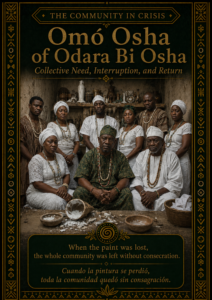
  • The Second Marriage of Ejiogbe

    The Second Marriage of Ejiogbe

    Odù: Ejiogbe
    Category: Odù, Ejiogbe, Story Articles
    Source Title: The Second Marriage of Ejiogbe


    STORY REFERENCE

    This story is respectfully adapted from the Baba Èjìogbè section of IFISM: The Complete Work of Orunmila by Mr. C. Osamaro Ibie.

    Within IFAStories, this account is presented as a sacred Ifá narrative for spiritual education, cultural preservation, and reflective study.

    This adaptation preserves the traditional meaning of the story while shaping the narration, structure, and commentary for a modern educational audience. It is offered with respect for Ifá, Yoruba sacred knowledge, and the ancestral wisdom carried through Odù.


    INTRODUCTION

    Some stories teach that prosperity does not create danger by itself. Prosperity often reveals what has already been forgotten, left unexplained, or poorly handled.

    This traditional Ifá story from Ejiogbe speaks about Ejiogbe, his second wife Iwere were, and a household pattern that was respected in poverty but broken in public abundance. The story is not only about marriage. It is also about memory, religious responsibility, ceremonial order, humility, and the danger of allowing public authority to erase private loyalty.

    At the center of the story is the head of an animal. In poverty, the head was given to the wife as part of household life. In prosperity, the head of a cow appeared within a public thanksgiving ceremony, where priests, family members, and sacred order were present. One object carried two meanings. To the priests, the cow’s head belonged to ceremonial order. To Iwere were, it carried the memory of poverty, loyalty, and recognition.

    The conflict becomes serious because no one built a bridge between these meanings before the wound became public.


    QUICK TAKEAWAY

    What was honored in hardship must not be carelessly denied in abundance.

    This story teaches that private memory and public ceremony must be explained to one another. Religious duty requires communication, marriage requires humility, and sacred communities must correct misunderstanding without humiliating the people who do not yet understand the order of the ceremony.


    THE STORY

    The story says that the first wife of a true son of Ejiogbe will not remain long with him unless she is fair in complexion.

    It also says that the children of Ejiogbe, those for whom Ejiogbe appeared during Ifá initiation or Ugbodu, often marry women who belong to the world of witchcraft. If such a man has three wives, at least two of them are said to be witches.

    The next woman Ejiogbe married was called Iwere were. She was identified in the story as a witch.

    At that time, Ejiogbe was very poor. He and Iwere were lived below the starvation line. Whenever they killed a rat, Orunmila would give the head to his wife. The same thing happened with a fish, a hen, and later a goat. By the time they were able to afford a goat, their fortunes had begun to improve.

    Eventually, Ejiogbe became sufficiently prosperous. He built his own house, raised children, and married other wives.

    At the height of this prosperity, Ejiogbe decided to offer thanksgiving to his Ifá. He bought a cow for a great feast and invited other priests who were members of his family.

    During the feast, the meat was shared among the invitees. The senior wife expected, as usual, to receive the head of the cow. After waiting in vain, she drew the head toward herself.

    Almost immediately, some of the more vindictive priests rebuked her. They said that the head was not the proper part of a cow to give to a woman. The cow’s head was then taken away from her.

    Iwere were remained still for some time. She gave her husband the chance to correct the situation. But when no positive response came from him, she withdrew from the feast chamber and went to her room.

    Three days later, she gathered her belongings and left Ejiogbe’s house. She went to live with her brother, Iroko, who gave her sanctuary.

    When the thanksgiving ceremonies were over, Ejiogbe went in search of her. He searched everywhere without success. Finally, he went to her brother Iroko, who confirmed that he had given her refuge.

    When Ejiogbe saw Iwere were, he asked why she had left him so unceremoniously.

    With tears in her eyes, she reminded him that when they were poor, he often gave her the head of whatever animal they could afford to slaughter for food. He had given her the head of the rat, the fish, the hen, and the goat. No priest or member of his family had appeared during those days to demand those heads from her.

    She asked why, now that they were wealthy enough to feast with a cow, the priests had come to deny her the privilege of keeping its head.

    She asked why no family member had come earlier to demand the heads of the rat, the fish, or the hen.

    Then, in poetic speech, she declared:

    What man can boast
    of being bigger than the elephant?

    Who can claim
    to be bigger than the buffalo?

    Who can boast
    of being more influential than the king?

    No head-tie can be wider
    than those used by the elders of the night.

    No rope can be as long
    as the one used by the witches.

    No hat can be more famous
    than a crown.

    In width or in breadth,
    the hand cannot be taller than the head.

    The palm frond is often taller
    than the palm leaves
    on the head of a palm tree.

    Wherever there is a musical performance,
    it is the sound of the bell
    that sounds louder
    than all other instruments.

    And the palm tree
    is more influential
    than all other trees in the forest.

    When Ejiogbe heard this poem, he too began to weep. He apologized to his wife and asked her to forgive him.

    Iwere were took pity on him and agreed to return with him to the house. But she returned on the condition that he would appease her with a piece of white cloth, some money, and by serving her head with a goat.

    This is why the source explains that whoever is born by Ejiogbe at Ugbodu is required, at the height of his prosperity, to serve the head of his senior wife with a goat.

    When this story comes out in divination for a person who was born by Ejiogbe, he should be asked whether he has already served his wife’s head with a goat.

    He should be told that his senior wife, if described in the source as yellow or fair in complexion, is a benevolent witch who may help him prosper in life, provided he does not despise her.

    If, on the other hand, this story comes out in divination for a man whose senior wife has left his house, he should be advised to go and beg her to return without delay, lest he return to poverty.


    STORY STRUCTURE

    Poverty and Household Pattern

    The story begins with poverty. Ejiogbe and Iwere were live with very little. During this time, whenever they slaughter a rat, fish, hen, or goat, the head is given to the wife.

    This pattern becomes important because it is not only about food. Over time, it becomes a sign of memory, care, and recognition within the household.

    Prosperity and Public Thanksgiving

    As Ejiogbe prospers, the household expands. He builds his own house, raises children, marries other wives, and reaches the point where he can offer thanksgiving to his Ifá.

    The thanksgiving feast changes the setting. What had once been a private household pattern now enters a public ceremonial environment.

    The Cow’s Head and Public Conflict

    During the feast, Iwere were expects to receive the cow’s head as she had received the heads of smaller animals in poverty. But the priests rebuke her and take the head away.

    The conflict begins because the cow’s head is read in two different ways. The priests see it through ceremonial order. Iwere were sees it through the memory of hardship and household recognition.

    Ejiogbe’s Silence

    Ejiogbe’s failure is not that he refuses Ifá or rejects thanksgiving. He performs the sacred public obligation. His failure is that he does not mediate between the private history of his marriage and the public order of the ceremony.

    He does not explain Iwere were’s expectation to the priests. He does not explain the ceremonial difference to Iwere were. And when the rebuke occurs, he does not act quickly enough to prevent the wound.

    Departure and Refuge

    Iwere were does not immediately destroy the household or create public chaos. She withdraws, waits, gathers her belongings, and leaves. Her brother Iroko gives her refuge.

    This refuge becomes important because it creates distance. Ejiogbe must now leave the ceremonial space and go to where the wound can be spoken clearly.

    Listening, Apology, and Repair

    When Ejiogbe finds her, Iwere were explains the meaning of her grief. Her poem is not ordinary complaint. It is sacred reasoning. She speaks through images of elephant, buffalo, king, crown, elders of the night, hand, head, bell, and palm tree.

    Ejiogbe listens, weeps, apologizes, and asks forgiveness.

    Lasting Instruction

    The story ends with divinatory instruction. Those born by Ejiogbe are told to honor the head of the senior wife at the height of prosperity. A man whose senior wife has left should be advised to beg her to return, so that he does not fall back into poverty.


    MAIN CHARACTERS AND RELATIONSHIP ROLES

    Ejiogbe

    Ejiogbe is the central figure of the story. He begins in poverty, rises into prosperity, performs thanksgiving to Ifá, and becomes responsible for the conflict that unfolds between private household memory and public ceremonial order.

    He is not presented as a man who never cared for his wife. During poverty, he gave her the heads of the animals they could afford. After she leaves, he searches for her. When she speaks, he listens and apologizes.

    His weakness is silence at the wrong moment. His greatness is that when the truth is placed before him, he humbles himself and corrects the breach.

    Iwere were

    Iwere were is Ejiogbe’s second wife. The story identifies her as a witch, but this must be handled carefully. In this context, the word should not be read through modern horror, fantasy, or insult. The story presents her as spiritually serious, powerful, and deeply connected to the memory of the household’s hardship.

    Her grievance is not shallow. She is not simply reaching for meat. She is reaching for the sign of recognition that had followed her through poverty.

    Her poem shows wisdom, proportion, and spiritual force. She speaks in images that explain order, authority, hierarchy, and the meaning of the head.

    Iroko

    Iroko is Iwere were’s brother. His role is brief but important. He gives her sanctuary after she leaves Ejiogbe’s house.

    His home becomes a place of cooling and protection. Because Iwere were is received there, Ejiogbe must go to her, listen, and face the matter outside the noise of the feast.

    The Priests

    The priests are members of Ejiogbe’s family who attend the thanksgiving feast. The story says some of them rebuke Iwere were and take the cow’s head away from her.

    They should not be reduced too quickly to simple villains. The story does not fully explain their ceremonial reasoning, but it suggests that they may have understood the cow’s head through public ritual order.

    Their error is not necessarily that they recognized ceremonial importance. Their error is the public injury caused by the way correction was handled.

    The Household and Community

    The household is not only the background of the story. It is the place where prosperity, marriage, memory, public ceremony, and religious authority meet.

    The story shows that when a household becomes prosperous, the responsibilities around that household also grow. Public success must not erase the one who endured private hardship.


    HUMAN CONDITIONS REVEALED

    Poverty and Memory

    Poverty creates memory. During hardship, small gestures can become deeply meaningful. The head of the rat, fish, hen, and goat becomes tied to Iwere were’s memory of shared struggle.

    When prosperity comes, those memories do not disappear. They may become even more important because prosperity tests whether hardship will still be remembered.

    Public Honor and Private Pain

    The wound happens in public. Iwere were is not only denied what she expected. What had once represented private recognition is taken from her in front of others.

    The story shows that public correction can create deep injury when it ignores private history.

    Silence and Mediation

    Ejiogbe’s silence is central. He stands between two worlds but does not speak quickly enough to protect the bridge between them.

    The story teaches that a person who belongs to both worlds has responsibility. A spouse, elder, priest, or family leader must help translate meaning before misunderstanding becomes humiliation.

    Religious Difference

    Iwere were and Ejiogbe do not belong to the same spiritual orientation in the same way. Ejiogbe belongs to the public priestly order of Ifá. Iwere were is associated with another spiritual force.

    The story does not teach that such difference must destroy a marriage. It teaches that difference requires explanation, preparation, and humility.

    Humility and Repair

    Ejiogbe’s correction matters. He does not hide behind public ceremony. He does not dismiss Iwere were’s pain. He searches, listens, weeps, apologizes, and accepts the terms of repair.

    Iwere were also shows disciplined dignity. She does not answer humiliation with chaos. She leaves, speaks truth, and allows the road of repair to remain open.


    MORAL AND SPIRITUAL TEACHINGS

    This story should not be reduced to one simple lesson about prosperity.

    Ejiogbe does not ignore Ifá. He does not refuse thanksgiving. In fact, he fulfills a public sacred obligation by buying a cow, preparing a feast, and inviting priests from his family.

    The deeper problem is that a private household pattern enters a public ceremonial setting without preparation.

    During poverty, the head of each animal had become a sign of recognition. During prosperity, the cow’s head entered a ceremonial order where priests and family authority were present. Both meanings were serious. But because they were not explained to one another, the feast became the place of misunderstanding.

    The story teaches that sacred duty requires more than correct materials and public formality. It also requires care for the people directly affected by the ceremony.

    A ceremony may be correct in form and still become painful if those closest to it do not understand their place within it.

    The story also teaches that prosperity carries responsibility. The more public the household becomes, the more carefully private loyalty must be protected. The more sacred the ceremony, the more humility is required from those who lead it.


    SYMBOLS AND SACRED ELEMENTS

    The Head

    The head is the central symbol of the story.

    It is a portion of food.
    It is a memory of poverty.
    It is a sign of household recognition.
    It may also carry ceremonial meaning.
    Spiritually, it points toward authority, place, and destiny.

    The cow’s head becomes the place where private memory and public ceremony collide.

    The Cow

    The cow represents the height of prosperity. In poverty, the household could only afford smaller animals. By the time Ejiogbe can provide a cow for thanksgiving, his condition has changed.

    The cow therefore marks public abundance. It is also the moment when prosperity tests whether the memory of hardship will be honored.

    The Goat

    The goat appears twice in the story’s pattern. First, it appears as one of the animals whose head was given to Iwere were during the household’s improving condition. Later, it appears in the condition of appeasement and in the divinatory instruction connected to the senior wife’s head.

    This shows that the goat is not merely an animal in the story. It becomes tied to correction, recognition, and the repair of the household relationship.

    White Cloth and Money

    Iwere were requires white cloth, money, and the serving of her head with a goat as part of the appeasement.

    The article can name these materials because the story names them. But their practical ritual handling is not explained here. They belong to the ritual and divinatory context of the story and should not be treated as a public ritual recipe.

    Iroko’s House

    Iroko’s house functions as refuge. It is the place where Iwere were is received after the dishonor. It creates distance from the feast and allows the matter to be addressed with seriousness.

    The movement to Iroko’s house shows that repair sometimes requires leaving the place where the wound occurred.

    The Poem

    Iwere were’s poem is sacred speech within the story. It teaches through comparison: elephant, buffalo, king, crown, elders of the night, hand, head, bell, and palm tree.

    The poem explains that everything has its proper place. Its repeated images of height, influence, width, and authority return the conflict to the symbol of the head.


    RITUAL / CEREMONY PUBLIC EDUCATION LAYER

    This story contains thanksgiving, sacrifice, offering, appeasement, and divinatory instruction. It also refers to Ugbodu, the initiation context in which Ejiogbe may appear for a person.

    The public teaching is clear: ritual and ceremony are not only about materials. They also involve order, relationship, memory, and responsibility.

    The cow belongs to a public thanksgiving ceremony. The head of the cow becomes the contested object because it carries ceremonial weight and household memory at the same time.

    The story also names a later correction involving white cloth, money, and a goat connected to the head of the senior wife. This is presented as part of the story’s ritual and divinatory continuation.

    This story preserves ritual importance, but it does not teach ritual procedure.

    It shows what the ritual, offering, ceremony, or sacred work means within the story.

    It does not provide a complete ritual manual.

    Any practical ritual explanation would require source verification, proper lineage instruction, and practitioner review.


    PRAYER / REZO / CHANT / SACRED SPEECH STATUS

    No explicit prayer, rezo, chant, or súyẹ̀rẹ̀ is preserved in this story segment as formal liturgical text.

    Because no sacred chant is preserved, this article does not create one.

    However, sacred force is carried through Iwere were’s poetic speech. Her words are not casual complaint. They are structured, symbolic, and spiritually serious. The poem functions as sacred reasoning within the story.

    It teaches through comparison and hierarchy. It names the elephant, buffalo, king, crown, elders of the night, the hand, the head, the bell, and the palm tree. Through these images, Iwere were explains proportion, authority, and the spiritual importance of proper place.

    Because these lines are preserved in source-based narrative form, their meanings should be heard as cautious interpretive glosses, not strict word-for-word liturgical translations.


    CULTURAL AND DIVINATORY CONTEXT

    This story belongs to the divinatory and ethical world of Ejiogbe. It is not only a household story. It becomes instruction for those born by Ejiogbe at Ugbodu and for cases where a senior wife has left the household.

    The source connects the story to a specific divinatory concern: the relationship between the man born by Ejiogbe and his senior wife.

    When the sign appears, the person may be asked whether he has served the head of his senior wife with a goat. If the senior wife has left, the instruction is to beg her to return without delay, so that the person does not fall back into poverty.

    This must be understood within the specific Odù and divinatory frame. It should not be turned into a universal rule about every marriage or every domestic conflict.

    The story shows that prosperity and household stability are connected to recognition, humility, and proper correction. It also shows that religious ceremony can affect household relationships when expectations are not explained carefully.


    WHEN THIS ODÙ APPEARS

    When this story appears in divination, it may point to a household issue connected to prosperity, the senior wife, forgotten recognition, or an unresolved breach in the marriage.

    It may warn that a person has allowed public success, religious formality, family pressure, or community authority to overshadow the person who endured hardship with them.

    It may also point to a spouse who feels publicly dishonored, unseen, or denied the recognition once given in private life.

    Within this specific Odù and divinatory frame, the story may ask:

    Has the senior wife been properly honored?
    Has prosperity caused the memory of hardship to be forgotten?
    Has a private household pattern been brought into public ceremony without explanation?
    Has religious duty been fulfilled outwardly while relational responsibility was neglected?
    Has a spouse left because pain was not addressed?
    Is correction still possible through humility, apology, and proper appeasement?

    The divinatory warning is serious, but it should be handled responsibly. It should not be used to silence pain, force reconciliation where harm or danger is present, or judge every modern marriage by one traditional pattern.

    When harm, danger, or abuse is present, safety must come first.


    MODERN ETHICAL EXPLANATION

    This story includes sensitive themes: marriage, gender, polygyny, witchcraft language, public humiliation, religious authority, and household rupture.

    Modern readers must approach these themes carefully.

    The story should not be used as a blanket accusation against women. It should not be used to turn the word “witch” into fantasy, insult, or suspicion toward living people. It should not be used to romanticize unequal treatment in marriage. It should not be used to dismiss the dignity of a wife because the story comes from a traditional setting where multiple wives appear.

    The word “witch” in this story should be heard within the sacred narrative language of Ifá. It may point to powerful feminine spiritual force, another spiritual orientation, or an authority that does not move in the same way as public priestly order. The article should not overstate what the source does not fully explain.

    The modern ethical teaching is not that a spouse should endure humiliation silently. Iwere were leaves after the dishonor is left uncorrected. Her departure forces the matter to be addressed.

    The story also does not teach that religious elders should humiliate people who misunderstand ceremony. Correction should be given with patience. Explanation should come before rebuke. Sacred order can be protected without destroying dignity.

    This story is especially useful for understanding marriages and families where people come from different religious, cultural, or spiritual backgrounds. One spouse may understand ritual objects, sacred foods, offerings, seating order, family hierarchy, or ceremonial roles. The other may not.

    The lesson is not that such marriages cannot work. The lesson is that communities must learn to explain, not shame.

    Sometimes what appears as disorder is really a lack of preparation.
    Sometimes what appears as arrogance is really emotional memory.
    Sometimes what appears as disrespect is really a person holding on to the only meaning they were ever taught.

    Sacred communities must become better at translation — not only translation from one language to another, but translation from one world of meaning to another.


    WHAT MUST NOT BE MISUNDERSTOOD

    This story should not be reduced to “Ejiogbe ignored Ifá.” He did not ignore Ifá. He performed thanksgiving. The issue is that public religious duty was not joined to careful household communication.

    This story should not be used to blame Iwere were as the sole cause of rupture. Her action must be understood through the pain of public humiliation and remembered hardship.

    This story should not be used to demonize women, wives, or those associated with witchcraft language in traditional stories.

    This story should not be used as a universal rule about all marriages. Its warning belongs to this specific Odù and divinatory frame.

    This story should not be used to force reconciliation where there is danger, abuse, or harm. Safety must come first.

    This story preserves ritual importance but does not teach ritual procedure.

    This story does not say that sacred order is wrong. It says sacred order must be communicated with care.

    This story does not say that private memory should always override ceremony. It says that when private memory and public ceremony meet, they must be explained to one another before misunderstanding becomes injury.


    REFLECTION QUESTIONS

    1. Why did the head become so important to Iwere were during the years of poverty?
    2. How did the meaning of the head change when the story moved from the private household to the public thanksgiving feast?
    3. What responsibility did Ejiogbe have as the person standing between his wife and the priests?
    4. How does Iwere were’s poem explain order, authority, and spiritual proportion?
    5. Why is it important that Iwere were leaves the house rather than accepting the humiliation silently?
    6. What does Ejiogbe’s apology teach about humility in marriage and religious responsibility?
    7. How can modern families and religious communities explain sacred customs without humiliating people who do not yet understand them?
    8. What does this story teach about remembering those who stood with us before prosperity arrived?

    CONCLUSION

    The Second Marriage of Ejiogbe is not simply a story about prosperity. It is a story about memory, ceremony, humility, and the danger of failing to translate meaning between worlds.

    To the priests, the cow’s head belonged to public ceremonial order. To Iwere were, it carried the memory of poverty, loyalty, and recognition. To Ejiogbe, it became the test of whether he could honor both.

    His failure was silence. His correction was humility.

    The story teaches that religious duty must not be separated from care. A ceremony may be correct in form and still become painful if the people closest to it are not prepared, protected, and respected.

    The final teaching is clear: before prosperity gathers witnesses around you, remember the one who stood beside you when there was almost nothing.

    Marriage requires more than love. It requires translation between worlds. It requires humility before misunderstanding becomes injury. And it requires the courage to repair what public silence has allowed to break.


    DOWNSTREAM SUMMARY BLOCK

    Core Story Tension:
    Private household memory collides with public ceremonial order when Iwere were expects the cow’s head during Ejiogbe’s thanksgiving feast.

    Core Ritual Dynamic:
    Thanksgiving to Ifá, the ceremonial meaning of the cow’s head, and the later appeasement involving white cloth, money, and a goat connected to the senior wife’s head.

    Core Character Dynamic:
    Ejiogbe stands between his wife’s remembered recognition and the priests’ public ceremonial order. His silence wounds the household; his humility opens the road of repair.

    Core Teaching:
    What was honored in hardship must not be denied in abundance. Sacred duty requires communication, humility, and care for those affected by ceremony.

    Core Divinatory Warning:
    When this story appears for one born by Ejiogbe, the person may need to examine whether the senior wife has been properly honored. If she has left, the story warns that he should beg her to return without delay, within the specific Odù and divinatory frame.

    Prayer / Sacred Speech Status:
    No formal prayer, rezo, chant, or súyẹ̀rẹ̀ is preserved in this story segment. Iwere were’s poem carries sacred narrative force and should not be treated as casual complaint.

    Ritual / Ceremony Boundary:
    The story preserves ritual importance but does not teach ritual procedure. Practical ritual explanation requires source verification, proper lineage instruction, and practitioner review.

    Modern Ethical Flag:
    Sensitive themes include marriage, gender, polygyny, witchcraft language, public humiliation, and household rupture. The story should not be weaponized against women, spouses, or vulnerable people, and should not be used to silence harm or danger.

    Terms Requiring Diacritic Review:
    Ejiogbe / Èjìogbè; Iwere were / possible Ìwèrè-wèrè; Iroko / possible Ìrókò; Ugbodu / possible Ìgbòdù. Source spelling should be preserved unless the user confirms preferred diacritics.

    IFAStories Website Story Article Complete
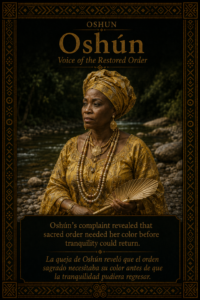
  • The Road Where Awó Fare Did Not Attend to Elegbara

    The Road Where Awó Fare Did Not Attend to Elegbara

    Introduction

    This sacred Ifá story, preserved under the Odù Oyekun Juani, teaches through the relationship between an Awó, his land, and the sacred presence of Elegbara.

    Awó Fare lives in the land of Ayare Lekun. But the source says that he does not attend to what is happening there, and he does not attend to Elegbara. Because of this neglect, Elegbara abandons him and goes to another land.

    That other land belongs to Badawa Ifá.

    Badawa Ifá always attends to Elegbara. He gives Elegbara everything he wants to eat. Because of this, his land is marked by abundance.

    The contrast is the foundation of the story.

    Awó Fare’s land is marked by misery because Elegbara has been neglected. Badawa Ifá’s land is marked by abundance because Elegbara is properly attended.

    This story is not only about poverty and prosperity. It is about sacred relationship, ritual attention, food, song, correction, and the return of Elegbara to a place where he had been forgotten.

    The story also preserves an opening Rezo, an Ebbó, two chants, and a final Note. These elements are central to the sacred structure of the story. They are preserved here for cultural and educational understanding, not as a public ritual procedure.


    Quick Takeaway

    STORY REFERENCE

    This retelling draws on a traditional account preserved in Caminos de Ifá, edited by Ernesto Valdés Jane under Proyecto Orunmila, a collaborative Cuban project dedicated to collecting, comparing, preserving, and publishing Osha-Ifá source materials.

    The narration, adaptation, commentary, and visual interpretation presented here are original to IFAStories.

    This article is offered for spiritual education, cultural preservation, and reflective study. It is not presented as ritual instruction, nor as a substitute for proper guidance from initiated elders within the tradition.

    IFAStories honors the source tradition, the ancestors, and the sacred responsibility of preserving these teachings with respect.


    Quick Takeaway

    Sacred presence must be maintained.

    Awó Fare’s land suffers because he does not attend to Elegbara. Badawa Ifá’s land has abundance because he does.

    The story teaches that restoration is possible, but what returns must still be cared for.


    The Story

    Rezo

    The story opens with this Rezo:

    Babawa Ifá Obá Mayire Elegbara Badawa Ifá Oyere Lekun Obá Yere Obá Lekun Elegbara Ifá Leye Beifa Ire Ashegun Eta Lese Elegbara Oun Bati Aye Aun Bati Awó Begbo Aun Laye Eluefare.

    Cautious Working Interpretation

    This Rezo is preserved as sacred source speech.

    A cautious working interpretation may be heard like this:

    Father of Ifá.
    Royal one of Mayire.
    Elegbara.
    Badawa Ifá, connected with the opening of the gate.
    King who opens.
    King of the doorway.
    Elegbara of Ifá, connected with life, movement, and the work of Ifá.
    Good fortune, victory, and triumph over opposition stand at the feet of Elegbara.
    He is with the world.
    He is with the Awó in the sacred bush.
    He is with the life and the road of Awó Fare.

    This is not a confirmed word-for-word translation. The Rezo is preserved in source-based Lukumí / Yorùbá liturgical spelling. Its full meaning should be reviewed by qualified practitioners and language authorities.

    The Rezo prepares the listener for the heart of the story. It places Elegbara at the doorway. It connects him with Ifá, the road, the Awó, good fortune, victory, and the life of Awó Fare.

    Before the story begins, Elegbara is already shown as central.

    What follows is the story of what happens when Awó Fare does not attend to him.


    The Narrative

    This is the road where Awó Fare did not attend to Elegbara.

    In this story, Obatalá was suffering because of what was happening in the land of Ayare Lekun.

    In that land lived Awó Fare.

    But Awó Fare did not attend to what was happening there. And he did not attend to Elegbara.

    Because of this, Elegbara abandoned him.

    Elegbara left Awó Fare and went to another land.

    That other land was where Badawa Ifá lived.

    Badawa Ifá always attended to Elegbara. He gave Elegbara everything he wanted to eat.

    And in that land, everything was abundant.

    The story places two lands beside one another.

    In Ayare Lekun, Awó Fare neglects Elegbara. In Badawa Ifá’s land, Elegbara is cared for.

    In one land, there is misery. In the other, there is abundance.

    One day, Obatalá went out onto the road.

    He carried his agogo.

    And as he walked, he sang:

    “Baba Ifá Nanire Oshabi Oshababa Ifá Nanire.”

    Cautious Working Interpretation

    A cautious working interpretation may be heard like this:

    Father Ifá carries blessing.
    The sacred gives birth to the sacred.
    And through Ifá, blessing returns to the road.

    This interpretation is provisional. The words Nanire, Oshabi, and Oshababa should remain source-preserved until reviewed by qualified practitioners and language authorities.

    Orunmila heard the song.

    He came out.

    He embraced Obatalá and asked him:

    “Father, what is happening to you?”

    Obatalá answered Orunmila.

    He told him about all the hardship Awó Fare was experiencing. He also told him that in the land where Awó Fare lived, there was great misery.

    Orunmila was carrying a rooster, seven goats, three chickens, ekú, eyá, and awadó.

    Then Orunmila said to Obatalá:

    “You will see how we are going to triumph, because Elegbara has never eaten ounko nor akukó. And you will see how we have what is needed to overcome Omó Badawa Ifá.”

    Orunmila understood what Elegbara had not received.

    He knew that the correction would require more than words. It would require addressing what had been absent.

    They arrived where Awó Fare was.

    Awó Fare was sad.

    But when Obatalá and Orunmila arrived, Awó Fare became happy despite his sadness.

    They told him:

    “From today, your land will be great, and nothing will be lacking for you. But in these lands, akukó and ounko must never be absent.”

    From that moment, the story gives a clear condition.

    Awó Fare’s land would become great. Nothing would be lacking. But akukó and ounko could never be absent there.

    Awo Fare gave moforibale to Orunmila.

    After this, they left for the land of Badawa Ifá.

    Each one carried an agogo.

    And as they traveled, they sang:

    “Awó Fare Niyere Ambo Badawa Aboshire Elegbara Badawa.”

    Cautious Working Interpretation

    A cautious working interpretation may be heard like this:

    Awó Fare is being called into blessing.
    We are coming toward Badawa.
    Badawa has served and cared for Elegbara.
    Elegbara is with Badawa.

    This chant must be understood in relation to the story. It names the three points of the conflict: Awó Fare, Badawa, and Elegbara.

    The exact translation requires practitioner and liturgical review.

    Elegbara heard this chant.

    He gave moforibale to Orunmila and said:

    “What a delicious smell you bring.”

    Orunmila answered:

    “This is food you have never eaten.”

    Elegbara asked:

    “Well, where is that delicious food?”

    Obatalá answered:

    “In the land that you abandoned.”

    Elegbara immediately replied:

    “Then I am going there with you.”

    They set out on the road.

    As they traveled, Orunmila kept restraining Elegbara. Elegbara kept passing his hand over Orunmila and smelling him.

    Elegbara was very happy.

    They arrived in the land of Awó Fare.

    Awó Fare immediately gave moforibale to Elegbara.

    Then Elegbara said to him:

    “I will stay with you in this land, so that you may become greater.”


    Final Note

    The final note says that after seven days, a goat is to be given to Elegbara.

    A piece of goat skin is always toasted.

    Everything Elegbara eats is given to him and distributed in different places.

    Elegbara must be refreshed with seven of his herbs, and oborí is named with obí and omí tuto.

    This final note preserves ritual importance and partial ritual details. It does not provide a complete public ritual manual.

    Any practical ritual explanation requires source verification and practitioner review.


    Story Structure

    The Neglected Relationship

    The story begins with Awó Fare living in Ayare Lekun.

    But he does not attend to what is happening in his land, and he does not attend to Elegbara.

    This is the root condition.

    The source gives the cause directly: because Awó Fare neglects Elegbara, Elegbara abandons him.

    The Two Lands

    The story then creates contrast.

    Awó Fare’s land is marked by misery.

    Badawa Ifá’s land is marked by abundance.

    The difference between the two lands is connected to how Elegbara is treated.

    Badawa Ifá always attends to Elegbara and gives him everything he wants to eat.

    This contrast teaches the story before any explanation is needed.

    Obatalá Carries the Suffering

    Obatalá suffers because of the condition connected to Awó Fare’s land.

    He goes onto the road carrying his agogo and singing.

    His chant brings Orunmila into the matter.

    This is important because the suffering of the land is not ignored by the sacred powers in the story.

    Obatalá carries the suffering onto the road.

    Orunmila Understands the Correction

    Orunmila hears Obatalá and receives the report of Awó Fare’s suffering.

    But Orunmila does more than recognize the problem.

    He understands what Elegbara has not received.

    He says that Elegbara has never eaten ounko or akukó.

    This is one of the most important details in the story. The correction is specific. It is not vague.

    The Promise and the Condition

    Awó Fare is told that from that day his land will become great and nothing will be lacking.

    But the promise comes with a condition.

    In that land, akukó and ounko must never be absent.

    This means the correction is not only about bringing Elegbara back once. It is about establishing the condition by which Elegbara’s favor and presence can remain.

    The Chant That Calls the Return

    When Orunmila, Obatalá, and the others go toward the land of Badawa Ifá, each one carries an agogo and they sing.

    The second chant names Awó Fare, Badawa, and Elegbara.

    Elegbara hears it. He smells what Orunmila is carrying. He asks where the food is.

    When Obatalá tells him it is in the land he abandoned, Elegbara chooses to return.

    Restoration with Obligation

    Elegbara returns to Awó Fare’s land.

    Awó Fare gives moforibale to Elegbara.

    Elegbara promises to stay with him so that Awó Fare may become greater.

    But the story does not end with restoration alone.

    It ends with responsibility.

    Akukó and ounko must not be absent in that land.


    Main Characters and Relationship Roles

    Awó Fare

    Awó Fare is the central human figure of the story.

    He is an Awó living in Ayare Lekun, but the source says that he does not attend to what is happening there, nor does he attend to Elegbara.

    His title alone does not keep Elegbara with him.

    The story shows that sacred responsibility must be maintained. Awó Fare’s land weakens when Elegbara leaves, and his future greatness depends on restoring and maintaining Elegbara’s favor.

    Elegbara

    Elegbara is the sacred presence whose attention, feeding, and favor affect Awó Fare’s land and future greatness.

    He should not be described as demonic, evil, horror-like, or as a fantasy trickster.

    Elegbara is active in the story.

    He leaves Awó Fare’s land. He remains with Badawa Ifá. He hears the chant. He smells the food. He asks where the food is. He chooses to return. He receives Awó Fare’s moforibale. And he promises to remain so that Awó Fare may become greater.

    In this story, Elegbara responds to treatment, food, song, recognition, and proper ritual care.

    Badawa Ifá

    Badawa Ifá is the contrast figure.

    Where Awó Fare neglects Elegbara, Badawa Ifá attends to him.

    Where Awó Fare’s land has misery, Badawa Ifá’s land has abundance.

    Badawa Ifá helps the reader understand what proper attention looks like in the story.

    Obatalá

    Obatalá is the sacred witness and mover of concern.

    The story says Obatalá was suffering because of the condition connected to Awó Fare’s land.

    He goes onto the road with his agogo and sings.

    His chant brings Orunmila into the matter.

    Obatalá does not correct the situation alone. He carries the suffering to Orunmila, whose knowledge can address the problem.

    Orunmila

    Orunmila is the sacred intelligence of correction.

    He hears Obatalá, receives the report of Awó Fare’s suffering, and understands what Elegbara has not received.

    His role is practical, ritual, and strategic. He identifies what has been absent and uses that missing element to restore Elegbara to the land Awó Fare had lost.

    Awo Fare

    Oluo Fare appears when he gives moforibale to Orunmila.

    This name should be preserved as it appears in the source. It may require later review to determine whether it is a title form, a variant of Awó Fare, or a distinct naming usage in the source.


    Human Conditions Revealed

    Neglect

    The central human condition is neglect.

    Awó Fare does not attend to what is happening in his land, and he does not attend to Elegbara.

    This neglect affects more than one private relationship. It affects the condition of the land.

    Misery and Abundance

    The story contrasts misery and abundance.

    Awó Fare’s land is marked by misery after Elegbara leaves.

    Badawa Ifá’s land is marked by abundance because he attends to Elegbara and gives him what he wants to eat.

    The teaching is carried through this contrast.

    Sacred Accountability

    Awó Fare’s mistake is specific.

    The story does not blame every hardship on ritual neglect. It says that in this road, Awó Fare had a responsibility toward Elegbara, and he failed to maintain it.

    This is sacred accountability, not general accusation.

    Restoration

    The story also shows that restoration is possible.

    Elegbara returns.

    Awó Fare gives moforibale.

    Elegbara remains so Awó Fare may become greater.

    But restoration does not erase responsibility. It creates continuing obligation.


    Moral and Spiritual Teachings

    This story teaches that sacred relationships are not automatic.

    Awó Fare is an Awó, but his title alone does not keep Elegbara with him. The relationship must be maintained.

    The story also teaches through contrast. Badawa Ifá gives Elegbara everything he wants to eat, and his land has abundance. Awó Fare does not attend to Elegbara, and his land has misery.

    The deeper teaching is not that every hardship comes from ritual neglect. The story gives one specific sacred situation.

    In this road, Awó Fare’s suffering is connected to his failure to attend to Elegbara. Because of that, the correction must address Elegbara directly.

    The story also teaches that correction requires specific knowledge. Orunmila understands that Elegbara has never eaten ounko or akukó. He recognizes what has been absent and uses that missing element to restore the relationship.

    Finally, the story teaches that blessing comes with obligation.

    Awó Fare’s land will become great. Nothing will be lacking. But akukó and ounko must never be absent there.

    The correction must become continuity.


    Symbols and Sacred Elements

    The Road

    The road is where Obatalá carries the suffering of the land into sacred motion.

    It is also the path through which Orunmila, Obatalá, and Elegbara move between lands.

    The road is where hidden suffering becomes revealed concern.

    The Agogo

    The Agogo is a traditional Yoruba bell or metal gong used to call attention, mark sacred presence, and announce spiritual movement.

    The agogo is carried by Obatalá and later by the group traveling toward Badawa Ifá’s land.

    It accompanies sacred song and marks movement, announcement, and ritual attention.

    Food

    Food is central to the story.

    Badawa Ifá gives Elegbara everything he wants to eat.

    Orunmila says Elegbara has never eaten ounko or akukó.

    The food draws Elegbara’s attention and becomes part of the continuing obligation in Awó Fare’s land.

    Akukó and Ounko

    Akukó and ounko are named as required elements that must never be absent in Awó Fare’s land.

    They are not decorative details. They are part of the warning and continuing ritual responsibility of this specific story.

    Moforibale

    Moforibale appears when Oluo Fare gives moforibale to Orunmila and later when Awó Fare gives moforibale to Elegbara.

    It marks reverence, recognition, humility, and proper relationship.

    The Rezo and Chants

    The Rezo and chants carry sacred speech through the story.

    The opening Rezo frames Elegbara’s importance before the narrative begins.

    Obatalá’s chant brings Orunmila into the matter.

    The second chant draws Elegbara’s attention and helps begin his return.

    The chants are not decorative. They move the story.


    Ritual and Ceremony Public Education Layer

    This story contains ritual material, but it does not provide a public ritual manual.

    The Ebbó names ritual materials. The final Nota gives partial ritual details connected to Elegbara. The story also names food, agogo, song, moforibale, and the condition that akukó and ounko must never be absent in Awó Fare’s land.

    For public education, the important point is not procedure.

    The important point is that Awó Fare’s neglected relationship with Elegbara must be corrected. That correction is shown through sacred attention, food, song, reverence, and continuing obligation.

    Any practical ritual explanation requires source verification and practitioner review.

    This article preserves the ritual importance of the story without teaching ritual procedure.


    Prayer, Rezo, Chant, and Sacred Speech Status

    This story contains one opening Rezo and two chants inside the narrative.

    The opening Rezo frames the story before the Patakín begins. It names Ifá, Elegbara, Badawa Ifá, royal authority, the gate or doorway, good fortune, victory, the world, the Awó, and the road of Awó Fare.

    The first chant belongs to Obatalá’s movement on the road:

    “Baba Ifá Nanire Oshabi Oshababa Ifá Nanire.”

    This chant brings Orunmila into the story. Obatalá sings, Orunmila hears, and the suffering of Awó Fare’s land becomes known.

    The second chant belongs to the movement toward Badawa Ifá’s land:

    “Awó Fare Niyere Ambo Badawa Aboshire Elegbara Badawa.”

    This chant draws Elegbara’s attention. He hears it, smells the food, and begins to ask where the food is.

    Because these lines are preserved in liturgical and source-based spelling, their meanings should be treated as cautious working interpretations, not confirmed literal translations.


    Cultural and Divinatory Context

    This story operates within a divinatory world where sacred relationship, food, song, land, obligation, and consequence are linked.

    It belongs to Oyekun Juani as preserved in the source.

    The story is not only about one man’s hardship. It is about the relationship between an Awó, his land, Elegbara, sacred food, song, and continuing responsibility.

    The final warning is important:

    Akukó and ounko must never be absent in that land.

    This instruction should remain tied to the story’s specific divinatory context. It should not be generalized into a universal public rule for everyone.


    When This Odù Appears

    When Oyekun Juani appears in relation to this story, it may point to neglected sacred responsibility, especially where a person has failed to attend to the force that supports their road, work, or land.

    It may warn that a condition of lack or disorder is connected to something that has not been properly maintained.

    It may also point to the need for correction through proper consultation, recognition, and ritual care.

    But this guidance must remain responsible.

    The story does not say that all hardship comes from ritual neglect. It shows one specific road in which Awó Fare’s hardship is connected to his failure to attend to Elegbara.

    When this story is used in divinatory reflection, the details should be handled by qualified practitioners, especially because the source preserves ritual materials and a final Nota.


    Modern Ethical Explanation

    Modern readers should hear this story with care.

    It should not be used to blame suffering people, families, priests, or communities in a broad or careless way.

    The story shows a specific sacred responsibility. Awó Fare did not attend to Elegbara. That failure affected his land.

    This is not a license to accuse every person who is suffering of neglecting ritual obligations.

    It is also not a statement that priests control every outcome.

    A priest is not a magician who controls all results. A person’s situation may involve many things: destiny, timing, consultation, sacrifice, discipline, community conditions, spiritual factors, and practical life decisions.

    But when a specific sacred duty belongs to a person, that duty must not be neglected.

    That is the balance of the teaching.


    What Must Not Be Misunderstood

    This story should not be reduced to a simple punishment formula.

    It should not be used to say that every hardship comes from ritual neglect.

    It should not be used to blame vulnerable people or suffering communities.

    Elegbara should not be described as demonic, evil, horror-like, or fantasy-based.

    Orunmila should not be reduced to a generic wise man.

    Obatalá should not be treated as a passive background figure.

    Badawa Ifá should not be treated as a villain who stole Elegbara. The source does not say Elegbara was stolen. It says Elegbara abandoned Awó Fare and went to another land where Badawa Ifá attended to him.

    The Ebbó and final Nota should not be turned into a public ritual manual.

    The Rezo and chants should not be treated as fully translated unless reviewed by qualified practitioners and language authorities.


    Reflection Questions

    1. What does the story reveal about the difference between having a sacred relationship and maintaining one?
    2. Why does the story contrast Awó Fare’s land with the land of Badawa Ifá?
    3. What role does Obatalá’s chant play in moving the story forward?
    4. Why is Orunmila’s knowledge of what Elegbara has not eaten so important?
    5. What does the warning about akukó and ounko reveal about restoration and continuing obligation?
    6. How can this story be read without turning ritual neglect into a simple punishment formula?
    7. Why should the Rezo and chants be preserved even when their exact translation requires review?
    8. What does the story teach about responsibility without turning that responsibility into general blame?
    9. Why should Elegbara not be framed as demonic, horror-like, or fantasy-based?
    10. How does the final Nota continue the ritual frame of the story?

    Conclusion

    The Road Where Awó Fare Did Not Attend to Elegbara teaches through loss, contrast, correction, and return.

    Awó Fare does not attend to Elegbara, and Elegbara leaves.

    Badawa Ifá attends to Elegbara, and abundance is found in his land.

    Obatalá carries the suffering of Awó Fare’s land into motion.

    Orunmila understands what Elegbara has not received and leads the correction.

    Elegbara returns, but the story does not end with return alone.

    It ends with responsibility.

    The food that brings Elegbara back must not be absent. The favor that returns must be cared for. The land that becomes great again must continue to honor the force that made that greatness possible.


    Downstream Summary Block

    Core Story Tension:
    Awó Fare neglects Elegbara, and Elegbara leaves his land.

    Core Ritual Dynamic:
    Elegbara returns through sacred song, food, recognition, and restored ritual attention.

    Core Character Dynamic:
    Awó Fare fails to attend. Badawa Ifá provides the contrast. Obatalá witnesses and carries the suffering. Orunmila understands the correction. Elegbara returns when properly recognized.

    Core Teaching:
    Sacred presence must be maintained. Restoration creates continuing obligation.

    Core Divinatory Warning:
    Akukó and ounko must never be absent in Awó Fare’s land.

    Prayer / Sacred Speech Status:
    The opening Rezo and two chants are preserved. All English meanings are cautious working interpretations requiring review.

    Ritual / Ceremony Boundary:
    Ritual materials and the final Nota are present, but no complete public ritual procedure is provided.

    Modern Ethical Flag:
    Do not universalize hardship as ritual neglect. Do not blame suffering people or communities. Preserve the specific sacred responsibility shown in the story.

    Terms Requiring Diacritic / Liturgical Review:
    Babawa, Mayire, Oyere Lekun, Leye Beifa, Begbo, Eluefare, Nanire, Oshabi, Oshababa, Niyere, Ambo, Aboshire, Elegbara, Elegbá, Orunmila, Obatalá, Ebbó, moforibale, Oluo Fare, Omó Badawa Ifá, ounko, akukó, oborí, obí, omí tuto.

    IFAStories Website Story Article Complete
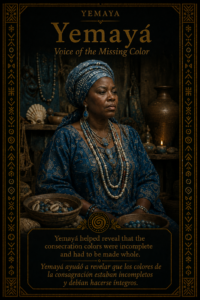
  • When Coconuts Were Denied to Orúnmila

    When Coconuts Were Denied to Orúnmila

    INTRODUCTION

    This story, preserved under the Odù Oyeku-Biroso, teaches through a simple but serious event: Orúnmila needs coconuts because his Guardian Angel has asked him to rogare his head with coconut. He has no money, so he goes to the plaza and asks the coconut sellers to give him the coconuts on credit.

    The sellers refuse him. But the source says they do more than refuse — they insult him.

    That detail matters.

    The story is not simply about business, credit, or coconuts. It is about how people respond when someone comes before them with a real need, especially when that need is connected to sacred responsibility.

    After being refused and insulted in the plaza, Orúnmila goes to an old man whom he knows. The old man receives him, listens to him, gives him the coconuts and the other things he needs, and even allows him to fulfill the request of his Guardian Angel in his own house.

    Then Ikú arrives.

    Ikú has come for the old man because his days have been fulfilled. But Orúnmila is present, and he speaks on the old man’s behalf. The old man’s goodness becomes his witness.

    This story teaches about service, dignity, sacred responsibility, gratitude, intercession, and consequence. It must be read with seriousness, but not with fear. Ikú is not horror in this story. Ikú is a sacred force moving within the order of destiny.


    STORY REFERENCE

    This retelling draws on a traditional account preserved in Caminos de Ifá, edited by Ernesto Valdés Jane under Proyecto Orunmila, a collaborative Cuban project dedicated to collecting, comparing, preserving, and publishing Osha-Ifá source materials.

    The narration, adaptation, commentary, and visual interpretation presented here are original to IFAStories.

    This article is offered for spiritual education, cultural preservation, and reflective study. It is not presented as ritual instruction, nor as a substitute for proper guidance from initiated elders within the tradition.

    IFAStories honors the source tradition, the ancestors, and the sacred responsibility of preserving these teachings with respect.


    QUICK TAKEAWAY

    When sacred need appears in ordinary form, the way people respond matters.

    The story does not condemn poverty. Orúnmila himself has no money. The deeper warning is against contempt, humiliation, and harshness toward someone who comes with a true need.

    The old man’s goodness becomes his witness. The sellers’ contempt becomes their burden.


    THE STORY

    One day, this sign came out for Orúnmila.

    Through this sign, his Guardian Angel asked him to rogare his head with coconut. But Orúnmila had no money.

    So he went to the plaza to ask if the coconut sellers would give him the coconuts on credit. He was trying to obtain what he needed to fulfill the instruction of his Guardian Angel.

    But the sellers refused him. They would not give him the coconuts on credit. And beyond refusing him, they insulted him.

    After this, Orúnmila went to see an old man whom he knew. The old man received him and told him to come inside.

    There, Orúnmila told him what had happened in the plaza. The good man listened. Then he gave Orúnmila the coconuts and the other things he needed to fulfill the request of his Guardian Angel.

    He even allowed Orúnmila to rogare his head there, in that same house.

    At that moment, someone knocked at the door.

    It was Ikú.

    Without hesitation, Orúnmila went out to meet Ikú.

    Ikú had come for the old man.

    Ikú said that the elder’s days had already been fulfilled. Ikú had not expected to find Orúnmila there.

    But Orúnmila pleaded for the old man.

    He asked Ikú not to take him, because the old man had been very good to him. Then Orúnmila spoke of the coconut sellers in the plaza, the ones who had refused him and insulted him when he was trying to fulfill the instruction of his Guardian Angel.

    In this way, Orúnmila convinced Ikú.

    Ikú left the old man in peace and took the coconut sellers.


    STORY STRUCTURE

    The Sign Appears

    The story begins when this sign comes out for Orúnmila. The source does not give a long divination procedure. It establishes that the sign appeared and that the instruction followed from there.

    This gives the story its sacred frame.

    Sacred Instruction

    Orúnmila’s Guardian Angel asks him to rogare his head with coconut. The coconut is not treated as an ordinary object in the story. It is connected to sacred instruction.

    Material Difficulty

    Orúnmila has no money. This is important because the story does not present his lack as wrongdoing. His poverty is not the failure. He still tries to fulfill what was asked of him.

    Conflict in the Plaza

    Orúnmila goes to the plaza and asks for the coconuts on credit. The sellers refuse him and insult him.

    This is where the moral weight begins to deepen. The issue is not only that they refuse. The source says they humiliate him.

    The Old Man’s Goodness

    The old man receives Orúnmila, listens to him, gives him what is needed, and allows the instruction of the Guardian Angel to be fulfilled in his house.

    The old man is not described as wealthy or powerful. He is simply shown as good.

    Ikú Arrives

    Ikú comes to the old man’s door because the old man’s days have been fulfilled. Ikú is not presented as random cruelty. Ikú comes with responsibility within the order of destiny.

    Orúnmila Intercedes

    Orúnmila speaks for the old man. He does not fight Ikú. He does not take life with his own hand. He gives testimony about the old man’s goodness.

    Sacred Consequence

    The old man is spared, and the coconut sellers are taken by Ikú. This must be understood carefully. The story should not be reduced to revenge or ordinary punishment logic. It is a sacred narrative consequence within this specific Odù story.


    MAIN CHARACTERS AND RELATIONSHIP ROLES

    Orúnmila

    Orúnmila is the central sacred figure of the story. He receives the sign, receives the instruction from his Guardian Angel, seeks the coconuts, suffers refusal and insult, receives help from the old man, and later intercedes when Ikú arrives.

    The story shows two movements in Orúnmila.

    First, Orúnmila is the one who must obey sacred instruction. He has no money, but he does not abandon what was asked of him.

    Second, Orúnmila becomes the one who intercedes. When Ikú comes for the old man, Orúnmila speaks on his behalf.

    First, Orúnmila needed help.
    Then, Orúnmila gives help.

    Guardian Angel

    The Guardian Angel gives the instruction that moves the story forward. The request to rogare the head with coconut is not casual. It creates the sacred obligation behind Orúnmila’s need.

    The source uses the Spanish religious register connected to “Ángel de la Guarda.” For this article, the term is rendered as Guardian Angel while preserving the meaning of the source.

    The Old Man

    The old man is the human helper in the story. He receives Orúnmila, listens to him, gives him the coconuts and other things he needs, and allows the request of the Guardian Angel to be fulfilled in his house.

    His importance is not based on status. The source does not present him as a priest, king, or wealthy man. His importance comes from his action.

    He opens the door.
    He listens.
    He helps.
    He gives dignity.

    Because of this, when Ikú comes, Orúnmila speaks for him.

    Ikú

    Ikú is the sacred death-force in the story. Ikú comes to take the old man because his days have already been fulfilled.

    Ikú should not be portrayed as horror, evil, or a monster. Ikú has a responsibility. Ikú is acting within the order of destiny.

    The story becomes more serious because Ikú is not acting randomly. Ikú has come with a duty. But when Ikú finds Orúnmila there, Orúnmila intercedes.

    The Coconut Sellers

    The coconut sellers are the collective group who refuse Orúnmila in the plaza.

    They should not be exaggerated into cartoon villains. A seller may have responsibilities. A seller may have limits. A seller may not always be able to give on credit.

    But the source says they did more than refuse. They insulted Orúnmila.

    That is where the moral weight rests — not in ordinary business boundaries, but in contempt and humiliation toward someone trying to fulfill a sacred instruction.


    HUMAN CONDITIONS REVEALED

    Material Lack

    Orúnmila does not have money. The story does not shame him for this. His lack of money is a condition, not a moral failure.

    Sacred Responsibility

    Orúnmila has been asked by his Guardian Angel to rogare his head with coconut. His need is therefore connected to spiritual responsibility, not ordinary desire.

    Refusal

    The sellers refuse him. This alone must be read carefully, because refusal is not always evil. People may have limitations.

    Humiliation

    The sellers insult him. This is what changes the moral weight of the event. The story warns against adding shame to another person’s burden.

    Hospitality

    The old man receives Orúnmila. Before giving him coconuts, he opens his house and listens. This act of receiving is part of his goodness.

    Gratitude

    When Ikú arrives, Orúnmila remembers what the old man did. The old man’s earlier kindness becomes something Orúnmila can speak for.

    Intercession

    Orúnmila stands between the old man and Ikú through speech, testimony, and spiritual authority. He does not act through violence.

    Consequence

    The story places the sellers under consequence because of the contempt they showed. This must be understood within the specific sacred frame of Oyeku-Biroso, not as a universal rule for ordinary life.


    MORAL AND SPIRITUAL TEACHINGS

    The story teaches that sacred instruction should be treated seriously. Orúnmila receives the instruction and seeks to fulfill it even though he has no money.

    It also teaches that poverty is not spiritual failure. Orúnmila lacks money, but he remains obedient to the instruction of his Guardian Angel.

    The deeper issue is contempt. The sellers do not only refuse him. They insult him. The story warns that humiliation can carry serious spiritual weight.

    A person may have boundaries. A person may have responsibilities. A seller may not always be able to give on credit. But the story teaches that even when one cannot give, one can still answer with dignity.

    The old man’s action teaches the value of hospitality. He does not perform a grand act. He receives Orúnmila, listens to him, gives what is needed, and allows the sacred instruction to be fulfilled in his home.

    The story also teaches that goodness may speak for a person later. When Ikú comes, the old man does not defend himself. Orúnmila speaks for him. His earlier goodness becomes his witness.

    The most sensitive teaching concerns the coconut sellers. Orúnmila tells Ikú not to take the old man and speaks of the sellers instead. This should not be taught as personal revenge. Orúnmila does not return to the plaza to harm them. He does not take justice into his own hands. Ikú had already arrived with a duty.

    This is not ordinary punishment logic. It is sacred narrative consequence within this Odù story.

    The ethical teaching is:

    A refusal can be honest, but humiliation is dangerous. A boundary can be necessary, but contempt can become a burden.


    SYMBOLS AND SACRED ELEMENTS

    Coconut

    The coconut is the named material needed for the head rogation. It is not decorative in the story. It becomes the object through which need, refusal, service, and consequence are revealed.

    The Head

    The head is the place requiring spiritual attention. In the story, the head represents the part of the person that must be aligned through the requested rogation.

    The Plaza

    The plaza represents public exchange, commerce, and social response. It is where Orúnmila’s need is refused and where insult appears.

    The plaza had what Orúnmila needed, but the plaza closed the road.

    The Old Man’s House

    The old man’s house represents reception, listening, hospitality, and protection. It becomes the place where the instruction of the Guardian Angel is fulfilled.

    The old man’s house also becomes the threshold where Ikú arrives and Orúnmila intercedes.

    The Door

    The door is an important symbol. The old man opens his door to Orúnmila. Later, Ikú comes to that same door.

    The doorway becomes the place where hospitality and destiny meet.

    Ikú

    Ikú represents the force of death, destiny, and appointed time. Ikú is not a horror figure in this story. Ikú comes with duty and responsibility.

    Oyeku-Biroso

    Oyeku-Biroso frames the story’s pattern: sacred instruction, lack, refusal, insult, hospitality, intercession, and consequence.


    RITUAL / CEREMONY PUBLIC EDUCATION LAYER

    This story contains ritual material, but it does not provide a ritual manual.

    The source says that this sign came out for Orúnmila and that his Guardian Angel asked him to rogare his head with coconut. It also says that other things were needed, but it does not name them.

    The story does not give a complete ritual procedure. It does not explain how to perform the head rogation. It does not list all articles. It does not provide step-by-step instruction.

    For public education, the important point is not procedure. The important point is that Orúnmila is trying to fulfill a sacred instruction, and the difficulty of obtaining the coconuts becomes the moral and spiritual test of the story.

    Any practical ritual explanation would require source verification and practitioner review.


    PRAYER / REZO / CHANT / SACRED SPEECH STATUS

    No explicit prayer, rezo, chant, or súyẹ̀rẹ̀ is preserved in this story segment as sacred speech text.

    Because no sacred speech is preserved, this article does not create one.

    Sacred force in the story is carried through the sign, the instruction of the Guardian Angel, the head rogation with coconut, the old man’s goodness, Orúnmila’s intercession, and the arrival of Ikú.


    CULTURAL AND DIVINATORY CONTEXT

    This story operates within a divinatory world where signs, sacred instruction, material need, human conduct, and consequence are linked.

    The source says that the sign came out for Orúnmila. From that point, his Guardian Angel asks him to rogare his head with coconut.

    This article avoids adding procedural details that are not in the source. It also avoids turning the story into a public ritual guide.

    The term Guardian Angel is used for the source’s Spanish religious register of Ángel de la Guarda. The term Ikú is used for the death-force that appears in the story, while recognizing that the source text uses Spanish wording for death.

    This rendering keeps the story aligned with IFAStories style while preserving the meaning of the source.


    WHEN THIS ODÙ APPEARS

    When Oyeku-Biroso appears in relation to this story, it may point to sacred instruction that must be treated seriously.

    It may indicate that a person has something important to fulfill but may face lack, delay, refusal, or public humiliation while trying to do it.

    It may also point to the importance of helping someone whose need is connected to sacred responsibility. The old man’s help appears simple, but it becomes spiritually important.

    The story may warn against contempt, harsh speech, and humiliating those who come with need.

    It should not be read as a fixed or mechanical prediction. The story does not say that every refusal brings death. It shows a specific pattern within this Odù: sacred need appears, one group refuses with insult, one person helps with goodness, Ikú arrives with duty, and Orúnmila intercedes.

    No additional ritual prescription should be added beyond what the source states.


    MODERN ETHICAL EXPLANATION

    This story contains a sensitive moral issue because Ikú takes the coconut sellers after Orúnmila speaks on behalf of the old man.

    This must be explained carefully.

    From a simple human point of view, a seller refusing credit does not deserve death. A seller may have responsibilities. A seller may have limits. A seller may not be able to give away what is being sold.

    So the teaching cannot be reduced to:

    “Those who refuse you should be punished.”

    That would be wrong and would make the story smaller than it truly is.

    The source gives another detail: the sellers did not only refuse. They insulted Orúnmila. They humiliated someone who was trying to fulfill a sacred instruction.

    That is where the moral weight rests.

    Not in business boundaries.
    Not in ordinary refusal.
    But in contempt.

    Even then, the story should not be taught as a model for revenge. Orúnmila does not return to the plaza to harm the sellers. He does not act violently. He does not take justice into his own hands.

    Ikú had already arrived. Ikú had already come with a duty. Orúnmila speaks within that sacred encounter.

    The consequence belongs to this specific Odù story and should be handled with humility.

    The ethical teaching is:

    The story does not tell us to punish those who refuse us. It tells us to be careful how we treat people when they come before us in need.


    WHAT MUST NOT BE MISUNDERSTOOD

    This story does not teach that poverty is spiritual failure. Orúnmila has no money, but he remains obedient.

    This story does not teach that every refusal is evil. A person may have limits and responsibilities.

    This story does warn against insult, humiliation, and contempt toward someone in need.

    This story does not teach revenge. Orúnmila does not take life with his own hand. Ikú has already arrived with a duty.

    This story does not present Ikú as horror, fantasy, or demonic force. Ikú is a sacred force of destiny and consequence.

    This story does not teach ritual procedure. It names the head rogation with coconut but does not explain how to perform it.

    This story does not contain a preserved prayer, rezo, chant, or súyẹ̀rẹ̀. No sacred speech should be invented for it.

    The old man should not be turned into a hidden priest or divine figure unless another source clearly states that. In this source, he is an old man whose goodness becomes spiritually important.


    REFLECTION QUESTIONS

    1. Why does the story begin with the sign coming out for Orúnmila before he goes to the plaza?
    2. What is the difference between Orúnmila’s lack of money and the sellers’ refusal?
    3. Why does the source’s detail that the sellers insulted Orúnmila matter so much?
    4. How does the old man’s hospitality change the direction of the story?
    5. Why should Ikú be understood as carrying responsibility rather than acting as horror?
    6. How does Orúnmila intercede for the old man?
    7. Why should this story not be taught as revenge?
    8. What is the difference between an honest boundary and contempt?
    9. How can a community help without humiliating those who come with need?
    10. How does the story show that goodness may speak for a person later?

    CONCLUSION

    When Coconuts Were Denied to Orúnmila teaches that sacred responsibility may appear through ordinary things: coconuts, a request for credit, a closed market, an old man’s open door.

    Orúnmila’s lack of money is not condemned. His obedience remains visible. He still seeks what is needed to fulfill the instruction of his Guardian Angel.

    The sellers’ failure is not simply that they refuse. The deeper issue is that they insult and humiliate him.

    The old man, however, receives him. He listens. He gives what is needed. He allows the instruction to be fulfilled in his house.

    When Ikú comes, Orúnmila speaks for him.

    The story is serious, but it should not be sensationalized. It does not teach revenge. It teaches that goodness, service, and respect can carry protection in ways no one sees at first.

    In Oyeku-Biroso, the plaza closed the road.
    The old man opened his house.
    Ikú came with a duty.
    Orúnmila answered with intercession.

    And the story remembers that the way we respond to someone’s need may become part of our own destiny.

  • The Mother of Rain: Afi dudu kpa Oju and the Hidden Destiny of Rain

    The Mother of Rain: Afi dudu kpa Oju and the Hidden Destiny of Rain

    ODÙ CONTEXT

    The Mother of Rain is a traditional Ifá story preserved under the source Odù label Oyeku-Bo-Owanrin.

    The story tells of Afi dudu kpa Oju, whose name may be understood as She Who Covers the Face with Darkness. She is remembered as the mother of Ojo / Rain.

    At the beginning of the story, Afi dudu kpa Oju is seeking a child. Her condition is brought before Ifá through divination. She is instructed to make sacrifice, including an offering to Esu. After making the sacrifice, she becomes pregnant and later gives birth to Rain.

    But Rain is not first received with honor. His charcoal-black appearance causes others to mock him. They assume he will not accomplish anything meaningful.

    The story then reveals that what the people mocked was not emptiness, shame, or failure. It was the first sign of Rain’s destiny. Through Esu’s preparation, Rain’s black attire becomes the darkness before rain, the soap foam becomes cloud, and the cudgels become showers.

    This story teaches that destiny may be hidden before it is recognized. It also teaches that sacred preparation may begin before the public understands what is being prepared.


    STORY REFERENCE

    This article is respectfully adapted from a traditional Ifá story attributed to C. Osamaro Ibie in the IFISM: The Complete Works of Orunmila tradition.
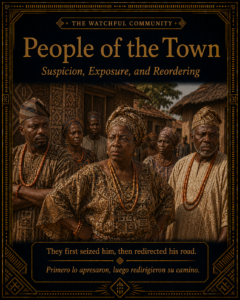
    Within IFAStories, the account is presented as a sacred Ifá narrative for spiritual education, cultural preservation, and reflective study. The article keeps the story readable for a modern audience while preserving its ritual boundaries, divinatory frame, and sacred speech status.

    The prayer/chant preserved in the story is included with a cautious interpretive translation. Because the source spelling appears in liturgical or OCR-transcribed form, the translation should be treated as a prayer gloss, not a verified word-for-word academic translation.

    INTRODUCTION

    There are stories where destiny is hidden before it is recognized.

    There are stories where the child who is mocked carries a force greater than the eyes that judged him.

    The Mother of Rain is one of those stories.

    It tells of Afi dudu kpa Oju, the mother of Rain, whose longing for a child brings her into the sacred order of divination. Through sacrifice and offering, the road to motherhood is opened. But when her child is born, the people do not understand what they are seeing.

    They see a charcoal-black child and laugh.

    They see darkness and assume emptiness.

    They see appearance but do not see destiny.

    The story then turns toward revelation. Esu prepares Rain with black attire, soap foam, and cudgels. These signs become the visible form of Rain’s power: darkness before rain, cloud before rain, and showers that strike the earth.

    This is not only a story about a mocked child becoming great. It is a story about longing, divination, sacrifice, sacred preparation, misunderstood appearance, and the moment when hidden destiny becomes impossible to deny.


    QUICK TAKEAWAY

    Destiny may be hidden beneath what the world misunderstands.

    Divination sees before the public sees. Sacrifice prepares before recognition arrives. Esu equips what has not yet been understood. And Rain, once mocked, becomes the force that touches everyone.


    THE STORY

    The story opens in heaven.

    There, Oyeku-Bo-Owanrin made divination for Afi dudu kpa Oju, who was known as the mother of Rain.

    Before Rain was born, there was longing.

    Before manifestation, there was need.

    Before the world could see the greatness of the child, divination had already opened the road.

    At that time, Afi dudu kpa Oju was desperate to have a child. Her condition was not treated as ordinary desire alone. It entered the sacred order of divination.

    The divination gave a specific path.

    Afi dudu kpa Oju was instructed to make sacrifice with a black sheep, a black garment, plenty of soap, and plenty of cudgels. She was also instructed to give a black he-goat to Esu.

    These materials must be heard carefully. They are not decorative objects. They are not a public ritual recipe. They belong to the source-specific ritual structure of this Odù and this story.

    A sacred chant is preserved near the opening of the narrative. It appears after the divination statement and seems to invoke the Odù itself through sound-play around Oyeku-Bo-Owanrin.

    Afi dudu kpa Oju made the sacrifice.

    After making the sacrifice, she became pregnant.

    The story then preserves a divinatory continuation. When this Odù appears at Ugbodu, the person should be told to make a similar sacrifice in order to avoid the risk of childlessness.

    This instruction is serious, but it remains source-specific. The story does not provide a complete ritual procedure, and it should not be turned into public ritual instruction.

    Afi dudu kpa Oju then gave birth to a child called Ojo — Rain.

    But the child was not welcomed with understanding.

    Her contemporaries ridiculed her. They mocked her for having a charcoal-black child, a child they believed would never do anything tangible.

    They saw the child’s color, but they did not see his destiny.

    The child’s destiny was hidden inside the very sign they misunderstood.

    Afi dudu kpa Oju is not remembered only because she gave birth to Rain. She is remembered because she carried longing before manifestation. She endured ridicule before recognition. And she lived to see the hidden destiny of her child revealed before the same community that doubted him.

    Then the role of Esu becomes important.

    Esu did not appear as a random trickster. Esu had received the prescribed black he-goat. After the sacrifice, Esu prepared Rain for manifestation.

    He dressed Rain in black attire.

    He rubbed Rain’s face with the foam of soap.

    He gave Rain several cudgels.

    What Esu placed on Rain would later become visible to everyone.

    The black garment would become the darkness before rain.

    The foam of soap would become the gathered cloud.

    The cudgels would become the showers that strike the earth.

    What had first appeared as ritual material became cosmic sign. What had been hidden in divine preparation became visible in the world.

    Then Rain began to show his power.

    Heaven darkened.

    The people wondered what he was about to do.

    The cloud gathered.

    The foam on his face began to show.

    And Rain began to strike all and sundry with the cudgels in his hand.

    He struck friends and foes.

    Old and young.

    High and low.

    Day and night.

    Trees and animals.

    Rain did not choose only those who welcomed him.

    Rain touched all.

    The story explains the signs directly.

    The darkness before Rain represents the black dress with which Esu clothed him.

    The cloud before Rain represents the soap foam on his face.

    The showers of Rain represent the cudgels in his hand.

    Darkness.

    Cloud.

    Showers.

    The child once mocked became the force that no one could ignore.

    At that stage, Afi dudu kpa Oju rejoiced. She understood that she had given birth to a great child.

    The same child people had mocked was now revealed as a force whose reach extended beyond the household, beyond the community, and beyond the voices that once laughed.

    The story says that because people laughed at Rain, it is said that Rain has no friends. And because Rain beats everyone indiscriminately, his force is still felt by all.

    Friends and foes.

    Old and young.

    High and low.

    Trees and animals.

    Rain’s greatness is not private revenge. It is not the anger of a rejected child. It is the revelation of a destiny whose power belongs to the wider world.

    Rain does not fall only on those who understand him. Rain does not fall only on those who welcome him.

    Rain reaches everyone.

    The story closes with further divinatory instruction. At divination for a woman looking for a child, she should be told to make sacrifice. The source says she would give birth to a child whose fame would be felt throughout the face of the earth, and whose greatness would shake the community in which he lives and beyond.

    This is preserved as source-specific divinatory guidance. It is not a public ritual manual. It belongs to the sacred frame of this Odù and this story.


    SACRED CHANT PRESERVED IN THE STORY

    A sacred chant is preserved near the opening of the story.

    It appears after the statement that Oyeku-Bo-Owanrin made divination in heaven for Afi dudu kpa Oju.

    The source preserves the chant, but no verified translation is supplied. Because these lines are preserved in liturgical and source-based spelling, they require review before final pronunciation, performance, or strict word-for-word translation.

    The chant is kept here in a working received form:

    Ifá Òyè Wọ̀-rìn-mí. Òyè Wọ̀n-rìn-mí. Òyè Wọ̀n-rìn-jẹ́.

    Òyè, bí ó bá balẹ̀, wọ́n rìn mí. Kí ó má wọ̀n ìrìn mí.

    Bí ó bá lè wọ̀n, ìrìn sí inú.

    Kí ó má wọ̀n ìrìn sí inú.

    À kò lè tórí wí pé ó wọ̀n ìrìn mí.

    À kò lè sọ wí pé ó wọ̀n ìrìn sí inú.

    Kí a máa pè é ní Èjì-Òyè.


    SUGGESTED INTERPRETIVE PRAYER TRANSLATION

    A careful interpretive meaning may be heard this way:

    The chant calls upon Ifá and Òyè.

    It invokes Òyè Wọ̀-rìn-mí, the force whose road moves with me.

    It invokes Òyè Wọ̀n-rìn-mí, the force whose movement presses upon my journey.

    It invokes Òyè Wọ̀n-rìn-jẹ́, the force whose movement carries destiny into being.

    It asks that the road not become difficult.

    It asks that the journey remain open.

    It asks that the inner path not be closed.

    It asks that no one be able to say:

    My journey has been blocked.

    It asks that no one be able to say:

    The road within me has been sealed.

    And it preserves the sacred name:

    Èjì-Òyè.

    Let us not name you the Twofold Honor without understanding your power.


    PRAYER TRANSLATION NOTE

    This translation should be treated as a cautious interpretive prayer gloss. It is shaped for meaning, narration, and spiritual understanding.

    It should not be treated as a final literal translation until the source spelling, Yoruba pronunciation, and liturgical context are reviewed.

    No additional prayer, chant, rezo, or sacred verse has been invented for this article.


    HOW THE CHANT CONNECTS TO THE STORY

    The chant prepares the whole story.

    It speaks of a road that must not be blocked.

    It speaks of an inner path that must remain open.

    This reflects the journey of Afi dudu kpa Oju. Before Rain is born, her road to motherhood is obstructed. Through divination and sacrifice, Ifá opens that road.

    But the chant also speaks to Rain.

    Rain’s destiny is hidden inwardly before the world can recognize it outwardly. The people see darkness and ridicule him. But Esu prepares the hidden road of Rain’s destiny to become visible.

    The black attire becomes the darkness before rain.

    The soap foam becomes cloud.

    The cudgels become showers.

    So the chant is not separate from the story. It is the spiritual doorway of the story.

    Before Rain can fall, the road must open.

    Before destiny can be recognized, the inner path must first be prepared.


    STORY STRUCTURE

    1. Initial Longing

    The story begins with Afi dudu kpa Oju seeking a child. Her longing gives the story its opening movement.

    This is important because the story does not begin with public ridicule. It begins with need, vulnerability, and the desire for motherhood.


    2. Divination

    Oyeku-Bo-Owanrin makes divination in heaven for Afi dudu kpa Oju.

    Her condition enters the sacred order of Ifá. This means that before the child appears to the world, Ifá has already opened the road.

    Before the people judge the child’s appearance, sacred order has already recognized his coming.


    3. Sacrifice and Offering

    The divination leads to specific sacrifice instruction: black sheep, black garment, soap, and cudgels. It also includes a black he-goat to Esu.

    These details matter because they later become connected to Rain’s manifestation.

    The story does not present these items as decoration. It presents them as part of the ritual and symbolic structure through which Rain’s destiny becomes visible.


    4. Pregnancy

    After Afi dudu kpa Oju makes the sacrifice, she becomes pregnant.

    This is the first visible result of the divinatory instruction. The road that had been closed begins to open.


    5. Birth and Misrecognition

    Afi dudu kpa Oju gives birth to Ojo / Rain.

    But the child is not understood. His charcoal-black appearance becomes the basis for ridicule.

    The people see darkness and assume failure. They see appearance but do not see destiny.


    6. Esu’s Sacred Preparation

    Esu prepares Rain for manifestation.

    He dresses Rain in black attire.

    He places soap foam on Rain’s face.

    He gives Rain several cudgels.

    Esu does not erase Rain’s darkness. He gives that darkness its form of manifestation.

    The people see a dark child and laugh.

    Esu sees Rain.


    7. Manifestation

    Rain begins to show his power.

    Heaven darkens.

    Clouds gather.

    Showers fall.

    Rain touches friends and foes, old and young, high and low, day and night, trees and animals.

    Rain does not fall only on those who understood him. Rain does not avoid those who mocked him.

    Rain reaches everyone.


    8. Recognition

    Afi dudu kpa Oju rejoices because she understands that she has given birth to a great child.

    Her joy is not simple pride. It is recognition.

    She understands that what she carried was great.


    9. Divinatory Continuation

    The story closes by returning to divination.

    When this Odù appears at Ugbodu, the person is instructed to make sacrifice to avoid the risk of childlessness.

    When divination is made for a woman looking for a child, she is advised to make sacrifice. The source says she would give birth to a child whose fame would be felt across the earth.

    This instruction remains source-specific. It should not be turned into public ritual procedure.


    MAIN CHARACTERS AND RELATIONSHIP ROLES

    Afi dudu kpa Oju

    Afi dudu kpa Oju is the mother of Rain.

    Her name may be understood as She Who Covers the Face with Darkness.

    She carries the story’s opening need: the desire for a child. Her role is not passive. She receives the divinatory instruction, makes the sacrifice, becomes pregnant, gives birth, endures ridicule, and later rejoices when the child’s greatness is revealed.

    She is not only the mother of Rain in a biological sense. She is the one who carries the atmosphere before Rain enters the world.

    She carries longing.

    She carries sacrifice.

    She carries pregnancy.

    She carries ridicule.

    She carries the hidden stage before manifestation.


    Ojo / Rain

    Ojo, or Rain, is the child born after sacrifice.

    At first, he is judged by appearance. His charcoal-black form becomes the reason others dismiss him.

    But Rain’s identity is larger than public perception. His darkness is not a defect. It is not shame. It is not emptiness.

    It is the first sign of Rain.

    Before rain falls, the sky darkens. Before the showers come, the face of heaven is covered. The people mocked the very sign that announced who the child was.

    Rain becomes a force whose reach extends to friends and foes, old and young, high and low, day and night, trees and animals.


    Esu

    Esu receives the prescribed black he-goat and later prepares Rain.

    He dresses Rain in black attire.

    He rubs Rain’s face with soap foam.

    He gives Rain cudgels.

    Esu must not be reduced to a generic trickster. In this story, his function is preparatory and transformative.

    He does not erase what Rain is. He reveals what Rain already carries.

    The people judge appearance.

    Esu activates destiny.


    The Contemporaries

    The contemporaries represent social misrecognition.

    They see the child’s appearance but do not understand his destiny. Their ridicule helps explain the saying that Rain has no friends.

    But the story should not be reduced to revenge against mockers.

    Their failure is a failure of sight. They judge too early. They see darkness and assume emptiness.


    The Woman Looking for a Child

    The woman looking for a child appears in the final divinatory instruction.

    She represents the later use of the story in divination. Her presence shows that this story is not only remembered as narrative. It continues as guidance within a sacred divinatory frame.


    HUMAN CONDITIONS REVEALED

    Desire for a Child

    The story begins with the desire for a child. Afi dudu kpa Oju’s longing is the human condition that brings the story into motion.


    Vulnerability Before Fulfillment

    Before Rain is born, the mother stands in a place of need.

    The story shows that destiny may begin in vulnerability before it becomes visible.


    Social Misrecognition

    The contemporaries judge the child by appearance.

    They assume that his charcoal-black body means he is incapable. This reveals the danger of judging destiny too early.


    Hidden Destiny

    Rain’s greatness is hidden at first.

    The community does not see it. The story teaches that what is prepared through divination and sacrifice may not be immediately understood by others.


    Sacred Preparation

    Rain’s destiny does not manifest without preparation.

    Divination, sacrifice, offering, chant, and Esu’s guidance all belong to the story’s movement from hiddenness to manifestation.


    Communal Impact

    Rain affects everyone.

    The story makes this clear by naming friends and foes, old and young, high and low, day and night, trees and animals.

    Rain’s reach is not selective.


    MORAL AND SPIRITUAL TEACHINGS

    1. Public Sight Is Not Always Sacred Sight

    The world may judge too early.

    But Ifá sees the road before the world understands the traveler.


    2. Destiny May Be Hidden Before It Is Recognized

    Rain’s greatness is hidden inside the very appearance that people mock.

    The child’s darkness is not a defect. It is the first sign of Rain.


    3. Sacrifice Prepares Manifestation

    The sacrifice is not decorative.

    The story connects sacrifice to pregnancy, birth, and Rain’s later manifestation.


    4. Esu’s Role Must Be Respected

    Esu is not presented as demonic, villainous, or merely mischievous.

    In this story, Esu receives offering and later prepares Rain for public manifestation.


    5. What Is Mocked May Become Necessary

    The child who is dismissed becomes the force everyone eventually feels.

    The mocked child becomes necessary to the world.


    6. Rain Is Not Private Revenge

    Rain touches everyone.

    Rain does not fall only on those who understood him. Rain does not avoid those who mocked him.

    Rain’s greatness is larger than social approval or rejection.


    7. Rain Is Force and Renewal

    At first, Rain is felt as force.

    The sky darkens.

    Clouds gather.

    Showers strike the earth.

    But after the rain passes, the world is changed.

    The dust settles.

    The heat cools.

    The soil receives water.

    Seeds begin to open.

    Trees are refreshed.

    Animals drink.

    Life continues.

    Rain is not only a force that strikes. Rain is a force that renews.


    SYMBOLS AND SACRED ELEMENTS

    Black Sheep

    The black sheep is part of the sacrifice material.

    Its role belongs to the ritual preparation before conception.


    Black Garment / Black Dress / Black Attire

    The black garment appears first as part of the sacrifice instruction and later as the attire Esu places on Rain.

    The source links it to the darkness before rain.


    Soap and Soap Foam

    Soap appears among the sacrifice materials.

    Soap foam later appears on Rain’s face.

    The source links this foam to the cloud before Rain.

    The foam should not be read as whitening the child or correcting his color. It does not cover shame. It reveals cloud.


    Cudgels

    Cudgels appear as part of the sacrifice materials and later as the instruments Esu gives to Rain.

    The source links the showers of Rain to the cudgels in his hand.


    Black He-Goat

    The black he-goat is the offering prescribed for Esu.

    This detail must remain visible because Esu later plays a central role in preparing Rain.


    Charcoal-Black Appearance

    The child’s charcoal-black appearance becomes the basis for ridicule.

    But it is also part of the story’s larger movement from misunderstood appearance to revealed force.

    The child’s darkness belongs to the sky.


    Darkness, Cloud, and Showers

    These are not random weather signs in the story.

    The source explains them through Rain’s black dress, soap foam, and cudgels.

    They form the visible body of Rain’s manifestation.


    RITUAL / CEREMONY PUBLIC EDUCATION LAYER

    This story contains divination, sacrifice, offering to Esu, sacred speech, ceremony-origin explanation, and divinatory continuation.

    The ritual instruction is specific: Afi dudu kpa Oju is told to sacrifice with a black sheep, black garment, soap, and cudgels, and to give a black he-goat to Esu.

    The story then says that after making the sacrifice, she becomes pregnant.

    For public education, the important point is not to turn this into a ritual recipe. The story preserves ritual importance, but it does not teach ritual procedure.

    It shows what the sacrifice means within the story: it responds to the condition of child-seeking and prepares the way for the birth and manifestation of Rain.

    The offering to Esu also matters. Esu later prepares Rain with the very signs that explain darkness, cloud, and showers.

    This means the offering is not incidental to the story’s movement.


    PUBLIC BOUNDARY STATEMENT

    This story preserves ritual importance, but it does not teach ritual procedure.

    It shows what sacrifice, offering, sacred speech, and sacred preparation mean within the story.

    It does not provide a complete ritual manual.

    Any practical ritual explanation would require source verification and practitioner review.


    PRAYER / REZO / CHANT / SACRED SPEECH STATUS

    A sacred chant is preserved in this story.

    The source preserves the chant, but no verified translation is supplied.

    Because these lines are preserved in liturgical and source-based spelling, their meanings should be heard as requiring review. They should not be treated as strict word-for-word translation, and no translation should be finalized without source and pronunciation review.

    The chant functions as sacred speech at the doorway of the narrative. It belongs to the divination opening and should remain connected to that moment.

    The interpretive translation provided in this article is a public-facing gloss for meaning. It is not a final liturgical translation.


    CULTURAL AND DIVINATORY CONTEXT

    This story operates inside a divinatory frame.

    A condition appears: Afi dudu kpa Oju desires a child.

    Divination is made.

    Sacrifice is prescribed.

    The sacrifice is completed.

    Pregnancy follows.

    The story also includes Ugbodu guidance. When this Odù appears at Ugbodu, the person is to be told to make a similar sacrifice to avoid the risk of childlessness.

    This must be handled carefully. The source gives the instruction, but it does not provide a complete public procedure.

    The story closes with divination guidance for a woman looking for a child. Again, this is source-specific instruction, not a general public ritual prescription.

    Culturally, the story also requires careful handling of Esu. Esu is not treated here as a demon or villain. His role is connected to offering, preparation, and the manifestation of Rain.


    WHEN THIS ODÙ APPEARS

    When this Odù appears, this story may point to a child-seeking condition, the risk of childlessness, or a destiny that has not yet become visible.

    It may also warn about judging by appearance too early.

    In the story, the child who is mocked becomes Rain, a force whose reach extends beyond the household and community.

    Within this specific Odù and divinatory frame, the story places emphasis on sacrifice, offering to Esu, and sacred preparation. However, the ritual details must not be turned into public procedure from this story alone.

    This story may also point to a person, child, calling, or destiny that appears misunderstood at first but later affects many people.

    That reading should remain connected to the story’s own structure:

    Divination.

    Sacrifice.

    Esu’s preparation.

    Manifestation.

    Recognition.

    Divinatory continuation.


    MODERN ETHICAL EXPLANATION

    This story includes sensitive themes: child-seeking, the risk of childlessness, public ridicule, appearance, and ritual instruction.

    It should be heard with care.

    It should not be used to shame people experiencing childlessness, fertility struggles, grief, family pressure, or health concerns.

    It should not be used as medical advice.

    It should not be used to ridicule a child or stigmatize dark appearance.

    It should not be used to turn ritual materials into public instruction.

    The traditional warning remains serious, but it belongs within the specific Odù and divinatory frame of this story.

    As a contemporary reflection, the story may also speak to the way many children are judged before their gifts are understood.

    Some are judged by skin color.

    Some by language.

    Some by poverty.

    Some by disability.

    Some by cultural background.

    Some by temperament.

    Some by the traditions they carry from their elders.

    A child may be called strange, difficult, dark, slow, awkward, or unlikely to succeed.

    But this story warns us:

    A child is not empty because society cannot yet understand the form their destiny takes.

    Rain was not rejected because he lacked destiny.

    Rain was rejected because the people could not recognize destiny when it appeared in a form they had already decided to dismiss.


    WHAT MUST NOT BE MISUNDERSTOOD

    This story should not be reduced to “a mocked child becomes great.”

    It should not be reduced to revenge against those who laughed.

    It should not be used to blame people facing childlessness.

    It should not be used as medical advice.

    It should not be turned into public ritual instruction.

    It should not present Esu as demonic, villainous, or merely a trickster.

    It should not treat Rain as a fantasy warrior or horror figure.

    It should not treat ritual materials as decorative props.

    The black garment, soap, cudgels, and black he-goat all belong to the story’s ritual and symbolic structure.

    It should not erase the chant’s uncertainty.

    The sacred speech remains review-required before final liturgical use, narration, or public performance.


    PART 2 — FOCUSED STORY ANALYSIS

    The Mother of Rain

    The story of Afi dudu kpa Oju — She Who Covers the Face with Darkness — the mother of Rain, is not only a story about a child who was mocked.

    It is a story about what is carried before destiny is revealed.

    The weight before release.

    The darkness before rain.

    The mother who bears the hidden stage.

    The child the world misunderstands.

    And Esu’s guidance, which helps hidden destiny enter visible form.

    Before rain falls, the sky gathers weight.

    Clouds begin to collect.

    The face of heaven becomes covered.

    The air changes.

    The atmosphere grows heavy.

    And only after that heaviness does the rain come.

    This is also the path of Afi dudu kpa Oju.

    Her name may be understood as She Who Covers the Face with Darkness.

    But in this story, darkness is not emptiness.

    It is not shame.

    It is not failure.

    It is the covering before manifestation.

    It is the hidden weight before destiny is released.

    Afi dudu kpa Oju carries longing.

    She carries the pain of wanting a child.

    She carries the seriousness of divination.

    She carries the sacrifice.

    She carries pregnancy.

    She carries the public ridicule that comes after her child is born.

    And she carries a destiny that others cannot yet understand.

    Her role is not small.

    She is not only the mother of Rain in a biological sense.

    She is the one who carries the atmosphere before Rain enters the world.

    She carries the hidden stage.

    She carries the darkness before the sky opens.

    The story begins with longing, not with ridicule.

    Before anyone mocks the child, the mother is already seeking a road.

    Her condition enters the sacred order of divination.

    Oyeku-Bo-Owanrin makes divination for her.

    This means that before the child appears to the world, Ifá has already opened the road.

    Before the people judge the child’s appearance, the sacred order has already recognized his coming.

    This is one of the first teachings of the story:

    Public sight is not always sacred sight.

    The world may judge too early.

    But Ifá sees the road before the world understands the traveler.

    When Afi dudu kpa Oju gives birth to Ojo — Rain — the people do not welcome him with understanding.

    They see his charcoal-black appearance.

    They ridicule him.

    They believe he will never do anything tangible.

    They see darkness and call it nothing.

    They see blackness and assume emptiness.

    But the story reveals that they are wrong.

    The child’s darkness is not a defect.

    It is not a curse.

    It is not something to be corrected.

    It is the first sign of Rain.

    Before rain falls, the sky darkens.

    Before the showers come, the face of heaven is covered.

    The people mocked the very sign that announced who the child was.

    This is where the story can also speak to the modern world.

    As a contemporary reflection, we may hear this teaching in the way many children are judged before their gifts are understood.

    Some are judged by skin color.

    Some by language.

    Some by poverty.

    Some by disability.

    Some by cultural background.

    Some by temperament.

    Some by the traditions they carry from their elders.

    A child may be called strange.

    Difficult.

    Dark.

    Slow.

    Awkward.

    Unlikely to succeed.

    But the story warns us:

    A child is not empty because society cannot yet understand the form their destiny takes.

    Rain was not rejected because he lacked destiny.

    Rain was rejected because the people could not recognize destiny when it appeared in a form they had already decided to dismiss.

    Then Esu enters the movement of the story.

    And the timing matters.

    Esu enters after the child has already been mocked.

    This is important.

    Esu does not cause the rejection.

    The rejection comes from the people’s limited sight.

    Here, Esu’s role can be understood as protective because he does not allow Rain to remain only as the mocked child.

    He guides.

    He prepares.

    He opens the road of manifestation.

    In many Ifá narratives, Esu appears where destiny needs movement.

    Where a road must open.

    Where misunderstanding must be exposed.

    Where something hidden must be brought into visibility.

    In this story, Esu prepares Rain to become readable to the world according to his destiny.

    He does not erase what Rain is.

    He reveals what Rain already carries.

    Esu dresses Rain in black attire.

    He places soap foam upon Rain’s face.

    He gives Rain cudgels.

    These actions are not random.

    They do not change Rain into something else.

    They reveal what Rain already is.

    The black attire becomes the darkness before rain.

    The soap foam becomes the gathered cloud.

    The cudgels become the showers that strike the earth.

    Esu does not erase Rain’s darkness.

    He gives that darkness its form of manifestation.

    The people see a dark child and laugh.

    Esu sees Rain.

    The people see difference and assume failure.

    Esu sees a force that must be prepared.

    The people judge appearance.

    Esu activates destiny.

    The foam on Rain’s face is especially important.

    It should not be read as whitening the child.

    It should not be read as correcting his color.

    The foam does not cover shame.

    The foam reveals cloud.

    It works with the darkness, not against it.

    Darkness becomes the covered sky.

    Foam becomes the cloud.

    Cudgels become showers.

    Rain becomes release.

    This is the reversal at the heart of the story.

    What people mocked becomes meaningful.

    What they rejected becomes visible.

    What they thought was emptiness becomes the sign of a force that will reach everyone.

    Rain moves through hiddenness.

    Divination.

    Sacrifice.

    Birth.

    Ridicule.

    Esu’s preparation.

    Manifestation.

    Recognition.

    And teaching.

    This movement matters because destiny does not always arrive fully understood.

    Some destinies pass through hiddenness.

    Some pass through ridicule.

    Some pass through preparation.

    Some pass through disruption before their gift is recognized.

    Rain’s early rejection does not define the fullness of his destiny.

    When Rain begins to show his power, heaven darkens.

    Clouds gather.

    Showers fall.

    Rain touches friends and foes.

    Old and young.

    High and low.

    Day and night.

    Trees and animals.

    Rain does not fall only on those who understood him.

    Rain does not avoid those who mocked him.

    Rain reaches everyone.

    This is why Rain’s greatness is not private revenge.

    Rain is not simply punishing those who laughed.

    Rain is revealing a force too large to be controlled by public opinion.

    Rain is impartial.

    Rain is not socially owned.

    Rain cannot be controlled by friendship, status, age, rank, or approval.

    Rain falls because Rain is Rain.

    The story says that because people laughed at Rain, Rain has no friends.

    This does not only mean loneliness.

    It means Rain is beyond social favoritism.

    Rain does not belong to one group.

    Rain does not serve only those who praise him.

    Rain does not ask who mocked him and who welcomed him before falling.

    Rain touches all.

    And because Rain touches all, everyone must eventually recognize him.

    When we follow the symbol of Rain beyond the moment of impact, the meaning deepens.

    At first, Rain is felt as force.

    The sky darkens.

    Clouds gather.

    Showers strike the earth.

    People feel the rain.

    But after the rain passes, the world is changed.

    The dust settles.

    The heat cools.

    The soil receives water.

    Seeds begin to open.

    Trees are refreshed.

    Animals drink.

    Life continues.

    So Rain is not only a force that strikes.

    Rain is a force that renews.

    Rain’s destiny is not only to be noticed by those who mocked him.

    Rain’s destiny is to nourish the world that once failed to understand him.

    This is one of the most beautiful teachings of the story:

    Rain is first experienced as disruption.

    But its deeper gift is renewal.

    The mocked child becomes necessary.

    The child who was dismissed becomes the one whose presence allows life to continue.

    As a contemporary reflection, this also gives the story a powerful cultural meaning.

    Rain is not born outside tradition.

    His arrival is prepared through divination, sacrifice, sacred chant, and Esu’s guidance.

    In modern society, Rain can represent the child who carries older traditions into a new time.

    A child may inherit ancestral customs.

    Traditional language.

    Sacred stories.

    Family discipline.

    Spiritual memory.

    Cultural values.

    At first, the modern world may call these things old.

    Strange.

    Dark.

    Outdated.

    Unnecessary.

    But the story teaches that tradition does not have to trap the child in the past.

    Tradition can prepare the child for the future.

    The black garment, the soap foam, and the cudgels begin as ritual materials.

    But later, they become weather signs.

    The old form becomes living movement.

    Tradition does not remain behind the child.

    Tradition enters the child.

    And through the child, tradition becomes rain for a new world.

    A culture survives when its children are not forced to choose between the ancestors and the future.

    The child can be rooted in the old road and still bring new rain.

    The child can carry what came before and still nourish what is coming.

    At the moment Rain’s greatness is revealed, Afi dudu kpa Oju rejoices.

    Her joy is not simple pride.

    It is recognition.

    She understands that what she carried was great.

    She carried longing.

    She carried darkness.

    She carried pregnancy.

    She carried ridicule.

    She carried the burden of a child others did not understand.

    Now she sees that her burden was not empty.

    What she carried in silence becomes the rain that reaches everyone.

    Her darkness becomes atmosphere.

    Her burden becomes release.

    Her child becomes renewal.

    The Mother of Rain teaches that darkness may be the first covering of blessing.

    It teaches that public judgment can be blind.

    It teaches that the child society mocks may carry a force the world will one day need.

    It teaches that Esu can guide hidden destiny into visible form.

    It teaches that tradition, when carried properly, does not imprison the future.

    It prepares the future.

    And it teaches that Rain does not come only to strike.

    Rain comes to renew.

    They saw a dark child and laughed.

    They did not know the child’s darkness belonged to the sky.

    They did not know the foam would become cloud.

    They did not know the cudgels would become showers.

    They did not know the child they mocked would become the force that touched everyone.

    And when the rain stopped, the world was not the same.

    The dust had settled.

    The soil had opened.

    The trees had drunk.

    The animals had returned.

    The seeds had remembered their purpose.

    And the mother who carried the darkness finally saw what the darkness had been preparing all along.


    REFLECTION QUESTIONS

    1. Why does the story begin with divination before the birth of Rain?
    2. What does Afi dudu kpa Oju’s desire for a child reveal about need, destiny, and sacred preparation?
    3. Why is Esu’s role essential to the structure of the story?
    4. How do the black garment, soap foam, and cudgels connect the sacrifice to Rain’s later manifestation?
    5. What does the ridicule of the charcoal-black child reveal about public misrecognition?
    6. Why does the story say Rain has no friends?
    7. Why should Rain’s indiscriminate reach not be reduced to revenge?
    8. How does Rain move from force to renewal?
    9. What does this story teach about children whose gifts are misunderstood?
    10. What ritual boundaries must be respected before this story is used in public teaching?
    11. What parts of the source still require review before narration, performance, or public release?

    CONCLUSION

    The Mother of Rain teaches that destiny may be hidden before it is revealed.

    Afi dudu kpa Oju seeks a child, receives divination, performs sacrifice, and gives birth to Rain. Yet the child’s first appearance is misunderstood.

    The story does not stop at ridicule.

    Esu prepares Rain, and Rain’s power becomes visible through darkness, cloud, and showers.

    What was mocked becomes the very force that touches all.

    But Rain is not only a force that strikes.

    Rain is also renewal.

    Rain cools the earth.

    Rain settles the dust.

    Rain opens the soil.

    Rain nourishes seeds, trees, animals, and life itself.

    For readers, the lesson is not simply that the mocked will triumph. The deeper teaching is that sacred preparation, divination, sacrifice, and destiny may unfold before the public understands what is happening.

    This story must therefore be read with respect for its ritual boundaries, its sacred speech, its source-specific divinatory frame, and its ethical responsibility toward children, mothers, appearance, and spiritual tradition.


    FINAL TEACHING SEAL

    Destiny may be hidden beneath what the world misunderstands.

    Divination sees before the public sees.

    Sacrifice prepares before recognition arrives.

    Esu equips what has not yet been understood.

    And Rain, once mocked, becomes the force that touches everyone.

  • The Marital Experience of Oyeku-bi-Irosun

    The Marital Experience of Oyeku-bi-Irosun

    ODÙ CONTEXT

    This story belongs to the sacred stream of Oyeku-bi-Irosun, where marriage, rivalry, public testing, humiliation, divination, offering, and restoration become central teachings.

    The story begins with a warning. The son of this Odù may face repeated difficulty in marriage, especially when another man is also seeking the woman he loves. Because of this, the source warns that he should not enter a contest for a woman’s hand in marriage.

    At the center of the story is Oyeku-bi-Irosun, an Ifá priest and diviner. His sacred knowledge is tested in public. A trader presents wealth as proof of his worth. Oyeku-bi-Irosun presents divinatory insight. The woman at the center of the story challenges him with a question about her deceased father, and when his answer appears impossible, she dismisses him.

    The story then turns toward ritual correction. Oyeku-bi-Irosun returns to Ikin, receives instruction to give a he-goat to Esu, and the narrative moves through Èṣù’s intervention, death, revival, sacred speech, and public confirmation.

    This story must be read carefully. It contains sensitive themes: marriage, rivalry, death, revival, and source language about “rightful asset.” A responsible reading must preserve the traditional warning without using the story to blame women, control relationships, or turn sacred instruction into modern possession language.


    STORY REFERENCE

    This story is respectfully adapted from the Òyèkú Méjì / Oyekun Meyi section of IFISM: The Complete Work of Orunmila by Mr. C. Osamaro Ibie.
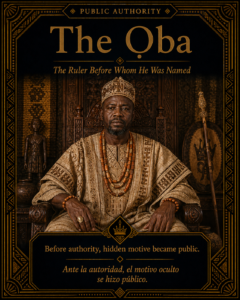
    Within IFAStories, the account is presented as a sacred Ifá narrative for spiritual education, cultural preservation, and reflective study.

    This adaptation preserves the traditional meaning of the story while shaping the narration, structure, and commentary for a modern educational audience. It is offered with respect for Ifá, Yoruba sacred knowledge, and the ancestral wisdom carried through Odù.

    The focused analysis in this article also reads the story through the ethics of Ifá consultation. The story is not treated only as a marriage rivalry narrative. It is also presented as a teaching about the responsibility of the questioner, the responsibility of the Awó, the danger of turning sacred consultation into public testing, and the role of Èṣù in carrying rejected warning toward consequence and correction.

    Ritual and ceremony elements are named only as they appear in the source narrative. They are included for public education and cultural understanding, not as public ritual instructions or a complete procedure.


    INTRODUCTION

    Some Ifá stories teach through open warning. Others teach through humiliation, correction, and the return of truth.

    The Marital Experience of Oyeku-bi-Irosun is not simply a story about two men competing for one woman. It is a sacred narrative about what happens when affection becomes a contest of pride, wealth, public proof, and spiritual misrecognition.

    Oyeku-bi-Irosun loves a woman and seeks to marry her. A trader also seeks her hand. Instead of allowing the matter to remain private, the woman creates a public test between the two men. The trader presents money. Oyeku-bi-Irosun presents divinatory ability.

    Then she asks a question designed to test the limits of his knowledge: will she see her father that day, even though her father has already died?

    Oyeku-bi-Irosun divines and says that before she sleeps, she will see her father. Because this seems impossible, she rejects him publicly and declares him unfit to marry her.

    But the story does not end with humiliation. Oyeku-bi-Irosun returns to Ikin. He receives ritual instruction. He gives a he-goat to Esu. Èṣù intervenes, the earlier divination is fulfilled, and the woman herself later becomes the witness who confirms what had been spoken.

    This is why the story must be handled with care. It speaks about marriage rivalry, sacred consultation, the responsibility of the questioner, the responsibility of the diviner, and the danger of turning sacred truth into public performance.


    QUICK TAKEAWAY

    When relationship becomes rivalry, sacred truth can be misjudged by public pride and visible proof.

    In this Odù, correction comes through divination, offering, Èṣù’s intervention, sacred speech, and the restoration of witnessed truth.


    THE STORY

    One characteristic given for this Odù is that its son may face repeated difficulty in marriage. For this reason, when he discovers that another man is also seeking the hand of the woman he loves, he is warned not to contest for her in marriage.

    Oyeku-bi-Irosun’s first marriage was marked by unhappiness. He met a woman, loved her deeply, and asked to marry her. Later, he discovered that another man, a trader, was also seeking the same woman.

    The woman informed both men separately that she would hold a special ceremony in three days and invited each of them to attend.

    On the appointed day, Oyeku-bi-Irosun and the trader met at her house. She introduced them to one another and stated that both had been her lovers. She then said the time had come to decide which of them was fit to become her husband.

    She asked both men to present their qualifications.

    The trader declared that he had wealth and that money could provide what she needed. Oyeku-bi-Irosun declared that he was a diviner who could see and reveal hidden matters.

    To test them, the woman asked the trader to put down whatever amount he could afford. He placed down one thousand bags of money.

    Then, knowing that her father was already dead, she turned to Oyeku-bi-Irosun and said that her father had promised to see her that day. She asked him to confirm whether she would truly see her father.

    Oyeku-bi-Irosun divined and told her that before she slept that day, she would indeed see her father.

    The woman challenged him. She said that he could not see anything, because her father had long been dead. She dismissed him as incompetent and declared him unfit to marry her.

    When Oyeku-bi-Irosun returned home, he consulted his Ikin to know why he had suffered such disgrace from his lover. He was advised to give a he-goat to Esu, and he did so immediately.

    Afterward, Esu transformed himself into a young, handsome, light-complexion man and went to the woman’s house. There he found the woman playing Ayo with the trader.

    When she saw the handsome young man, she invited him to play Ayo with her.

    The young man replied that he was in a hurry to reach the next town. The woman persuaded him not to leave and told the trader to leave her place, saying that she had now seen the man she wanted to marry.

    The young man told her not to dismiss her fiancé, because he himself was not ready to marry. He then said that she did not appear to have the qualifications of a woman fit to be his prospective wife.

    When she asked what those qualifications were, he said that such a woman should be fatherless and capable of removing the last remaining fruit from the top of an apple tree.

    The woman immediately said that she had no father. Since the young man had seen an apple tree at the entrance to the town, she pointed to it and agreed to pluck the remaining fruit.

    She climbed the tree. As she stretched out her hand to pluck the apple, Esu blinked his eye at her. She fell from the tree and died instantly.

    The people then remembered that the Ifa priest had predicted that she would see her father that day. The trader-lover left.

    Esu returned to Oyeku-bi-Irosun and told him that the woman had died.

    Oyeku-bi-Irosun said that his honor and dignity would not fully appear unless the woman was brought back to life, so that she herself could explain how she saw her father and then marry him.

    Esu advised him to go and revive her himself, since he knew what to do.

    Oyeku-bi-Irosun went with his Oroke and found the people preparing for the woman’s burial. He stopped the burial arrangements and asked them to allow him to bring her back to life.

    He instructed them to sit her up. Then he pointed his Oroko at her and spoke the chant.

    Almost immediately, the woman woke, and the people rejoiced.

    Oyeku-bi-Irosun asked whether she had seen her father, and she answered that she had. She then rose, embraced him, and declared him her husband.

    She became the first wife of Oyeku-bi-Irosun and gave birth to three children: Ifatuga, Ifayemi, and Ifawale.


    SACRED CHANT PRESERVED IN THE STORY

    The story preserves the chant spoken during the revival scene:

    Ahunji, ahunji, ahunji,
    Baaba sun sejirìn,
    Ahunji, ahunji, ahunji

    The source provides this translation:

    Arise, arise, arise,
    Wake up from sleep,
    ‘Cause one wakes up after sleeping,
    Wake up, wake up, wake up.

    Because these lines are preserved in liturgical and source-based spelling, their meanings should be heard as cautious prayer glosses, not strict word-for-word translations, unless a verified literal translation is provided.

    This article does not invent any additional prayer, rezo, chant, or súyẹ̀rẹ̀.


    DIVINATORY INSTRUCTION PRESERVED IN THE STORY

    At Ugbodu, the neophyte should be advised not to contest with any man for the hand of a woman.

    When he begins wooing a woman for marriage, he should immediately offer a he-goat to Esu in order to avoid embarrassing rivalry.

    At ordinary divination, the person should be advised to offer a he-goat to Esu in order to avoid unwelcome contest over what the source describes as his rightful asset.

    This final instruction requires careful modern handling. It should not be used to describe a woman, spouse, or romantic partner as property. In this article, the phrase is preserved as source language and interpreted through the wider divinatory warning: do not let anger, rivalry, or public defeat cause a person to abandon what truly belongs to their path.


    STORY STRUCTURE

    Initial Condition

    The story begins by identifying a marital difficulty associated with this Odù. The son of Oyeku-bi-Irosun may face problems in marriage, especially when another man is also seeking the same woman.

    Warning

    The source gives the warning before the main event unfolds: he should not contest with another man for a woman’s hand in marriage.

    This warning frames the entire story.

    Desire and Rivalry

    Oyeku-bi-Irosun loves the woman and wants to marry her. The conflict begins when a trader is also interested in her.

    The relationship becomes a contest.

    Public Testing

    The woman creates a public selection between the two men.

    The trader presents wealth. Oyeku-bi-Irosun presents divinatory ability. The story contrasts visible material capacity with sacred knowledge.

    Divination and Rejection

    The woman tests Oyeku-bi-Irosun by asking whether she will see her deceased father.

    After divination, he says she will see him before sleeping. Because this seems impossible, she dismisses him.

    Ritual Correction

    After being humiliated, Oyeku-bi-Irosun returns to his Ikin.

    The correction begins when he is instructed to give a he-goat to Esu, and he does so.

    Èṣù’s Intervention

    After the offering, Esu enters the story in transformed appearance. His intervention redirects the conflict and leads to the moment where the earlier divinatory statement is remembered.

    Death, Revival, and Public Truth

    The woman falls from the apple tree and dies. Oyeku-bi-Irosun later comes with Oroke / Oroko, speaks the preserved chant, and she wakes.

    Her testimony confirms that she saw her father.

    Divinatory Continuation

    The story ends by turning the event into instruction for Ugbodu and ordinary divination. The warning against marital contest and the offering to Esu are preserved as guidance.


    MAIN CHARACTERS AND RELATIONSHIP ROLES

    Oyeku-bi-Irosun

    Oyeku-bi-Irosun is the Ifa priest and diviner at the center of the story.

    His role is not only that of a suitor. He is also a sacred authority whose divinatory knowledge is tested, rejected, and later confirmed.

    His importance lies in how he responds to humiliation. He does not resolve the matter through argument alone. He returns to Ikin, receives instruction, makes the offering, and later restores truth through the revival and testimony of the woman.

    The Woman

    The woman is the figure around whom the marital rivalry forms. She invites both men, tests their qualifications, and challenges Oyeku-bi-Irosun’s divinatory ability.

    She should not be read as a symbol of female evil, nor should her death be treated as something to celebrate. Her role is more complex.

    She represents human judgment when it depends too heavily on visible proof, immediate evidence, or public comparison. After revival, she becomes the witness who confirms the divination.

    The Trader

    The trader is the rival suitor. He represents material capacity in the story because he presents money as proof of suitability.

    The story does not say that wealth is evil. Rather, it shows that wealth alone cannot answer the deeper spiritual question raised by divination.

    Esu / Èṣù

    Esu receives the he-goat offering and then intervenes.

    In this story, Esu functions as a sacred boundary figure and corrector. His intervention comes after ritual instruction has been followed.

    He exposes the instability of the contest and alerts Oyeku-bi-Irosun when the woman has died.

    The Woman’s Father

    The woman’s father is deceased before the story’s central test. His presence becomes the proof-point of the divination.

    The woman believed she could not see him because he was dead, yet after revival she confirms that she did.

    Ikin

    Ikin is the sacred divination object consulted by Oyeku-bi-Irosun after humiliation.

    In the story, Ikin marks the return to sacred diagnosis after social disgrace.

    Oroke / Oroko

    Oroke / Oroko is the ritual object used in the revival scene.

    The source uses both spellings, so the term requires later review before final orthographic standardization.

    The People

    The people function as witnesses.

    They prepare for burial, witness the revival, and rejoice when the woman wakes. Their presence makes the restoration public.


    HUMAN CONDITIONS REVEALED

    Rivalry

    The main human condition is rivalry. Two men seek the same woman, and the situation becomes a public contest.

    The story warns that such rivalry can produce humiliation and danger.

    Public Comparison

    The woman asks each man to prove his worth. This creates a social arena where wealth and sacred knowledge are compared.

    Misrecognition of Sacred Knowledge

    Oyeku-bi-Irosun’s divination is rejected because it seems impossible.

    The story shows that sacred knowledge may be true before the public understands it.

    Humiliation

    Oyeku-bi-Irosun is dismissed as incompetent. This disgrace becomes the reason he returns to Ikin for guidance.

    Attraction to Surface Appearance

    When Esu appears in handsome form, the woman’s judgment shifts again.

    The story uses this moment to show how appearance can redirect desire.

    Death and Restoration

    The woman’s death and revival must be understood within sacred narrative logic, not horror.

    Her revival allows the truth to be witnessed by the person whose testimony matters most.

    Public Confirmation

    The story does not leave Oyeku-bi-Irosun’s restoration as rumor.

    The woman herself confirms that she saw her father.


    MORAL AND SPIRITUAL TEACHINGS

    Marriage Should Not Become a Contest of Pride

    The story warns that marriage pursuit becomes dangerous when it turns into rivalry, public humiliation, or a competition over status.

    Sacred Knowledge Should Not Be Mocked Because It Is Not Immediately Visible

    Oyeku-bi-Irosun’s divination appears impossible at first, but the story later confirms it.

    The teaching is that hidden truth may not be recognized immediately.

    Wealth Is Not the Same as Wisdom

    The trader’s money is visible and impressive, but it does not settle the deeper spiritual matter.

    Humiliation Should Return One to Sacred Order

    After being disgraced, Oyeku-bi-Irosun consults Ikin.

    The story points toward sacred diagnosis, not emotional reaction.

    Ritual Correction Changes the Direction of the Story

    The he-goat offering to Esu is not decorative. It is the turning point that precedes Esu’s intervention.

    Sacred Speech Participates in Restoration

    The chant appears at the moment of revival.

    In this story, sacred speech is part of the restoration.

    Truth Requires Witness

    Oyeku-bi-Irosun wants the woman herself to testify.

    Public disgrace requires public confirmation.


    SYMBOLS AND SACRED ELEMENTS

    Ikin

    Narrative Role: Consulted after humiliation.
    Spiritual Significance: Return to Ifá diagnosis when human judgment has failed.

    He-Goat

    Narrative Role: Offering material given to Esu.
    Spiritual Significance: Marks the ritual exchange that precedes sacred intervention.

    Esu’s Transformation

    Narrative Role: Esu appears in another form and enters the conflict.
    Spiritual Significance: Shows how appearance, attraction, and judgment can become unstable.

    Ayo Game

    Narrative Role: The woman is playing Ayo with the trader when Esu arrives.
    Spiritual Significance: Provides the social setting where the intervention begins.

    Apple Tree and Remaining Fruit

    Narrative Role: The woman climbs the tree to pluck the fruit and falls.
    Spiritual Significance: The test involving the tree becomes the path through which the earlier divination is fulfilled.

    Oroke / Oroko

    Narrative Role: Used during the revival.
    Spiritual Significance: A sacred implement connected to restoration in this story. The exact spelling requires later review.

    Ahunji Chant

    Narrative Role: Spoken during the revival.
    Spiritual Significance: Sacred speech connected to awakening and restoration.

    Money

    Narrative Role: The trader’s proof of worth.
    Spiritual Significance: Represents visible material capacity in contrast with hidden divinatory knowledge.


    RITUAL / CEREMONY PUBLIC EDUCATION LAYER

    This story preserves ritual importance, but it does not teach ritual procedure.

    It shows what ritual, offering, divination, and sacred speech mean within the story. It does not provide a complete ritual manual. Any practical ritual explanation would require source verification and practitioner review.

    The Special Ceremony

    The woman says she will hold a special ceremony and invites both men.

    The source does not explain this ceremony as a complete ritual. Publicly, it should be understood as the setting where the suitor contest becomes visible.

    Divination Concerning the Father

    Oyeku-bi-Irosun performs divination when the woman asks whether she will see her deceased father.

    The story does not explain how the divination is performed. Its public meaning is that hidden truth is revealed before it is recognized by others.

    Consultation of Ikin

    After being humiliated, Oyeku-bi-Irosun consults Ikin.

    This shows the return to sacred diagnosis. The story names the consultation but does not teach the procedure.

    He-Goat Offering to Esu

    The he-goat offering to Esu is prescribed after Oyeku-bi-Irosun consults Ikin. He performs the offering immediately.

    The same offering appears again in the closing divinatory instruction.

    This offering matters because Esu’s intervention follows it in the story. However, the source gives the material and purpose, not a complete ritual sequence.

    Revival with Oroke / Oroko and Chant

    The revival scene includes partial ritual details: Oyeku-bi-Irosun goes with Oroke, asks the people to sit the woman up, points Oroko at her, and recites the chant.

    This is sacred story material, not a public ritual guide. The article preserves the ritual importance but does not teach how to perform the rite.


    PRAYER / REZO / CHANT / SACRED SPEECH STATUS

    A chant is preserved in this story. It appears during the revival scene, when Oyeku-bi-Irosun points Oroko at the woman and speaks the words that precede her waking.

    Ahunji, ahunji, ahunji,
    Baaba sun sejirìn,
    Ahunji, ahunji, ahunji

    The source provides this translation:

    Arise, arise, arise,
    Wake up from sleep,
    ‘Cause one wakes up after sleeping,
    Wake up, wake up, wake up.

    Because these lines are preserved in liturgical and source-based spelling, their meanings should be heard as cautious prayer glosses, not strict word-for-word translations, unless a verified literal translation is provided.

    This article does not invent any additional prayer, rezo, chant, or súyẹ̀rẹ̀.


    CULTURAL AND DIVINATORY CONTEXT

    This story operates as more than a memory of a marital conflict. It becomes divinatory instruction.

    The opening warning says that the son of this Odù should not contest for a woman’s hand when another man is also seeking her. The closing returns to this same point and gives instruction for Ugbodu and ordinary divination.

    The role of Esu is also important. In this story, Esu receives the he-goat offering and then intervenes. His role is sacred, corrective, and tied to the ritual exchange that precedes his intervention.

    The story also preserves the relationship between divination and public truth. Oyeku-bi-Irosun’s statement is rejected in the moment, but later the woman herself confirms it.


    WHEN THIS ODÙ APPEARS

    When this Odù appears, this story may warn about marriage rivalry, public embarrassment, and contests over affection or recognition.

    It can point to a situation where someone’s worth is being judged through wealth, status, appearance, or immediate proof, while deeper spiritual truth is being ignored.

    Within this specific Odù and divinatory frame, the story warns against entering a rivalry that turns relationship into public humiliation. It also suggests that when disgrace occurs, the answer is not ego-driven reaction but return to sacred consultation and proper correction.

    The story may also point to the danger of surrendering what truly belongs to one’s path out of anger or defeat. However, this must be handled carefully. The warning must not be used to describe a woman, spouse, or romantic partner as property.

    The ritual prescription preserved in the story is the he-goat offering to Esu, but the source does not provide complete procedure. Public readers should understand the ritual importance without treating the story as a ritual manual.


    MODERN ETHICAL EXPLANATION

    This story contains sensitive themes: marriage, gender, rivalry, death, revival, and source language about “rightful asset.” A modern reader must not flatten the story into a lesson about possession or entitlement.

    The story does not teach that a woman is property. It does not teach that a man is entitled to a woman because he has performed divination or sacrifice. It also should not be read as saying that the woman deserved death because she rejected Oyeku-bi-Irosun.

    A careful reading shows that the deeper issue is the public contest itself.

    The woman creates a test where wealth and sacred knowledge are placed in competition. Oyeku-bi-Irosun enters the rivalry despite the Odù’s warning. The trader relies on visible wealth. The situation becomes unstable because marriage is turned into public proof and humiliation.

    The traditional warning remains serious: within this Odù, rivalry around marriage can become dangerous.

    But the modern ethical reading must also be clear: this story should never be used to control a partner, justify coercion, shame a person for choosing differently, or describe a spouse as an object.

    When conflict, danger, or harm exists in any modern relationship, safety, consent, communication, and responsible counsel matter.


    WHAT MUST NOT BE MISUNDERSTOOD

    This story should not be reduced to “one man wins the woman.”

    It should not be used to blame women as a group.

    It should not frame the woman’s death as deserved punishment.

    It should not treat the trader as evil simply because he has money.

    It should not present Esu through hostile, monstrous, or horror-like framing.

    It should not treat Oroke / Oroko as a fantasy object.


    REFLECTION QUESTIONS

    1. What does the story reveal about the danger of turning marriage into a public contest?
    2. How does the trader’s wealth contrast with Oyeku-bi-Irosun’s divinatory knowledge?
    3. Why does Oyeku-bi-Irosun return to Ikin after humiliation?
    4. What role does Esu play after the he-goat offering?
    5. Why is it important that the woman herself confirms that she saw her father?
    6. How can modern readers preserve the traditional warning without treating the woman as property?
    7. What ritual details are present in the story, and what details remain incomplete?
    8. How does sacred speech function in the revival scene?

    CONCLUSION

    The story of Oyeku-bi-Irosun teaches that rivalry can cloud judgment, and public humiliation can distort the recognition of sacred truth.

    In this Odù, marriage becomes dangerous when it is handled as a contest of pride, wealth, appearance, and proof.

    The story does not resolve disorder through argument alone. It turns back to divination, offering, Esu’s intervention, and sacred speech. Through these, truth becomes visible and dignity is restored.

    Its final wisdom is careful and serious: do not allow relationship, pride, or anger to pull sacred destiny into rivalry. What belongs to one’s path must be handled with restraint, ritual order, and witnessed truth.


    PART 2 — FOCUSED STORY ANALYSIS

    The Marital Experience of Oyeku-bi-Irosun

    The deeper teaching of this story is not only marriage rivalry.

    On the surface, two men seek the same woman. One is a trader, whose strength is visible wealth. The other is Oyeku-bi-Irosun, an Awó, whose strength is Ifá knowledge.

    But the story is not simply asking which man is better. It is showing what happens when Ifá consultation is pulled into competition, embarrassment, and public testing.

    Before the woman asks her question, the Odù has already warned Oyeku-bi-Irosun. The son of this Odù may face difficulty in marriage. When another man is also seeking the woman he loves, he is warned not to contest for her.

    That warning is important. The danger does not begin when Èṣù blinks his eye. The danger begins when rivalry enters the road of marriage, and the warning of Ifá is not fully guarded.


    When Sacred Consultation Becomes Public Testing

    The woman places both men before her. The trader presents wealth. Oyeku-bi-Irosun presents divinatory knowledge.

    In that moment, Ifá is treated as something that must prove itself before witnesses.

    This is one of the central warnings of the story. Ifá is not entertainment. It is not a public trick. It is not a weapon for romantic victory. It is not meant to be placed beside money as if sacred knowledge and visible wealth are the same kind of proof.

    The person who comes before Ifá carries responsibility. They may come with fear, confusion, uncertainty, or a need for guidance. But they should not come with mockery. They should not ask a sacred question as a trap. They should not use divination to embarrass the Awó.

    The Awó also carries responsibility. The Awó must protect the seriousness of consultation. The Awó must recognize when a question is being shaped by pride, pressure, seduction, or public challenge.

    Not every question is simple. Some questions carry hidden meaning. Some questions touch death, family, destiny, and consequence.


    The Question About the Father

    This is why the woman’s question matters.

    She asks Oyeku-bi-Irosun whether she will see her father that day. But she already knows her father is dead.

    So her question is not sincere guidance-seeking. It is a test. She is using the death of her father to expose Oyeku-bi-Irosun before the people.

    Oyeku-bi-Irosun tells her that she will see her father before she sleeps. To the woman, this sounds impossible. Her father is dead, so she believes the Awó has failed.

    But the answer carries warning. The words are not wrong. They are dangerous because they point toward something she does not yet understand.

    The woman hears the answer as something to mock. She does not receive it as something to question carefully. She does not ask what the answer means. She does not recognize the weight of a death-related statement spoken through Ifá.

    That is where the story turns. Ifá has not failed. The warning has been rejected before its meaning becomes visible.


    Responsibility on Both Sides

    Still, the story does not place all responsibility on the woman alone.

    Oyeku-bi-Irosun is humiliated, but he has also been drawn into a public contest where Ifá is being used to compete with the trader’s wealth.

    That is why the warning goes both ways. The questioner must not mock Ifá. The Awó must not allow Ifá to become performance, pride, or proof of personal worth.

    After the humiliation, Oyeku-bi-Irosun does not fight the trader. He does not argue with the woman. He does not defend himself before the crowd.

    He returns home. He consults his Ikin. He returns to Ifá.

    This is where correction begins. When disorder appears, Oyeku-bi-Irosun does not repair it with anger. He returns to the source of instruction.

    Ifá tells him to give a he-goat to Èṣù. After the offering, Èṣù enters the story.

    This order matters. Èṣù enters after consultation. Èṣù enters after instruction. Èṣù enters after sacrifice. He is not acting outside the movement of the story. He enters the unresolved matter and carries it toward consequence.


    Èṣù’s Corrective Role

    Èṣù appears as a young, handsome man and goes to the woman’s house. He finds her with the trader. When she sees Èṣù, she is drawn to him. She tells the trader to leave because she has now seen the man she wants to marry.

    This moment reveals that her judgment is still unstable. First, she compared wealth and divination. Then, after rejecting Oyeku-bi-Irosun, she shifts again when another attractive appearance enters before her.

    Èṣù exposes what is already present. He exposes judgment guided by appearance. He exposes desire without steadiness. He exposes the same pattern that caused the first public test.

    Then Èṣù gives her a condition. The woman fit for him must be fatherless, and she must be able to remove the last remaining fruit from the top of the apple tree.

    She says she has no father. Then she agrees to climb.

    This is where her earlier question returns. She had used the death of her father to mock Oyeku-bi-Irosun. Now the same truth becomes part of the condition that leads her toward consequence.

    She climbs the tree. She reaches for the fruit. Then Èṣù blinks his eye.

    The blink is the visible turning point, but it is not the whole meaning of Èṣù’s role. Èṣù received the offering. Èṣù entered the unresolved matter. Èṣù tested the woman’s judgment. Èṣù carried the rejected warning into visible consequence. Then Èṣù returned to Oyeku-bi-Irosun and told him what had happened.

    So Èṣù is not merely the force behind the fall. He is the messenger, the tester, and the one who moves the matter from hidden disorder into public correction.


    Death Is Not the Final Teaching

    The woman falls and dies. But her death is not the final teaching. It is the moment when the rejected word of Ifá becomes undeniable.

    She asked whether she would see her dead father. She mocked the answer. Through death, she enters the condition where the answer becomes true.

    But the story does not end there. If it ended with death, the lesson would be only punishment. Instead, the story continues into testimony.

    Èṣù tells Oyeku-bi-Irosun that the woman has died. Oyeku-bi-Irosun says his dignity will not be fully restored unless the woman herself is brought back to life. She must explain how she saw her father.

    This is very important. Oyeku-bi-Irosun does not want rumor. He does not want people only saying, “The Awó was right.”

    The woman who mocked the divination must return and testify. The disgrace was public, so the correction must also be public.


    Sacred Speech, Restoration, and Witness

    Oyeku-bi-Irosun goes to the place where the people are preparing her burial. He stops them. He asks them to sit her up. He uses the sacred instrument named in the source and speaks the chant preserved in the story.

    The source gives the meaning of the chant as a call to arise and wake from sleep.

    This moment must be handled with care. The story preserves sacred speech, ritual authority, and revival. But it should not be treated as a public ritual manual.

    The point is not to teach a procedure. The point is to show that correction comes through the proper spiritual road, not through pride, argument, or public boasting.

    The woman wakes. The people rejoice. Then Oyeku-bi-Irosun asks the necessary question:

    Did you see your father?

    And she says yes.

    That answer completes the circle. The same woman who mocked the divination now confirms it. The one who rejected the warning becomes the witness to its truth.

    Only after this does she rise, embrace Oyeku-bi-Irosun, and declare him her husband.

    This order must be preserved. She is not his wife when she dies. She becomes his wife only after revival, testimony, and public confirmation.


    Wealth, Sacred Sight, and the Limit of Visible Proof

    The story is not about Oyeku-bi-Irosun simply winning a woman. It is about Ifá truth being restored after it was mocked. It is about public disgrace being corrected through public witness. It is about a spoken warning becoming visible through the events of the story.

    The trader’s role is also important. He is not shown as evil. He represents visible wealth. He represents what people can see immediately.

    His money has power while the matter remains at the level of public comparison. But when the deeper question appears, wealth reaches its limit.

    Money cannot interpret the Odù. Money cannot answer death. Money cannot restore life. Money cannot bring testimony from the other side.

    So when the trader leaves, the meaning is not that wealth is wicked. The meaning is that wealth cannot replace sacred sight.


    The Odù’s Ethical Warning

    The instruction of the Odù must be understood carefully.

    The person under this Odù is warned not to enter embarrassing rivalry. He is warned not to abandon the road Ifá has marked for him because of shame, anger, or public pressure.

    But this teaching is not ownership. It should not be used to treat a woman, a spouse, or a partner as property.

    The true warning is about rivalry. Rivalry can cloud judgment. Public comparison can corrupt sacred matters. Mockery can turn a question into danger. Sacred truth should not be rejected simply because it has not yet completed its road.


    Lessons for the Questioner, the Awó, and the Community

    For the questioner, the lesson is clear: do not come before Ifá with mockery. Do not ask sacred questions as a trap. Do not touch death, ancestors, family, or destiny carelessly. When an answer comes, do not reject it only because it does not fit what you expected.

    For the Awó, the lesson is also clear: do not allow Ifá to become performance. Do not use sacred knowledge to prove personal worth. Do not let desire, pride, or public pressure pull divination out of its proper place.

    Guard the consultation. Understand the question. Return to Ikin when disorder appears.

    For the community, the lesson is this: do not laugh too quickly at sacred speech. Do not dismiss Ifá because the truth has not yet finished unfolding. Some words are spoken before the people understand what they mean.


    Final Reflection

    This is why the story of Oyeku-bi-Irosun is not only a marriage story.

    It is a teaching about consultation. It is a teaching about responsibility. It is a teaching about the danger of testing what is sacred. It is a teaching about Èṣù as the one who carries a rejected warning into consequence, then opens the road for correction.

    And it teaches that disgrace is not healed by pride.

    It is healed by returning to sacred order, receiving instruction, making correction, and allowing truth to be witnessed.

  • The Marriage of EjiogbeThe Marriage of Ejiogbe: An Ifá Story of Forgotten Instruction, Healing, and the Oluweri RiverThe Marriage of Ejiogbe

    The Marriage of EjiogbeThe Marriage of Ejiogbe: An Ifá Story of Forgotten Instruction, Healing, and the Oluweri RiverThe Marriage of Ejiogbe

    ODÙ CONTEXT

    This story belongs to the sacred stream of Ejiogbe, where marriage, forgotten instruction, household disorder, sacrifice, healing, and irreversible consequence become central teachings.

    At the heart of the account is a union that begins with desire but remains unprotected because a sacred instruction is left undone. Ejiogbe marries Eji-Alo, but he forgets the he-goat offering he had been instructed to give to Esu after marriage.

    From that omission, the story unfolds through affliction, separation, ritual correction, healing, and transformation into landscape memory.

    This Odù teaches that joy does not cancel responsibility. A household may begin in love, but when sacred order has spoken and its instruction is forgotten, what was neglected may later appear through suffering, rupture, and consequence.

    STORY REFERENCE

    This story is respectfully adapted from the Baba Èjìogbè section of IFISM: The Complete Work of Orunmila by Mr. C. Osamaro Ibie.
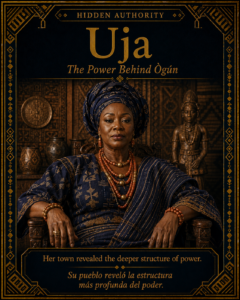
    Within IFAStories, the account is presented as a sacred Ifá narrative for spiritual education, cultural preservation, and reflective study.

    This adaptation preserves the traditional meaning of the story while shaping the narration, structure, and commentary for a modern educational audience. It is offered with respect for Ifá, Yoruba sacred knowledge, and the ancestral wisdom carried through Odù.

    INTRODUCTION

    Some Ifá stories reveal disorder through open conflict. Others reveal it through what was forgotten.

    The Marriage of Ejiogbe begins with attraction and union. Ejiogbe sees Eji-Alo, loves her, and accepts her as his wife. Yet beneath that beginning lies a serious omission: after marriage, he fails to give the big he-goat to Esu that he had been instructed to offer.

    The story does not treat what follows as random. The afflicted child, the departure of Eji-Alo, and the sorrow of the household are all read through the earlier forgotten instruction.

    Yet this is not only a story of consequence. It is also a story of correction. The offering is remembered. The medicine is prepared. The child is healed.

    But the story refuses an easy ending.

    The child is restored, yet the marriage is not. What had already broken does not simply return to its first condition. Instead, the consequence enters the land itself through the river called Oluweri.

    QUICK TAKEAWAY

    A household is not secured by affection alone.

    When sacred instruction is forgotten, its consequence may enter quietly. Healing may still come, but not every broken thing returns to what it was before.

    THE STORY

    Ejiogbe woke and met a fair-skinned woman named Eji-Alo.

    As soon as he saw her, he loved her. She also desired him and offered herself to him in marriage. Ejiogbe accepted her as his wife.

    But after the marriage, Ejiogbe forgot what had been required of him.

    He had been instructed in heaven to give a big he-goat to Esu after marrying on earth, so that his wife would not desert him. He did not make the offering.

    Eji-Alo was the daughter of a wealthy chief at Ife. In time, she became pregnant and gave birth to a male child who was crippled from the womb.

    Although Ejiogbe could heal other cripples, he could not heal his own child.

    Because of the child’s condition, Eji-Alo became frustrated. She refused to remain in Ejiogbe’s house and care for the child. At last, she left the house and left the child behind with him.

    After some time, Esu, Ogun, and Obalifon met Ejiogbe and asked why he had not been seen outside. Ejiogbe told them that Eji-Alo had left him with a crippled child to care for.

    Then Esu went to seek ritual help in heaven.

    The two Awos connected with the matter were Eduwe Koko Meji and Ejo Meijinja. They were the same Awos who had earlier performed divination for Ejiogbe during his last spiritual journey to heaven.

    They reminded him that he had been instructed to give a big he-goat to Esu after marriage so that his wife would not desert him.

    The forgotten instruction was finally restored.

    The he-goat was given to Esu. After the sacrifice was completed, the two Awos prepared medicine and used it to wash the child’s legs.

    At once, life returned to the child’s limbs.

    The child was healed.

    But Eji-Alo did not return. She had already married Oluweri.

    A portion of the medicine that had been used for the child was then prepared into Àṣẹ for Ejiogbe. With it, he could command Eji-Alo to return if he chose.

    But because she was already with another man, Ejiogbe used the Àṣẹ differently. He called Eji-Alo to meet him at a place far from the environs of Ife. He also commanded Oluweri to come to that same place.

    When Eji-Alo and Oluweri appeared before him, Ejiogbe caused them to fall down. He joined them into one body and commanded them to move forward forever without turning back.

    In this way, Eji-Alo and Oluweri became the flowing river now called Oluweri in Ondo State of Nigeria.

    The story also preserves a divinatory warning. When Ejiogbe appears in divination for a woman who is thinking of leaving her husband, she should be warned not to do so lightly, especially if she is the wife of an Ifá priest.

    STORY STRUCTURE

    Initial Desire and Hidden Omission

    The story opens with immediate attraction and marriage. Ejiogbe and Eji-Alo are drawn to each other, and the union begins with desire and acceptance.

    But the true instability is already present.

    The required offering to Esu has not been made. The visible happiness of the union is therefore built over an unseen omission. This is the hidden fracture beneath the household.

    Exposure Through Affliction

    The child’s crippled birth makes the hidden disorder visible.

    The story then deepens the crisis by showing that Ejiogbe can heal others, yet cannot heal his own child. His power is real, but it cannot function fully while the earlier instruction remains unfinished.

    The household becomes the place where the neglected obligation is exposed.

    Divination and Ritual Recall

    The turning point begins when Esu, Ogun, and Obalifon meet Ejiogbe and bring the matter into the open.

    The Awos Eduwe Koko Meji and Ejo Meijinja do not invent a new solution. They remember the old instruction. They reconnect the present crisis to the earlier divination.

    This is important because the story teaches that forgotten guidance does not stop governing destiny simply because a person has moved on.

    Sacrifice and Correction

    Once the he-goat is finally given to Esu, the ritual correction begins.

    Medicine is prepared. The child’s legs are washed. Life returns to the child’s limbs.

    The healing confirms that the offering, medicine, and remembered instruction are not decorative details. They are the sacred means through which the story moves from disorder toward correction.

    Healing Without Reconciliation

    The child is healed, but the marriage is not restored.

    This is one of the deepest teachings of the story. Correction is real, but it does not erase everything that has already happened.

    Eji-Alo has already married Oluweri. The relationship has moved beyond its first condition.

    Transformation Into Landscape Memory

    The story ends not with reunion, but with transformation.

    Eji-Alo and Oluweri are joined into one body and made to move forward forever. They become the river called Oluweri.

    The private sorrow of the household becomes public memory in the land.

    Lasting Divinatory Instruction

    The narrative does not end only as an origin story for the river.

    It continues as divinatory guidance. When this sign appears, the story warns against leaving a marriage lightly under the conditions preserved in the Odù.

    The story survives because it continues to speak.

    MAIN CHARACTERS

    Ejiogbe

    Ejiogbe is the central figure of the story: husband, father, ritual subject, and final acting authority.

    His life carries the consequence of neglected instruction. He enters marriage but forgets the offering required after marriage. Because of this, the household becomes exposed to affliction, departure, and sorrow.

    Spiritually, Ejiogbe represents the danger of incomplete obedience. He has power, but he is not above sacred responsibility. He can heal others, yet cannot heal his own child until the forgotten instruction is restored.
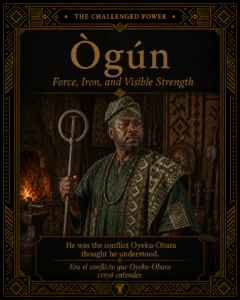
    By the end of the story, he moves from helplessness into restored authority.

    Eji-Alo

    Eji-Alo is the woman Ejiogbe loves and marries.

    Her role should not be flattened into that of a simple villain. Her departure is serious, and the story gives it consequence, but it happens within a household already affected by neglected sacred order.

    She becomes the visible sign of the earlier warning: Ejiogbe had been told to give the he-goat to Esu so that his wife would not desert him.

    Her movement away from the marriage becomes one of the ways the forgotten instruction manifests.

    The Child

    The child is one of the most important figures in the story.

    He does not speak, but his condition reveals the hidden disorder of the household. His affliction is not presented as moral blame. The child is innocent.

    His body becomes the place where the unfinished instruction becomes visible.

    Through his healing, the story shows that correction is possible. Yet through the continued rupture of the marriage, the story also shows that healing one wound does not restore everything that has been broken.

    Esu

    Esu carries the warning Ejiogbe failed to honor.

    The offering to Esu was meant to guard the home, preserve the marriage, and protect the innocent child from becoming exposed to consequences he did not cause.

    When the warning was left undone, the protection remained unfinished. Correction therefore had to return through Esu, because Esu was connected to the instruction that had been neglected.

    His role in this story is not separate from the crisis. He stands at the point where forgotten instruction, consequence, and correction meet.

    Ogun and Obalifon

    Ogun and Obalifon appear with Esu when Ejiogbe has withdrawn from public life.

    Their presence helps reveal the seriousness of the crisis. They function as sacred witnesses to Ejiogbe’s isolation and household sorrow.

    Their arrival marks the moment when private suffering becomes exposed before sacred figures.

    Eduwe Koko Meji and Ejo Meijinja

    Eduwe Koko Meji and Ejo Meijinja are the Awos who reconnect the crisis to its original source.

    They had already performed divination for Ejiogbe during his earlier spiritual journey. When they appear again, they do not create a new explanation. They remember what had already been spoken.

    Their importance lies in memory, precision, and ritual continuity.

    They show that some problems cannot be solved by new action until the old instruction is completed.

    Oluweri

    Oluweri is the man Eji-Alo later marries.

    His presence prevents a simple return to the earlier marriage. Once Eji-Alo has joined herself to another man, the story moves away from reconciliation and toward transformation.

    In the final outcome, Oluweri is joined with Eji-Alo and becomes part of the river that carries the memory of the story forward.

    HUMAN CONDITIONS REVEALED

    Attraction

    The story begins with attraction between Ejiogbe and Eji-Alo.

    This attraction is real, but it is not enough to secure the household. The story teaches that desire can begin a union, but cannot protect it by itself.

    Neglected Obligation

    The central hidden condition is the neglected offering to Esu.

    This forgotten obligation becomes the source of disorder beneath the visible events. The story insists that what is left undone may later become the deepest cause of suffering.

    Affliction

    The child’s condition is the visible form of the hidden disorder.

    The story does not blame the child. Instead, the child’s affliction reveals that something in the household was unfinished before he was born.

    Helplessness

    Ejiogbe’s inability to heal his own child is central.

    He has spiritual ability, but his power is blocked in the matter closest to his heart. This reveals that public strength does not cancel private responsibility.

    Household Fracture

    Eji-Alo’s departure shows how suffering can break a household apart.

    The marriage does not simply endure the pressure. The forgotten instruction moves from hidden omission into visible rupture.

    Correction

    The restored offering and medicine show that correction is possible.

    The child’s healing proves that the disorder can be addressed when the forgotten instruction is remembered and restored.

    Irreversible Consequence

    The transformation of Eji-Alo and Oluweri into the river shows that not every consequence can be reversed.

    The story ends by fixing unresolved human conflict into geography and memory.

    MORAL AND SPIRITUAL TEACHINGS

    Sacred Instruction Remains Binding

    One of the central teachings of this story is that sacred instruction remains active even when it is forgotten.

    The Awos do not search for a new cause. They recover the old instruction. This shows that what Ifá has already revealed may continue to govern later events.

    Sacrifice Protects the Household

    The he-goat offering to Esu is tied directly to the stability of the marriage and the protection of the household.

    This makes the story especially important for understanding that sacrifice is not only personal. In this account, the offering concerns relationship, family, and the child who comes through the union.

    Visible Suffering May Reveal Hidden Disorder

    The child’s affliction points backward to the forgotten offering.

    The story does not encourage shallow explanation. It teaches that visible suffering may require deeper spiritual diagnosis.

    Healing and Reconciliation Are Not the Same

    The child is healed, but the marriage is not restored.

    This is one of the story’s most powerful teachings. Healing may come, but it does not always return everything to its former condition.

    Some consequences continue after one part of life has already been corrected.

    Sacred Stories Continue as Guidance

    The story does not remain only in the past.

    Its final warning continues into divinatory practice. This means the narrative is not only remembered as history or myth. It remains a living teaching when the sign appears.

    SYMBOLS AND SACRED ELEMENTS

    The Child’s Legs

    The child’s legs are the visible site of affliction and healing.

    Their restoration shows that the ritual correction has become effective in the body. The story does not only say healing occurred; it shows movement returning.

    The River Called Oluweri

    The river preserves the final transformation.

    Spiritually, it represents consequence fixed into geography. What began as household disorder becomes memory carried by the land.

    The river also completes the movement pattern of the story: first the child cannot move, then the child is healed, and finally Eji-Alo and Oluweri are made to move forward forever.

    Ife

    Ife anchors the story in a sacred and social setting.

    It is the place connected to marriage, household life, family status, and the beginning of the visible crisis. The final confrontation occurs away from the environs of Ife, showing that the matter has moved beyond ordinary domestic repair.

    The Big He-Goat

    The big he-goat is the prescribed offering to Esu after marriage.

    Its importance lies in enacted responsibility. The offering becomes the material hinge between warning, omission, and correction.

    Medicine

    The medicine first heals the child’s legs and later becomes connected to Àṣẹ-command.

    This shows that sacred remedy may carry both restorative and authoritative force within the story.

    Àṣẹ

    Àṣẹ is the command-force prepared for Ejiogbe.

    It is not vague power. It is effective authority used to summon Eji-Alo and Oluweri and bring the unresolved matter before him.

    The Washing of the Legs

    The washing of the child’s legs is the visible ritual action through which healing occurs.

    Its meaning is embodied correction. What was blocked is opened. What could not move begins to move.

    CULTURAL AND DIVINATORY CONTEXT

    This story reflects a world in which marriage, child affliction, ritual obligation, divine inquiry, and later divination remain connected.

    The household is not treated as separate from spiritual order. What happens in family life may be shaped by prior instruction, forgotten sacrifice, and ritual correction.

    The story also preserves the importance of divination before action. The two Awos had already spoken to Ejiogbe during an earlier heavenly journey. Their words remain authoritative when the crisis later appears.

    Sacrifice also appears here in concrete form. The he-goat is specific. Esu is specific. The ritual outcome is visible.

    In the same way, the healing medicine and later Àṣẹ are preserved as exact parts of the story’s movement.

    Most importantly, the narrative continues into practice. The ending makes clear that this account survives because it guides later divination. It is not just a remembered event. It becomes an active warning.

    WHEN THIS ODÙ APPEARS

    When this Odù appears, this story may warn about a household problem whose deepest cause is older than the visible crisis.

    It may point to a situation where suffering has appeared, but the real disorder began with a neglected responsibility or forgotten instruction.

    This narrative may also point to strain in marriage or partnership, especially where separation is being considered under unstable spiritual conditions.

    One lesson drawn from this account is that departure should not be treated lightly when the sign itself preserves a warning against it.

    The story may also diagnose a condition in which a person has strength in many areas but remains powerless in the matter closest to home.

    In such a case, the counsel is not shallow confidence. The counsel is return to proper diagnosis, remembered instruction, and ordered correction.

    It may further warn that not every healed condition restores the whole of life. A person may see one area repaired while another remains under consequence.

    That is why the story invites humility, seriousness, and caution rather than quick conclusions.

    RITUAL BOUNDARY NOTE

    This story preserves ritual importance, but it does not provide a complete ritual procedure.
    It tells us that Ejiogbe had been instructed to give a big he-goat to Esu after marriage.

    It tells us that the forgotten offering was later restored.

    It tells us that medicine was prepared and used to wash the child’s legs.

    It tells us that part of the medicine became Àṣẹ-command.

    But it does not teach how to perform the ritual.

    Any procedural explanation would require source verification and practitioner review.

    PRAYER / CHANT STATUS

    No explicit prayer, rezo, chant, or súyẹ̀rẹ̀ is preserved in this verified story segment.

    Because no chant is preserved, this article does not create one.
    However, the absence of a chant does not mean the absence of sacred speech. Sacred speech appears through the original instruction given to Ejiogbe, the remembered divination of the Awos, the warning tied to the offering, the medicine, the Àṣẹ-command, and the final divinatory instruction.
    REFLECTION QUESTIONS

    Why does the story place so much weight on the offering that Ejiogbe failed to make after marriage?

    What does the child’s affliction reveal that ordinary household explanation cannot fully explain?

    Why is the child healed before the broken marriage is addressed?

    What is the difference between correction and reconciliation in this story?

    How should Esu’s role be understood here: as receiver of sacrifice, keeper of warning, mediator of correction, or all of these together?

    Why does the story preserve its final warning in divination rather than ending only with the river’s origin?

    What does it mean that unresolved household conflict becomes remembered through the river called Oluweri?

    CONCLUSION

    The Marriage of Ejiogbe teaches that what is neglected at the beginning of a household may later return with great force.

    The story does not treat consequence as accidental. It shows that instruction, sacrifice, and relationship remain joined.

    It also teaches that real healing does not erase every form of damage.

    The child’s body is restored, yet the marriage is not. In this way, the narrative remains spiritually serious and refuses shallow comfort.

    Its final dignity lies in the fact that it continues to speak.

    It survives as counsel, warning, and teaching for those who meet the sign again in divination.

    DOWNSTREAM SUMMARY BLOCK

    Core Story Tension:
    A marriage begins in attraction but is destabilized by a neglected post-marriage offering, leading to child affliction, separation, healing, and final consequence.

    Core Ritual Dynamic:
    The forgotten he-goat offering to Esu is later restored; medicine heals the child; part of that same ritual stream becomes Àṣẹ for summons and transformation.

    Core Character Dynamic:
    Ejiogbe moves from helpless husband under consequence to restored acting authority, while Eji-Alo moves from bride to absent wife to transformed consequence alongside Oluweri.

    Core Teaching:
    Neglected sacred obligation can disturb household destiny, and healing one condition does not always restore the whole of what was broken.

    Core Divinatory Warning:
    When this sign appears, the story warns that leaving a marriage should not be treated lightly, especially under the specific divinatory conditions preserved in this Odù.

  • The Path Where the Great Power of Ikú’s Son, the Great Power of Ifá’s Son, and Oparaldo Were Born

    The Path Where the Great Power of Ikú’s Son, the Great Power of Ifá’s Son, and Oparaldo Were Born

    ODÙ CONTEXT

    This story belongs to the sacred stream of Oyekun Iroso, where hidden danger, spiritual protection, ritual timing, and the reversal of harmful force become central teachings.

    At the heart of this account are two sons and two lines of power.

    One is the son of Ifá, who stands under the authority of Orunmila. His power is not used to frighten the people. It is used to feed them, strengthen them, cleanse the land, and protect the community through sacred order.

    The other is the son of Ikú, Awó Aberi Biku. His power is connected to fear, restriction, and instability. The people around him do not live in fullness. They live under anxiety and limitation.

    This contrast is one of the deepest teachings of the story. It shows that spiritual power must be judged not only by its force, but by what it produces. Power aligned with Ifá brings order, protection, and communal well-being. Power driven by fear may appear strong, but it cannot create lasting peace.

    This Odù also reveals the birth of oparaldo as a sacred response to danger. When Ikú moves against the people, Ifá provides a ritual means of protection: the tied hen, the coconut, the candles, the cloth, and the rite that blocks death-force from entering the protected space.


    STORY REFERENCE

    This retelling draws on a traditional account preserved in Caminos de Ifá, edited by Ernesto Valdés Jane under Proyecto Orunmila, a collaborative Cuban project dedicated to collecting, comparing, preserving, and publishing Osha-Ifá source materials.

    The narration, adaptation, and commentary presented here are original to IFAStories.

    This article presents the account for spiritual education, cultural preservation, and reflective study. It is not offered as ritual instruction or as a substitute for proper guidance from initiated elders within the tradition.


    INTRODUCTION

    Some Ifá stories reveal danger through open conflict. Others reveal it through what is hidden, prepared in secrecy, and timed to arrive when the people are most vulnerable.

    This story begins in the land of Abonire, where the son of Ifá performs sacred work for the people. After they eat, they fall asleep, and while they sleep, he performs his great secret with adié dundún, the black hens. Through Ifá, sacrifice, sacred speech, and ashé, he gives strength and virtue to the land.

    But another power watches from the side of resentment.

    Ikú sees that his son, Awó Aberi Biku, no longer holds the power he once had as an Awó. This wounds Ikú deeply, not only because his son has lost authority, but because a father’s pride is tied to the strength of his lineage. Ikú does not simply want power for himself. He wants his son to be feared, recognized, and restored.

    This is why the relationship between Ikú and his son matters. Ikú acts from attachment, shame, and resentment. When Obatalá asks him why he has given so little power to his own son if he possesses so much power in the world, the question exposes the imbalance. Ikú’s response is not humility. He seeks a hidden work through Osain.

    On the other side, the relationship between Orunmila and the son of Ifá is different. The son of Ifá does not stand alone. His authority comes through obedience, divination, and alignment with Ifá. When danger approaches, he does not invent his own defense. He goes before Ifá, receives instruction, and follows it with precision.

    This makes him not only a powerful Awó, but a true son of Ifá: one who protects the people by listening before acting.

    This is not only a story about conflict. It is a teaching about how hidden danger is exposed, how spiritual order answers destructive force, and how what was prepared for harm can be brought under the authority of Orunmila and transformed into a great secret.


    QUICK TAKEAWAY

    Power that protects life is different from power that rules through fear.

    Ikú moves to restore his son’s power through secrecy and danger. The son of Ifá protects the people through divination, sacrifice, candles, coconut, cloth, the tied hen, and oparaldo.

    This story teaches that Ifá provides sacred means of defense when danger moves in secret, and that rightful authority can reveal, judge, and transform what was prepared for harm.


    THE STORY

    Rezo

    Oyeku Biroso Awó Kome Awó Ifá Abinere Awó Komo Awó Akeremi Ikú Awó Komo Awó Aye Adié Dundún Abonire Kumo Awó Paka Do Obani Shawe Komo Awe Ikú Aberikunlo Ona Baramiregun Awe Komo Awó Omó Eye Ikú Awó Komo Awó Oyerun Biroso Abonire Orunmila Omó Komo Awó Abeya Ifá Awó Ni Orun.

    In the land of Abonire, power was already at work.

    But not all power moved in the same way. One power gave strength, virtue, and well-being through Ifá. Another power rose through fear, resentment, and hidden work.

    In that land there lived a son of Ifá. He held great authority over Abonire, and whenever the people finished eating, they would remain seated and fall asleep.

    Then the son of Ifá would come forward and perform his great secret with adié dundún, the black hens. He called upon the great power of Ifá and its ashé, and through that work he gave power and virtue to the people of the land.

    When he performed the ceremony to remove evil from the land and give it strength, he sang:

    Oyekun Birose Kalekun Bawa Ifá Nire
    Kalekun Leyere Ikú Babawa
    Orunmila Laderi Babawa Ifá Layere

    He gave the two adié dundún to Ifá so that the people might live well.

    He invited the people of that land to eat from those adié. He also placed before Orunmila a gourd with cooked onibonibo, one with yam broth, one with eshinshin, one with eri kinia, and one with eré de carita, together with a small figure covered with plenty of epó.

    After everyone had eaten that food, they made ebbó with all of it and sent it on its way.

    After that, the son of Ikú, whose name was Awó Aberi Biku, would come and eat the food.

    But in the land where Awó Aberi Biku lived, the people ate nothing but oshinshin and flour. They lived in great fear because he held power over them.

    Ikú was the one who brought that food every day, and sometimes he also brought adié. But when Ikú saw that his son no longer had power as an Awó, he became resentful and upset.

    Ikú went to complain before Obatalá.

    Obatalá said to him:

    If you possess all the power in the world, why have you given so little power to your son?

    That question struck Ikú deeply. It exposed the imbalance between the greatness of Ikú’s force and the weakness of his son’s authority.

    Ashamed, Ikú went to Osain.

    Osain said to him:

    I am going to prepare a work for you. But when orubo dundún is asleep, bring me the elese, the root of caimito, vergonzosa, salvadera, maravilla blanca, and seeds. And while he is asleep, take a piece of ekute, earth from different places, different creatures of the earth, and iguí.

    Ikú did what Osain instructed.

    When he went to the house of Osain, he sang:

    Ikú Babare Ikú
    Ikú Egun Baragun
    Ikú Babare Ikú

    Osain heard him and said:

    Here comes Ikú.

    Osain prepared the work for him and told Ikú to keep it in a salvadera tree. He instructed Ikú that when he arrived in the land where Awó Omó Awó Iña was, he should blow the afoshé that had been given to him.

    Then Osain told him:

    In seven days, at seven at night, go and snatch away everyone who is asleep, when they fall asleep in the land of Komo Awó Ifá, which was the land of the son of Ifá.

    But on the side of protection, another consultation was also opened.

    In the land of the son of Ifá, he had already been told that he must always keep that hen tied wherever he might be, and that one day he would be told what he had to do with it.

    Awó Komo Awó Ifá began to see what was happening. He became frightened and upset.

    He took two coconuts and two adié and went before Ifá.

    Ifá said to him:

    That adié must be given to the great secret. Plenty of coconut must be grated, and the blood of the adié must be given, together with koborí eledá.

    Then Ifá said to him:

    Very well. Each one has a candle. It shall be lit at seven at night. And with that hen you have tied, and with this coconut I am going to give you, you are going to perform oparaldo with it and this cloth.

    Before the danger entered openly, the story had already established a condition.

    The hen had to remain tied wherever the son of Ifá might be. It was not to be released before its appointed purpose.

    The night of danger had also been named.

    Seven days.

    Seven at night.

    The threat had its hour, and the response had its hour.

    What had been prepared in secret now began to move toward the people. The work had already been made. The salvadera tree had already been chosen. The afoshé had already been given. The time had already been set.

    And the people in that land were the same people who, after eating, would remain seated and fall asleep.

    Then Ikú came singing:

    Ikú Towa Baba Bawa
    Ikú Towa Baba Baba
    Ikú Egun Ayere
    Ikú Baba

    Awó Komo Awó Ifá saw him and began to light candles for everyone.

    When Ikú saw the candles, he stopped and became frightened.

    Then Awó Komo Awó sang:

    Onile Onile Baba Ikú Olona
    Onire Onire Baba Ikú Olona
    Egun Baba Ikú Olona
    Awó Koomo Awó Ikú Olona
    Ikú Lode Komo Awó

    Ikú ran away, and everyone woke up.

    When Awó Komo Awó went to place the adié in the salvadera, he found what Ikú had stored there. He took it and brought it to Ifá, saying:

    Let us go to the great secret of Ifá and see what we are going to do with this.

    When they arrived at the great secret, Orunmila poured ashé over it and said:

    Bring me a fish from the river so that blood may be given to it, because this is going to become the great secret.

    And he broke a coconut behind ilú.

    What had been hidden for harm was now placed under sacred authority. What had been carried in secrecy was now judged in the open presence of sacred power.

    Ikú became so frightened when the coconut was broken that he went to where his son was and said to him:

    You have no power at all, and to show you that I do, I am going to begin with you.

    So the line of fear turned back upon itself.

    The sleeping people were not taken.

    They awakened.

    What had been hidden did not remain hidden.

    It was found.

    And what had been prepared for harm did not remain in the service of harm.

    It became the great secret.

    The story leaves behind a final instruction.

    One must have a shell or a pot with its lid, leaving a small opening.

    It is fed with a black hen, fish blood, or ologbo.

    It carries an otá and a black necklace.

    So the story does not remain only as memory.

    It remains as instruction.


    STORY STRUCTURE

    Initial Condition

    The story begins in Abonire, where the son of Ifá holds spiritual authority. His power is not shown through domination, but through feeding, ritual work, sacrifice, and the strengthening of the people.

    Sacred Empowerment

    The son of Ifá performs a secret with adié dundún. Through this rite, he removes evil from the land and gives power, virtue, and well-being to the people.

    Rival Power

    Awó Aberi Biku, the son of Ikú, belongs to another line of power. The people under him live in fear and eat only limited food. His authority exists, but it does not create peace or fullness.

    Complaint and Hidden Work

    Ikú becomes upset when he sees that his son lacks power as an Awó. He complains to Obatalá, then goes to Osain, who prepares a hidden work for him.

    Protective Consultation

    Awó Komo Awó Ifá sees danger approaching and goes before Ifá. Ifá gives exact instructions involving the tied hen, coconut, candles, cloth, blood, and oparaldo.

    Confrontation

    Ikú arrives at the appointed time, singing as he approaches. Awó Komo Awó lights candles for everyone. When Ikú sees the candles, he becomes frightened, and the chant of resistance keeps him outside.

    Discovery and Transformation

    Awó Komo Awó finds the hidden work in the salvadera and brings it before Ifá. Orunmila pours ashé over it and declares that it will become the great secret.

    Lasting Instruction

    The story ends with ritual continuation: a shell or pot with a lid and small opening, fed with black hen, fish blood, or ologbo, carrying an otá and a black necklace.


    MAIN CHARACTERS

    The Son of Ifá / Awó Komo Awó Ifá

    He is the figure of sacred service and ritual protection. He uses the power of Ifá to strengthen the people of Abonire, remove evil, and protect the land. His obedience to Ifá allows him to answer danger at the correct time.

    He also represents the proper relationship between an Awó and Orunmila. He does not act from ego or fear alone. When danger appears, he consults Ifá, receives instruction, and follows it. His power comes from alignment, not personal force.

    Awó Aberi Biku

    He is the son of Ikú. He represents a power surrounded by fear but lacking true stability. His people live under restriction and fear, showing that authority without right order does not produce well-being.

    Awó Aberi Biku is also important because he reveals the weakness of inherited force when it is not properly grounded. He is connected to Ikú, but his authority does not bless the people. It confines them.

    Ikú

    Ikú is the force that moves through resentment, fear, and hidden action. When he sees that his son lacks power, he seeks a way to restore that power through dangerous means. His movement creates the central threat of the story.

    Ikú’s relationship with his son is one of pride, shame, and force. He wants his son restored, but his method is destructive. Instead of correcting the imbalance through sacred order, he seeks hidden power through Osain.

    Obatalá

    Obatalá exposes the imbalance in Ikú’s complaint. His statement reveals the contradiction: if Ikú possesses great power, why has he given so little to his son?

    His role is brief but powerful. He does not prepare the hidden work. He exposes the truth that pushes Ikú into action.

    Osain

    Osain prepares the hidden work for Ikú. His role is connected to the preparation of spiritual materials, herbs, roots, earth, creatures, and afoshé. In the story, his work becomes part of the danger that later must be exposed.

    Osain’s presence shows the seriousness of prepared ritual force. The materials are not random. They are gathered, prepared, hidden, and directed.

    Orunmila

    Orunmila is the final sacred authority in the story. When the hidden work is brought before Ifá, Orunmila pours ashé over it and transforms what had been prepared for harm into the great secret.

    He represents rightful order. Under his authority, hidden danger is not merely rejected. It is judged, redirected, and transformed.

    The People of Abonire

    The people receive strength from the son of Ifá. Their sleeping condition makes them vulnerable, but through the ritual action of Awó Komo Awó Ifá, they are protected and awakened.

    They represent the community that sacred power must protect.


    RELATIONSHIP BETWEEN IKÚ AND HIS SON

    The son of Ikú, Awó Aberi Biku, represents a line of power surrounded by fear but lacking stability. His people live under restriction. They eat little. They remain afraid. His authority exists, but it does not nourish the land.

    Ikú’s concern for his son is not tender in the ordinary sense. It is a relationship shaped by power, pride, and fear of loss. When Ikú sees that his son no longer holds authority as an Awó, he becomes ashamed and resentful. He does not accept the condition as a lesson. Instead, he seeks a way to restore his son’s influence through hidden force.

    Obatalá’s question exposes the spiritual contradiction:

    If Ikú possesses so much power, why has he given so little to his own son?

    This question strikes at the heart of the story. Ikú’s son is not powerless because power does not exist. He is unstable because his power is not properly ordered. It does not bless, feed, or protect. It produces fear.

    So Ikú goes to Osain, and from that moment the father’s concern turns into a dangerous movement. What begins as shame over his son becomes a hidden work aimed at the people of the son of Ifá.


    RELATIONSHIP BETWEEN ORUNMILA AND THE SON OF IFÁ

    The son of Ifá stands in a very different relationship.

    He is not simply someone who possesses ritual knowledge. He is one who belongs to the order of Ifá. His power flows through consultation, obedience, sacrifice, and sacred responsibility.

    The people of Abonire are vulnerable because they fall asleep after eating. Yet they are not abandoned. The son of Ifá watches over them. He performs sacred work for their strength. When danger begins to move toward them, he becomes frightened, but he does not act carelessly. He goes before Ifá.

    This is what defines his relationship with Orunmila.

    A true son of Ifá does not depend only on personal force. He depends on revealed instruction. He listens. He follows. He protects according to what Ifá opens.

    When the hidden work is later found in the salvadera tree, the son of Ifá does not keep it for himself. He brings it before Ifá and Orunmila. This shows humility and proper order. The danger is not handled through ego. It is brought before the highest sacred authority.

    Then Orunmila pours ashé over it and declares that it will become the great secret.

    This moment shows the difference between the two relationships. Ikú seeks to empower his son through hidden danger. Orunmila empowers the son of Ifá through revealed order, sacrifice, and transformation.


    HUMAN CONDITIONS REVEALED

    Fear

    Fear appears in the land of Awó Aberi Biku, where the people live under the power of Ikú’s son. It also appears when Awó Komo Awó Ifá realizes danger is approaching.

    The story distinguishes fear that oppresses from fear that leads a person to seek Ifá.

    Resentment

    Ikú becomes resentful when he sees that his son no longer has power as an Awó. This resentment becomes the doorway through which harmful action is prepared.

    Shame

    Ikú’s shame is revealed after Obatalá questions him. His shame does not become humility. Instead, it turns into a search for hidden power.

    Hidden Danger

    The danger in the story does not begin openly. It is prepared in secret, hidden in the salvadera, and timed for the moment when the people are asleep.

    Obedience

    Awó Komo Awó Ifá survives the danger because he follows Ifá’s instructions. He keeps the hen tied, performs the rite at the appointed time, and uses the prescribed materials.

    Vulnerability

    The people of Abonire are vulnerable because they fall asleep after eating. Their weakness is not mocked by the story; it becomes the condition that requires protection.

    Sacred Responsibility

    The son of Ifá does not use his authority for himself alone. He serves the people, feeds them, strengthens them, and protects them from danger.

    Reversal

    The story reveals a powerful reversal: what Ikú prepared against the people is discovered, brought before Ifá, and transformed into the great secret.


    MORAL AND SPIRITUAL TEACHINGS

    This story teaches that not all power is the same.

    Some power nourishes, protects, blesses, and strengthens. Other power controls through fear and moves through hidden harm.

    The son of Ifá represents power aligned with service and sacred order. His work feeds the people, removes evil, and gives them virtue. Awó Aberi Biku represents a different kind of authority, one that surrounds people with fear but does not give them fullness or peace.

    The story also teaches that danger may be hidden, timed, and prepared in secrecy. For that reason, protection must come through divination, obedience, and exact ritual action.

    Awó Komo Awó Ifá does not defeat Ikú through force alone. He follows what Ifá gives him.

    The tied hen, the coconut, the candles, the cloth, and oparaldo become the sacred answer to the advance of Ikú. These are not decorative objects in the story. They are the means by which death-force is blocked and the road is closed against what sought to enter.

    The deepest teaching is that rightful sacred order does more than resist danger. It reveals what was hidden, brings it before authority, and transforms what was prepared for harm into enduring spiritual power.

    This story also teaches that a parent’s desire to restore a child’s power can become dangerous when it is ruled by shame and resentment. Ikú wants his son empowered, but his path is hidden and destructive.

    By contrast, Orunmila’s relationship with the son of Ifá is based on guidance, not force. The son of Ifá is protected because he listens, consults, and obeys.


    EXPANDED OPARALDO CONTEXT

    In Afro-Cuban and Lukumí understanding, oparaldo is not a minor ceremony. It is a sacred work of cleansing, expulsion, and spiritual separation, used to confront disturbing dead, harmful influence, and destructive force.

    In this story, oparaldo appears at the moment when danger has already been prepared but has not yet fully entered. Ikú has received the hidden work. The salvadera tree has been chosen. The afoshé has been given. The time has been set: seven days, at seven at night.

    But Ifá also gives the son of Ifá a response.

    The tied hen, the coconut, the candles, and the cloth are not decorative elements in the story. They are part of the sacred defense that blocks the road of Ikú. The candles make protection visible. The tied hen reaches its appointed purpose. The coconut and cloth become part of the separation.

    Through oparaldo, the force that sought to enter is confronted and driven back.

    For those new to the tradition, this shows that the people are not abandoned before spiritual danger. Ifá provides a way to recognize danger, prepare protection, and defend the community when destructive force approaches.

    For those within the tradition, the story reveals something deeper: oparaldo is one of the sacred ritual means a babalawo may possess and perform when Ifá opens the way for protection, cleansing, spiritual defense, and separation from harmful forces.

    The story does not present oparaldo as fear.

    It presents it as order.

    It is the moment when the road is closed against what should not enter.


    SYMBOLS AND SACRED ELEMENTS

    A. Symbols

    The Sleeping People

    The sleeping people represent vulnerability. Their condition shows how danger can approach when awareness is lowered and protection has not yet been activated.

    The Road

    The road appears through the chants that keep Ikú outside. It represents boundary, movement, approach, and refusal. Ikú is not allowed to enter the protected space; he is kept on the road.

    The Salvadera Tree

    The salvadera becomes the place where the hidden work is stored. It marks the concealed location of danger before that danger is exposed.

    The Small Figure Covered with Epó

    The small figure covered with palm oil is part of the ritual arrangement before Orunmila. It belongs to the sacrificial and sacred setting through which the son of Ifá works for the land.

    The Great Secret

    The great secret is the final transformation of the story. What was prepared for harm becomes something placed under Orunmila’s authority.


    B. Sacred / Ritual Elements

    Adié Dundún / Black Hens

    The black hens are central to both empowerment and protection. They are used in the rite of the son of Ifá and later appear in the divinatory continuation.

    Coconut

    Coconut appears in the protective instruction and in the moment of sacred authority. It is connected to the ritual response and to the breaking behind ilú.

    Candles

    The candles are lit at seven at night. Their appearance frightens Ikú and marks the moment when protection becomes visible.

    Oparaldo

    Oparaldo is the rite given by Ifá as the response to Ikú’s advance. In the story, it functions as a work of cleansing, separation, repulsion, and protection.

    Afoshé

    The afoshé is given to Ikú as part of the hidden work prepared by Osain. It belongs to the movement of danger before Ifá exposes and redirects that danger.

    Koborí Eledá

    Koborí eledá appears in the instruction given by Ifá. It points to the spiritual care, cooling, strengthening, or alignment of the head. In the story, it belongs to the larger protective response that prepares the son of Ifá for the danger ahead.

    Otá and Black Necklace

    The final instruction says the shell or pot carries an otá and a black necklace. These items show that the story continues into ritual practice and does not end as narrative alone.

    The Number Seven

    Seven days and seven at night mark the timing of danger and response. The story gives the threat an appointed hour and gives protection an appointed hour.


    CULTURAL AND DIVINATORY CONTEXT

    This story shows why divination precedes action in Ifá tradition. Awó Komo Awó Ifá does not respond blindly. When he sees what is happening, he goes before Ifá with two coconuts and two adié. The answer he receives gives the exact ritual response.

    Sacrifice also matters because the story presents spiritual order as something enacted through proper materials, timing, and obedience. The black hen, coconut, blood, candles, cloth, and oparaldo are not abstract symbols only. They are ritual means through which danger is answered.

    The story also shows how sacred authority is installed and protected. The son of Ifá strengthens the people through ritual feeding and sacrifice. Orunmila later receives the hidden work, pours ashé over it, and transforms it into the great secret.

    The divinatory continuation is especially important. The story gives later instruction: one must have a shell or pot with its lid, leaving a small opening. It is fed with a black hen, fish blood, or ologbo. It carries an otá and a black necklace.

    This means the story is not only remembered.

    It continues as ritual knowledge.

    In Afro-Cuban and Lukumí understanding, this is also where the story becomes especially important for explaining oparaldo. The rite appears as a protective response when harmful force, disturbing dead, or destructive influence must be separated from a person, house, or community.

    For new listeners, the story makes the concept understandable: Ifá does not leave the people defenseless.

    For those within the tradition, it also points to one of the ritual tools a babalawo may possess and perform when Ifá opens the way for cleansing, protection, spiritual separation, and defense.


    WHEN THIS ODÙ APPEARS

    When Oyekun Iroso appears with this story, it may point to a situation where hidden danger is moving quietly and must be addressed through proper consultation, timing, and ritual protection.

    This story may warn about resentment from another person or force that feels weakened, displaced, or deprived of influence. It may also point to a contrast between power used for communal well-being and power used to control through fear.

    One lesson drawn from this account is that the person must not ignore warnings or abandon a prescribed protection before its time. The tied hen in the story had to remain tied until Ifá revealed its purpose.

    This Odù may also point to the need for spiritual cleansing, separation, and boundary-making. The oparaldo becomes the means by which harmful presence is driven back and the protected space is defended.

    It can also teach that what is hidden must be brought before proper authority. The secret work stored in the salvadera does not remain concealed. It is found, taken before Ifá, and transformed through Orunmila’s ashé.

    This story may also speak about family, lineage, and inherited power. Ikú wants his son to possess force, but the story shows that force without order becomes unstable. The son of Ifá receives power differently: through consultation, obedience, and sacred responsibility.


    REFLECTION QUESTIONS

    What is the difference between the power of the son of Ifá and the power of the son of Ikú?

    Why does the story show the people of Abonire eating, sleeping, and needing protection?

    What does Ikú’s resentment reveal about power that is not properly ordered?

    How does Obatalá’s question expose the relationship between Ikú and his son?

    Why is the tied hen important before its purpose is fully revealed?

    How do the candles change the movement of danger in the story?

    What does the chant of Awó Komo Awó teach about boundaries and protection?

    Why does Orunmila transform the hidden work instead of simply discarding it?

    How does oparaldo function as cleansing, separation, and defense in this story?

    How does the final ritual instruction show that the story continues beyond memory?


    CONCLUSION

    The Path Where the Great Power of Ikú’s Son, the Great Power of Ifá’s Son, and Oparaldo Were Born teaches that sacred power must be measured by what it produces.

    The son of Ifá strengthens the people.

    The son of Ikú rules within fear.

    Ikú moves through resentment, while Ifá provides protection through exact instruction.

    The story also teaches that danger may be hidden, but it is not beyond the reach of sacred order. Through the tied hen, coconut, candles, cloth, blood, and oparaldo, Ifá gives the people a way to block what seeks to enter.

    At the end, the hidden work is exposed and brought before Orunmila. What was prepared for harm becomes the great secret.

    That is the final movement of the story: not only resistance, but transformation under rightful sacred authority.

    This is why the story remains powerful. It teaches that harmful force may move in secret, but sacred order can reveal it. It teaches that fear may try to rule, but Ifá protects life. And it teaches that when Orunmila takes authority over what was hidden, even danger can be transformed into sacred knowledge.


    DOWNSTREAM SUMMARY BLOCK

    Core Story Tension

    The son of Ifá strengthens the people through sacred power, while Ikú seeks to restore power to his son through hidden and dangerous work.

    Core Ritual Dynamic

    Ifá provides protection through the tied hen, coconut, candles, cloth, blood, and oparaldo, while Orunmila transforms the hidden work into the great secret.

    Core Character Dynamic

    The son of Ifá protects and empowers.

    Awó Aberi Biku stands within fear.

    Ikú acts through resentment and shame on behalf of his son.

    Osain prepares hidden work.

    Obatalá exposes imbalance.

    Orunmila restores sacred order.

    Core Teaching

    Power aligned with Ifá protects life, reveals danger, and transforms harm into sacred force.

    Core Divinatory Warning

    This story may warn of hidden danger, resentment, spiritual vulnerability, and the need to follow prescribed protection exactly and at the proper time.

    Core Oparaldo Teaching

    Oparaldo appears as a sacred work of cleansing, expulsion, separation, and defense. It shows that when spiritual danger approaches, Ifá may open a ritual path to protect the person, the house, the land, or the community.

error: Content is protected !!