Category: Odu

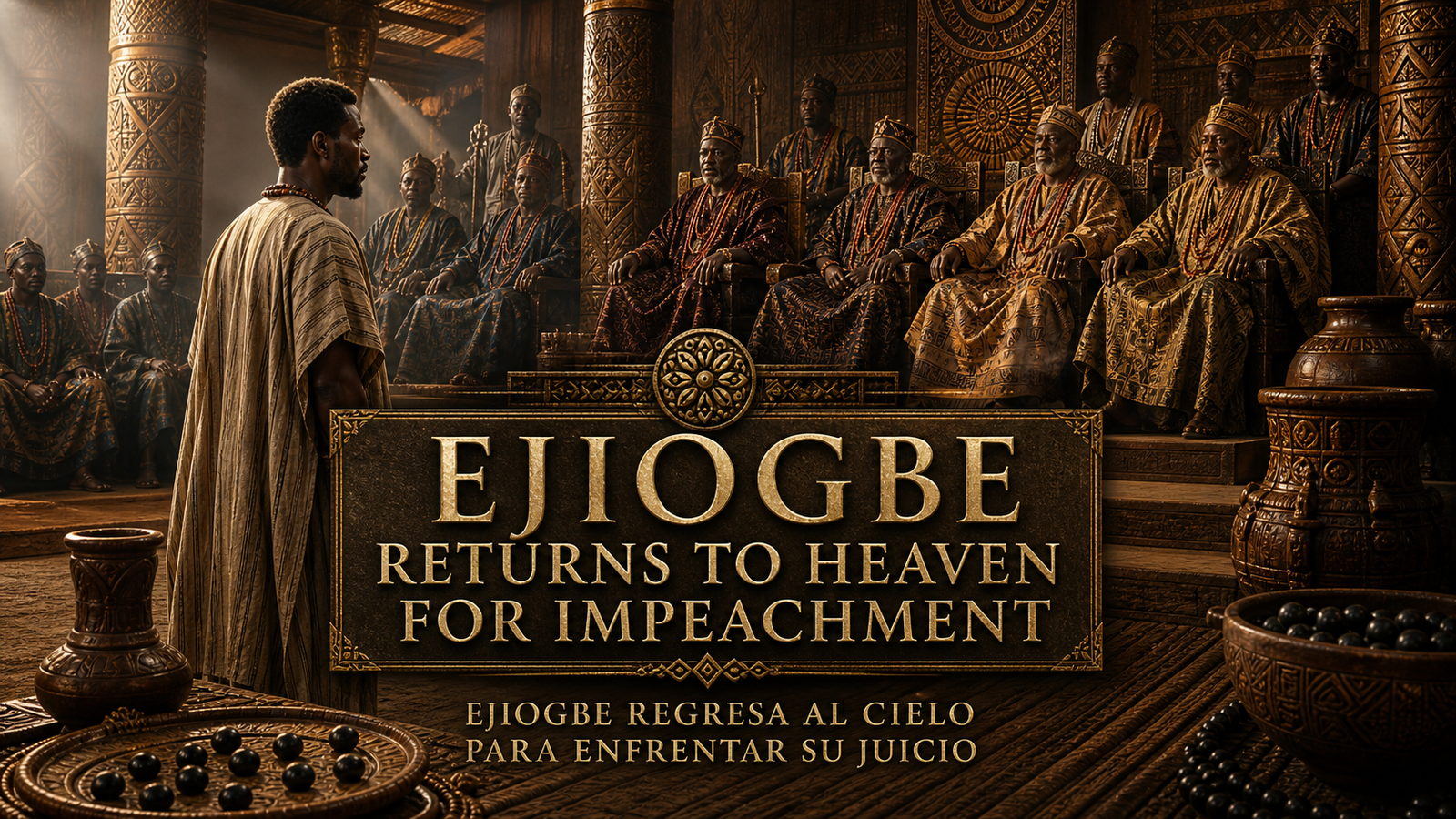
  • Ejiogbe Returns to Heaven for Impeachment

    Ejiogbe Returns to Heaven for Impeachment

    Odù Context

    This story belongs to the sacred stream of Èjìogbè, where visible goodness, public usefulness, and spiritual responsibility can also attract hidden opposition. In this account, Ejiogbe becomes known on earth because of the help he gives to others. His work is not centered on wealth, rank, or praise. It is centered on service.

    He heals children in danger. He assists women in difficult childbirth. He settles disputes. He helps those who are oppressed. Wherever suffering appears, Ejiogbe responds.

    Yet the story also shows that goodness does not always produce gratitude. Sometimes it exposes the interests of those who benefit from control, fear, or dependency. The elders and priests who feel threatened by Ejiogbe’s generosity begin to accuse him. Their complaint rises from earth into Heaven.

    The teaching of this Èjìogbè pattern is not only about accusation. It is about witnessed truth. Heaven does not judge Ejiogbe by rumor alone. A messenger is sent to observe him directly. Through that witness, the story reveals that divine judgment is not blind to human conduct.

    At the same time, Ejiogbe is not only vindicated. He is also corrected. He is told to continue helping people, but to do so with greater order. This makes the story both a defense of true service and a lesson about sustainability, ritual maintenance, and right conduct.


    Story Reference

    This narrative is drawn from the Baba Èjìogbè section of IFISM: The Complete Work of Orunmila by Mr. C. Osamaro Ibie.

    In this article, the story is presented within the framework of traditional Ifá practice, sacred study, and cultural preservation.

    This adaptation treats the account not as fiction, but as part of the living wisdom of Ifá. It is respectfully presented for spiritual education, reflective study, and the continuity of Yoruba sacred knowledge.


    Introduction

    Some Ifá stories begin with open danger. Others begin with goodness that becomes misunderstood. This story begins with Ejiogbe giving himself completely to the service of others.

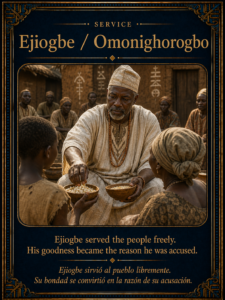
    On earth, Ejiogbe had no separate life for himself. When children were seized by convulsion, people called him. When pregnant women were in danger during labor, people ran to him. When disputes broke out between families, he listened and settled them. When the oppressed needed help, he went to them.

    He did not ask first what they could pay. He did not delay because the task was difficult. He served because service was his nature.

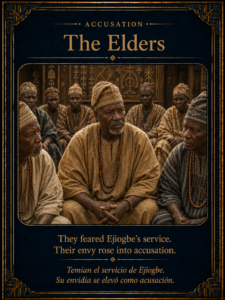
    But the same goodness that helped the people also stirred resentment among others. Certain elders and priests believed that Ejiogbe had damaged their livelihood by helping people without demanding payment. They accused him of spoiling the world and introducing a way of conduct that did not agree with the established order on earth.

    Their resentment grew into dangerous hostility. What began as displeasure became accusation. One by one, they went to Heaven to report him before God.

    This story therefore moves through three major stages: public service, heavenly judgment, and divine correction. It teaches that false accusation may rise upward, but witnessed truth also rises upward. It also teaches that even when a person is vindicated, sacred work must still be maintained through right order, sacrifice, and obedience.


    Quick Takeaway

    In Èjìogbè, true service may provoke envy, but divine judgment restores what jealousy tries to overturn. Yet the story also teaches that goodness must be sustained with wisdom. Service must continue, but it must continue with order, sacrifice, and proper spiritual alignment.


    The Story

    While Ejiogbe was living on earth, certain elders began going to Heaven one after another to report him before God. They believed that he had damaged their means of livelihood by performing works for people without payment.

    They said that Ejiogbe was spoiling the world. They said he was introducing a new code of behavior that was foreign to the way life was conducted on earth. They accused him of offending other divinities and disturbing the established order.

    Yet Ejiogbe’s life on earth told a different story.

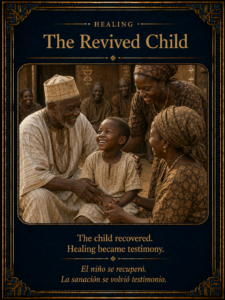
    He spent his days serving others. When children were seized by convulsion, he was called to revive them. When pregnant women were in danger during labor, he was summoned to help them. When disputes arose, he settled them. When the oppressed needed assistance, he went to them. His work was constant, and often he had no time even to care for himself.

    Because of this, the people loved him. But those who profited from suffering became resentful.

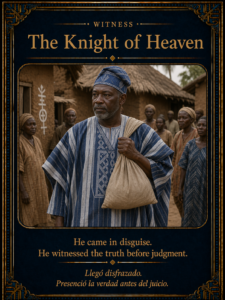
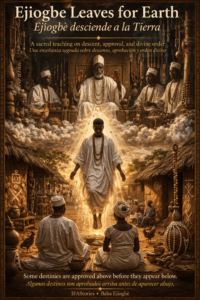
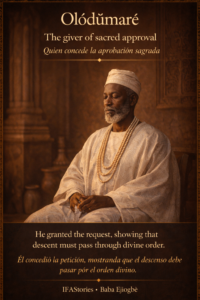
    Olódùmarè, who is also called Osalobua in Bini, then sent for Ejiogbe from Heaven. A Knight of Heaven was sent to bring him. But before the messenger reached Ejiogbe’s house, he removed his heavenly garment, placed it in a bag, and disguised himself as a poor man without work.

    Very early in the morning, the disguised messenger arrived at Ejiogbe’s house. He asked for any humble task by which he might earn a living.

    Ejiogbe answered that he had no work to assign, because his own occupation was to render free service to the people.

    Food had already been prepared for Ejiogbe, and he invited the visitor to eat with him. But the man refused. He said he was not qualified to eat from the same plate as Ejiogbe. He insisted that he would eat only whatever remained after Ejiogbe had eaten.

    Before Ejiogbe could begin his meal, people arrived in distress. Their only child had been seized by convulsion. They begged Ejiogbe to come at once.

    Ejiogbe left the food untouched and went with them. The disguised Knight followed him.

    When Ejiogbe reached the child, he placed his left knee upon the ground. He uttered an incantation and called the child’s name three times. The child answered, sneezed, opened the eyes, and then asked for food.

    The household was filled with relief.

    But before Ejiogbe could return to his own meal, another group arrived. They told him that a pregnant woman had been in severe labor throughout the night. Her condition was dangerous, and they begged him to come quickly.

    Again, Ejiogbe did not delay.

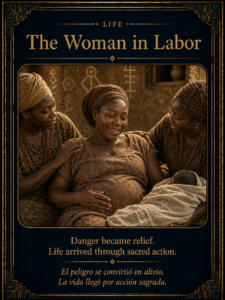
    He went to the woman. When he arrived, he made quick divination and declared that she would deliver safely. He gave her ìyẹ̀rosùn and water to swallow. While she swallowed it, he pronounced an incantation. Then the child and the placenta came out together, and there was rejoicing in the house.

    Once again, Ejiogbe left without asking for payment.

    By the time he returned home with the visitor, it was already well past midday. Yet he had still not eaten his morning meal. Even then, rest did not come.

    Another crowd was waiting for him. They had disputes they wanted him to settle. Ejiogbe listened to them one by one. He judged their complaints, reconciled them, and they returned to their houses in peace.

    Only when the sun was close to setting did Ejiogbe finally sit down to eat.

    Again, he invited the visitor to join him. Again, the visitor said he would eat only after Ejiogbe had eaten.

    But as Ejiogbe began his meal, the visitor went inside. He opened the bag, put on his heavenly garment, and revealed himself.

    When Ejiogbe saw the dress of the Knight of Heaven, he knew at once that this was no ordinary man. He stopped eating and asked what message had been brought to him.

    The Knight answered that God required him in Heaven without delay.

    At that moment, everything changed. The stranger had been revealed. The summons had come. Ejiogbe could no longer remain where he was.

    Ejiogbe dressed himself and departed with the Knight. Once they passed beyond the town, the messenger embraced him, and almost at once they arrived in the palace of God.

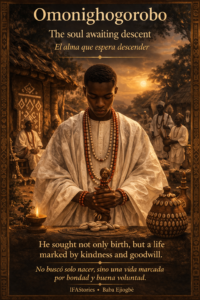
    There, the voice of God called him by his heavenly name:

    Omonighorogbo.

    That was the name Ejiogbe bore in Heaven before he came into the world.

    God demanded an explanation. Why had he caused such confusion on earth? Why had he offended the other divinities? Why had so many reports been brought against him?

    Ejiogbe went down upon his knees to answer.

    The accusation had reached Heaven. What began on earth as resentment had now become a matter of divine judgment.

    But before Ejiogbe could speak, the Knight who had brought him asked permission to explain what he had seen.

    The Knight testified that Omonighorogbo had spent the whole day in service to mankind and had not even found time to take a proper meal. He told how Ejiogbe had revived the child. He told how Ejiogbe had helped the pregnant woman deliver safely. He told how Ejiogbe had settled disputes and restored peace. And he testified that Ejiogbe had done all these things without demanding payment.

    Then the truth became clear.

    The offense was not that Ejiogbe had done evil. The offense was that Ejiogbe had tried to live on earth according to the conduct of Heaven. He had brought compassion into a place ruled by profit. He had brought service into a place ruled by control. He had brought help into a world where some gained from suffering.

    For that reason, the money-loving divinities and priests on earth had become angry.

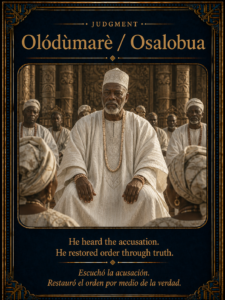
    When God heard the messenger’s report, He ordered Omonighorogbo to rise from his knees. He declared that the accusations against him had come from envy and jealousy.

    Then God commanded Ejiogbe to return to the world and continue the good works he had been doing. But from that time onward, he was also instructed to charge reasonable fees for his service, while still helping those who were truly in need.

    Ejiogbe had been vindicated. The accusation had failed. The truth had been witnessed. Jealousy had been exposed before divine authority.

    But the story did not end with vindication alone.

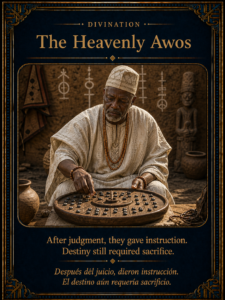
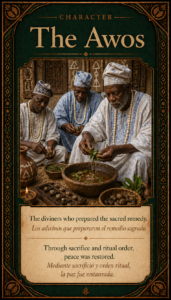
    Before returning to earth, Ejiogbe went to the heavenly Awos who had made divination for him before he first came into the world. Their sacred names and sayings were remembered:

    Eduwe koko mejinja won sarawon kpelenje kpelenje.
    Meaning: When two cocoyam leaves are quarrelling, the wind carries them about.

    Ejo-Mejinja, won sarawon loroku loroku.
    Meaning: When two snakes are fighting, they embrace each other.

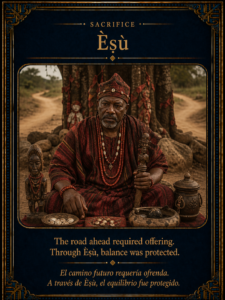
    The Awos advised him to offer another he-goat to Èṣù.

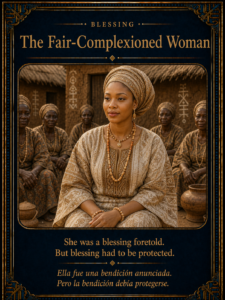
    They also told him that when he returned to earth, he would meet a fair-complexioned woman and that he should marry her. After marrying her, he was to offer a big he-goat again to Èṣù so that she would not leave him.

    They said that the marriage would bring him strength and prosperity. But they also warned him that if he allowed the woman to leave him, he would return to penury.

    Ejiogbe performed the sacrifice to Èṣù in Heaven.

    After that, he returned to the world. As the heavenly Knight had instructed him, he closed his eyes. When he opened them again, he was back on earth, as though waking from sleep.

    Around him, people were already wondering why Ejiogbe had slept for so long that morning.

    But Ejiogbe had not merely slept.

    He had been summoned.
    He had been judged.
    He had been defended.
    He had been vindicated.
    And he had returned with divine instruction.


    Story Structure

    Initial Condition

    The story begins with Ejiogbe living on earth as a servant of humanity. He gives help freely and constantly, but his generosity begins to threaten those who profit from human suffering.
    Conflict and Accusation

    The elders and hostile priestly authorities accuse Ejiogbe before Heaven. Their complaint frames his good works as disorder. They do not accuse him because he has harmed the people, but because his service disrupts their own influence.

    Hidden Witness

    A Knight of Heaven is sent to bring Ejiogbe, but he first enters Ejiogbe’s life in disguise. This is one of the most important structural features of the story. Heaven does not act on accusation alone. It observes.

    Proof Through Service

    The revival of the child, the safe delivery of the pregnant woman, and the settling of disputes all become evidence. These episodes are not random. They reveal what kind of person Ejiogbe truly is.

    Heavenly Judgment

    In the palace of God, Ejiogbe is called by his heavenly name, Omonighorogbo. The accusation that began on earth is now examined before divine authority.
    Testimony and Vindication

    The Knight speaks before Ejiogbe can defend himself. His testimony reveals the truth of what he witnessed. The accusation is exposed as envy and jealousy.

    Correction Within Vindication

    God does not tell Ejiogbe to stop helping people. Instead, He tells him to continue, but with better order. Ejiogbe must charge reasonable fees while still helping those in need.

    Divinatory Continuation

    The narrative continues beyond the judgment scene. Ejiogbe consults the heavenly Awos, receives instruction, makes sacrifice to Èṣù, and receives warning concerning marriage, prosperity, and possible loss.

    Lasting Instruction

    The story ends with a clear teaching: truth may be vindicated, but blessing must still be maintained. Service must continue with order, sacrifice, and obedience.


    Main Characters

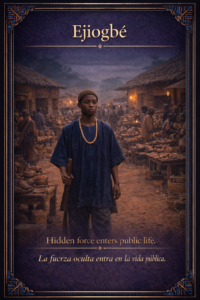
    Ejiogbe

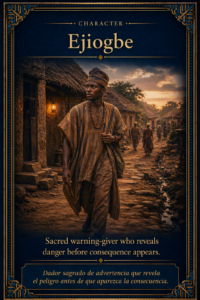
    Ejiogbe is the central figure of the story. He heals, helps, delivers, reconciles, and answers the needs of others. His authority comes from service rather than domination. Spiritually, he represents true usefulness that remains visible in Heaven even when it is misjudged on earth.

    Omonighorogbo

    Omonighorogbo is Ejiogbe’s heavenly name. Its presence deepens the story because it shows that a person’s earthly conduct is connected to a higher sacred identity. Ejiogbe is not only judged as a man on earth; he is called by the name he bore before coming into the world.
    The Knight of Heaven

    The Knight of Heaven is the messenger sent to fetch Ejiogbe, but he becomes much more than a messenger. He is witness, observer, mediator, and defender. His testimony is crucial because it reveals the truth of Ejiogbe’s conduct before divine judgment.

    God / Olódùmarè / Osalobua

    God is the supreme divine authority who hears the accusation, receives the testimony, and restores order. In this story, God does not merely punish or excuse. He judges, vindicates, corrects, and instructs.

    The Elders and Hostile Priestly Authorities

    These figures represent resentment born from threatened interest. They oppose Ejiogbe because his generosity weakens their control. Their role is to show how envy can disguise itself as concern for order.

    The Money-Loving Divinities on Earth

    These beings are angered because Ejiogbe tries to behave on earth as beings behave in Heaven. They represent spiritual authority distorted by greed, control, and attachment to profit.

    The Heavenly Awos

    The heavenly Awos are the divinatory authorities Ejiogbe consults before returning to earth. Their role shows that even after divine vindication, further guidance is still necessary.
    Èṣù

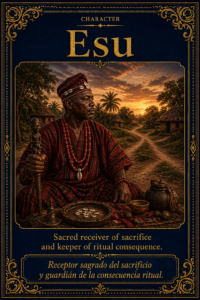
    Èṣù is the recipient of the prescribed offerings. Though he does not speak in the narrative, his role is structurally essential. The sacrifices to Èṣù are connected to future stability, marital protection, prosperity, and the prevention of loss.
    The Fair-Complexioned Woman

    The woman appears as a foretold future spouse. Her symbolic role is relational blessing joined to warning. She represents prosperity that may arrive through relationship, but must be protected through sacrifice and obedience.


    Human Conditions Revealed

    Service

    Service appears through Ejiogbe’s constant response to suffering. The story shows service not as a concept, but as costly action that interrupts rest, food, and personal comfort.

    Envy

    Envy is the hidden force behind the accusation. The story reveals that some opposition does not come because a person has done wrong, but because a person’s goodness threatens others.

    Rivalry

    The elders and hostile priests see Ejiogbe as a threat to their authority. This turns the story into a conflict between true usefulness and threatened control.

    Vulnerability

    The convulsing child and the woman in dangerous labor represent moments when life becomes fragile. These vulnerable conditions allow Ejiogbe’s sacred authority to be revealed through action.

    Endurance

    Ejiogbe repeatedly postpones his own meal and comfort. His endurance shows that sacred labor can demand bodily sacrifice before recognition comes.

    Misrepresentation

    The story reveals how goodness can be falsely described as disorder. Ejiogbe is accused not because he harms the world, but because others choose to interpret his service as disruption.

    Witness

    The Knight of Heaven shows the importance of witness. The story teaches that truth must be seen clearly before judgment is made.

    Regulation

    God’s instruction about reasonable fees introduces balance. The story does not reject generosity, but it teaches that sacred service must be sustainable.

    Prosperity

    The heavenly Awos connect future strength and prosperity to marriage and sacrifice. Blessing is real, but it is not automatic.

    Penury

    The warning that Ejiogbe may return to poverty if the woman leaves him shows that blessing can be lost when protective instruction is ignored.


    Moral and Spiritual Teachings

    One major teaching of this story is that good works do not always produce gratitude. Sometimes they produce hostility. When a person’s actions expose the selfishness or dependence of others, opposition may follow.

    A second teaching is that divine judgment should be grounded in truth, not accusation alone. Heaven does not simply act on complaint. The messenger sees, observes, and testifies. Sacred order depends on accurate witness.

    The story also teaches that service must be sustainable. God does not tell Ejiogbe to stop helping people. Instead, He tells him to continue, but to charge reasonable fees. This is not a rejection of compassion. It is a correction that keeps service from destroying the one who serves.

    Another teaching is that vindication does not end responsibility. After Ejiogbe is cleared, he still goes to the heavenly Awos. He still receives warning. He still has to make sacrifice. The story therefore teaches that one area of resolution does not remove the need for continued spiritual alignment.

    Finally, the narrative teaches that prosperity may depend on protected relationship. The marriage promised to Ejiogbe is not presented as a simple personal blessing. It is joined to sacrifice, warning, and the possibility of loss. Blessing must be maintained with seriousness.


    Symbols and Sacred Elements

    The Knightly Garment

    The knightly garment represents revelation. While hidden in the bag, the messenger appears ordinary. When the garment is put on, the truth of his identity is revealed.

    The Bag

    The bag represents concealment. It carries the hidden heavenly garment while the messenger observes Ejiogbe’s life. It shows that Heaven may test and witness quietly before declaring judgment openly.

    The Untouched Meal

    Ejiogbe’s uneaten food represents the cost of service. It shows how completely he gives himself to the needs of others.

    The Left Knee on the Ground

    This posture appears during the child’s revival. It gives the ritual action bodily seriousness and marks the moment as sacred intervention.

    Incantation

    Incantation is operative sacred speech. It is used in healing and childbirth intervention, showing that spoken ritual force carries consequence within the story.

    Ìyẹ̀rosùn

    Ìyẹ̀rosùn is used in the childbirth event. Its presence shows that ritual power in Ifá is often material as well as verbal.

    Water

    Water is used with ìyẹ̀rosùn as a ritual medium. It carries the preparation into the body and participates in the act of safe delivery.

    The Palace of God

    The palace of God represents the highest place of review, correction, and blessing. It is the court beyond earthly rivalry and false complaint.

    The Sacred Names and Sayings of the Heavenly Awos

    The preserved lines of the Awos are part of the living sacred texture of the story. They should not be removed or treated as ornament. They preserve identity, authority, and meaning within the divinatory sequence.

    The He-Goat

    The he-goat is the offering prescribed to Èṣù. Its role is sacrificial protection and continuity. The story connects it directly to future stability and prosperity.

    The Fair-Complexioned Woman

    The woman represents relational blessing joined to warning. She is a future good, but not a self-maintaining good. The story teaches that some blessings require protection.


    Cultural and Divinatory Context

    This story shows that in Ifá tradition, action is not separated from divination, and destiny is not separated from ritual maintenance.

    Ejiogbe’s life is first seen in practical human terms: healing, helping, reconciling, and answering need. But the story makes clear that these actions also belong to a sacred order that Heaven can review and judge.

    The role of witness is especially important. The Knight of Heaven does not simply arrive and carry Ejiogbe away. He first observes. He sees the child revived, the woman delivered, the disputes settled, and the meal left uneaten. This means that the divine judgment scene is not based only on accusation. It is based on witnessed truth.

    The story also shows why divination matters after major events, not only before them. One might assume that once Ejiogbe is cleared in Heaven, the story is complete. Instead, he still consults the heavenly Awos. This teaches that vindication does not remove the need for further instruction.

    The role of sacrifice is equally important. The offering to Èṣù is not merely symbolic. It is tied to future stability, marriage, prosperity, and protection from loss. The story preserves a living principle of Ifá practice: destiny must often be supported through the right offering made at the right spiritual point.

    Culturally, the story also preserves hierarchy and sequence. Complaint rises upward. Messenger mediation takes place. Divine review follows. Then divination and sacrifice order the future. This keeps the narrative anchored in sacred tradition rather than reducing it to simple moral folklore.


    When This Odù Appears

    When Èjìogbè appears through this teaching, it may point to a situation in which a person’s good works are provoking jealousy or hidden resentment.

    It may warn against over-giving. A person may be helping too many people without preserving enough order in his own life. The lesson is not to become hard-hearted, but to understand that sincere service still requires sustainability.

    This story may also point to false accusation, misrepresentation, or pressure from rival authorities. Not every complaint comes from truth. Sometimes the deeper cause is envy.

    It may also reveal that a person’s work is being watched in two directions: by those who oppose it and by higher forces that see the truth. The story reminds the reader that what is misrepresented on earth may still be clearly witnessed in Heaven.

    This Odù may also point to a future blessing connected to relationship, marriage, or prosperity. But the blessing may require sacrifice, alignment, and obedience to warning.

    Another lesson drawn from this account is that a person who has been cleared in one matter should not assume all work is finished. After vindication comes instruction. After instruction comes responsibility.

    In practical divinatory terms, this narrative may diagnose:

    • jealousy toward a person’s useful work
    • exhaustion caused by unregulated service
    • false accusation or misrepresentation
    • the need for truthful witness or clarification
    • a future blessing tied to ritual obedience
    • the danger of losing prosperity through neglect of protective instruction

    Reflection Questions

    Why does the story place such importance on the Knight of Heaven seeing Ejiogbe’s actions for himself?

    What does the story teach about the difference between true service and unsustainable self-sacrifice?

    Why does God vindicate Ejiogbe and still correct how he should continue his work?

    How does envy disguise itself as concern for order in the story?

    Why are the healing of the child, the childbirth event, and the settling of disputes necessary before the heavenly judgment scene?

    What does the untouched meal reveal about the cost of Ejiogbe’s service?

    Why does the story continue into sacrifice and divination after the accusation has already been resolved?

    What does the warning about the fair-complexioned woman reveal about the fragility of blessing?

    How does the story distinguish sacred authority from social control?

    What does this story teach about the relationship between service, order, and prosperity?


    Conclusion

    Ejiogbe’s story teaches that sacred work is not always welcomed by the world it serves. A person may help others sincerely and still become the target of accusation, resentment, and rivalry. Yet the story also insists that truth is not finally decided by rumor. What Heaven sees clearly cannot be permanently overturned by jealousy.

    At the same time, the narrative refuses a shallow ending. Ejiogbe is not merely praised and sent away. He is instructed, corrected, and prepared for what comes next.

    This deepens the teaching.

    Goodness must be preserved through order. Blessing must be protected through sacrifice. Destiny must be maintained, not merely received.

    In the end, the story leaves a strong and sober wisdom: service that is true may be opposed, but divine judgment restores what envy tries to distort. Still, what is restored must be guarded by obedience, right conduct, and ritual seriousness.

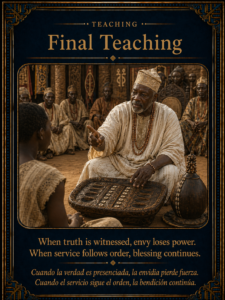
    When truth is witnessed, envy loses its power.
    When service is aligned with order, blessing can continue.
    And when Heaven defends what is right, no earthly accusation can stand forever.


    Downstream Summary Block

    Core Story Tension:
    Genuine public service provokes jealousy and accusation from threatened authorities.

    Core Ritual Dynamic:
    Healing, divination, sacred speech, and sacrifice carry the story from immediate intervention to future protection and prosperity.

    Core Character Dynamic:
    Ejiogbe is opposed by resentful authority figures but vindicated through the witnessed truth of the Knight of Heaven.

    Core Teaching:
    True service must be upheld by truth, sustained by order, and maintained through ritual obedience.Core Divinatory Warning:
    Jealous opposition, overextension, false accusation, and unprotected blessing can lead to loss.

  • Ejiogbe, the Wrath of the Elders, and the Return of Peace

    Ejiogbe, the Wrath of the Elders, and the Return of Peace


    Odù Context

    This story belongs to Èjìogbè, the Odù that often reveals how sacred warning appears before danger becomes visible. In this account, Ejiogbe becomes known because of the good he brings into the lives of others. His usefulness draws honour, but it also attracts hidden opposition.

    The teaching of Èjìogbè in this story is not only about public success. It is about what happens when blessing becomes visible, when envy begins to gather, and when inward peace is disturbed by forces that have not yet openly appeared.

    One of the deepest lessons of this Èjìogbè pattern is that warning is already mercy. Ejiogbe is not left without guidance. Before the danger becomes open, he receives a dream warning. But the story does not end with warning alone. It continues into divination, sacrifice, ritual preparation, and the restoration of peace.

    In this way, the story teaches that rising destiny must be protected, that spiritual unrest should not be ignored, and that peace of mind returns through sacred order.


    Story Reference

    This narrative is drawn from the Baba Èjìogbè section of IFISM: The Complete Work of Orunmila by Mr. C. Osamaro Ibie.

    In this article, the story is presented within the framework of traditional Ifá practice, sacred study, and cultural preservation.

    This adaptation treats the account not as fiction, but as part of the living wisdom of Ifá. It is respectfully presented for spiritual education, reflective study, and the continuity of Yoruba sacred knowledge.


    Introduction

    Some Ifá stories begin with visible danger. Others begin with honour, usefulness, and public admiration. This story begins with Ejiogbe being loved by many because of the good he had done.

    The sick came to him and found restoration. Paupers came to him and, through sacrifice, found the path toward wealth. Barren women came to him and were helped to bear children. Pregnant women came to him and were assisted so they could deliver safely.

    Because of these works, many people held Ejiogbe in high regard.

    But honour does not always come alone.

    The same goodness that made Ejiogbe visible among the people also stirred resentment among certain older Awos. They could not equal his benevolence, and because of that, their hearts turned against him. What began as public admiration became surrounded by hidden hostility.

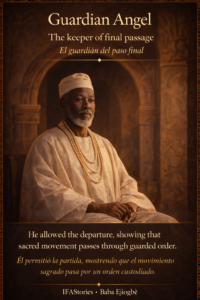
    Then, in the night, Ejiogbe received a warning through a dream. His guardian angel revealed that some elders were plotting against him. When he awoke, he was troubled and confused, but he did not ignore the warning. He resolved to go for divination.

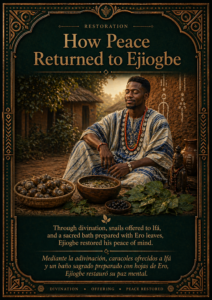
    From that point, the story moves from danger into sacred correction. Ejiogbe consults Ifá priests. He receives instruction. A sacrifice with snails is prescribed. Those he had helped before return to help him. The snails are prepared. Ero leaves are added. A ritual bath is made. Through this process, Ejiogbe’s disturbed condition gives way to peace of mind.

    The story therefore carries two connected teachings: first, that visible goodness may attract hidden opposition; and second, that peace is restored through divination, sacrifice, obedience, and sacred timing.


    Quick Takeaway

    In Èjìogbè, public honour must still be spiritually protected. Good works may attract admiration, but they can also awaken envy. When warning comes, it must be answered through divination, sacrifice, ritual preparation, and obedience to sacred order.


    The Story

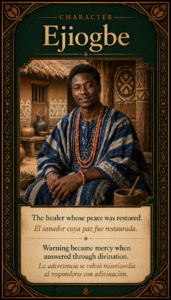
    Ejiogbe became widely known because of the good he did for many people. His house was continually visited by those who came seeking help. He restored the sick, performed sacrifice so that paupers might obtain wealth, helped barren women bear children, and assisted pregnant women so they could deliver safely.

    Because of these works, those who benefited from him held him in high regard.

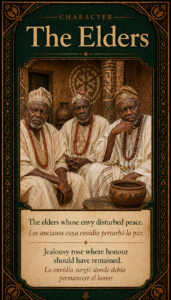
    At the same time, certain elderly Awos became hostile toward him because they could not equal the benevolence and usefulness for which he had become known.

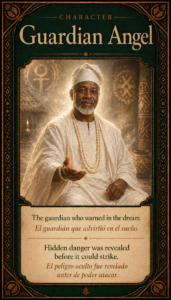
    As this condition grew around him, Ejiogbe became restless. In the night, he received a warning in a dream from his guardian angel. He was told that some elders were making plans against him.

    When morning came, he awoke in confusion. Because of the warning he had received, he resolved to go for divination.

    Ejiogbe went to certain Ifá priests for consultation. In connection with that divination, a sacred verse was spoken:

    Ajogodole efo ni mo kpe Ifa mi.
    Osigi sigi le ekpo.
    Usee mi oojagba igbo.
    Abu kele kon lo obe ide.


    Prayer Interpretation

    Because this prayer contains older, regional, and possibly non-standard forms, the interpretation should be presented carefully. Some words can be supported with confidence, while others should be treated as sacred poetic language rather than forced into a rigid literal translation.

    Original LineAccented / Narration-Ready LineLiteral Meaning We Can SupportSafer Interpretive Meaning
    Ajogodole efo ni mo kpe Ifa mi.Àjogodólé ẹ̀fọ́ ni mo pè Ifá mi.Ẹ̀fọ́ can refer to leaves or vegetable matter. Mo pè Ifá mi means “I call my Ifá.”“With sacred leaves, I call upon my Ifá.”
    Osigi sigi le ekpo.Òsígì-sìgì lẹ́ ẹ̀pò.This line is uncertain. Ẹ̀pò may suggest palm oil, but ekpo/kpo may reflect non-standard Yorùbá or Bini-influenced spelling.“The sacred substance is prepared with ritual force.”
    Usee mi oojagba igbo.Iṣẹ́ mi ò jàgbà igbó.Iṣẹ́ mi means “my work.” Igbó can mean forest or bush. The middle verb phrase remains uncertain.“May my work not be lost or swallowed by the wilderness.”
    Abu kele kon lo obe ide.Abú kẹ́lẹ́ kọ́n lọ́ ọ̀bẹ idẹ.Ọ̀bẹ can mean knife. Idẹ can mean brass, bronze, or copper. The full line remains uncertain.“May the cutting force of hardship not carry away what has been prepared.”
    Uroko iro, Erero lu uroko iro Erero.Ùrókò irọ́, Èrèrò lu ùrókò irọ́ Èrèrò.Irọ́ means falsehood or lie. Ùrókò / Èrèrò remain uncertain in this line. Some sources may suggest orúkọ, meaning “name.”“Falsehood is named; may truth, thought, or sacred judgment strike down falsehood.”

    Taken together, the prayer can be understood as a sacred appeal for Ejiogbe’s work, peace, and spiritual preparation not to be scattered, lost, or overcome by hostile forces. It calls upon Ifá through ritual substances, invokes protection over the work being done, and closes with a chant of release from falsehood and disturbance.

    This interpretation should not be treated as a final word-for-word translation. Rather, it is a careful reading that preserves the sacred force of the prayer while acknowledging where the language remains uncertain.


    He was instructed to make sacrifice to his Ifá with a basket of snails. At that time, however, he did not have the money to obtain what was required.

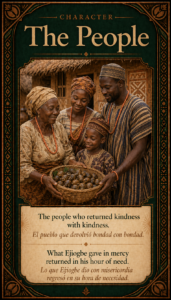
    Then the people he had helped before came forward and brought the snails to him.

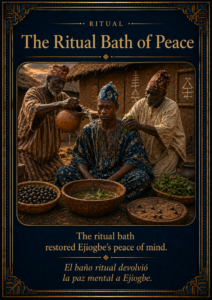
    After the snails were obtained, they were broken, and the liquid from them was gathered. The Awos then collected Ero leaves and mixed them into the snail liquid so that Ejiogbe could bathe with it.

    When the sacrifice had been completed and the bath had been carried out, Ejiogbe began to live in peace. His disturbed condition gave way to peace of mind.

    From that event came a continuing instruction for divination. When Èjìogbè appears during divination, snails are to be offered to Ifá. When it appears at Ugbodu, the goat for the ceremony is not to be offered on that day. It is to be offered five days later. What is to be offered on the Ugbodu day are snails, dried rat, and dried fish.

    After peace of mind returned to him through the ceremony, Ejiogbe rejoiced and sang:

    Uroko iro, Erero lu uroko iro Erero.

    This final chant marks the return of peace after disturbance. Even though the exact wording remains difficult, its placement in the story is clear: Ejiogbe sings after the sacrifice, bath, and restoration have been completed. The chant therefore functions as a sign of release, relief, and restored inward balance.


    Main Characters

    Ejiogbe

    Ejiogbe is the central figure of the story. He is known for benevolence, healing, sacrifice, fertility support, and practical spiritual assistance. His authority comes from usefulness rather than title alone. Yet the story also shows that even one who helps many people may still need divination, protection, and restoration.

    The Elderly Awos

    The elderly Awos represent opposition born from envy. They are older and more established, but they cannot match Ejiogbe’s beneficial force. Their role shows that seniority alone does not guarantee righteousness. In this story, they become the field of hidden danger.

    The Guardian Angel

    The guardian angel appears as a messenger of warning. This figure does not remove the danger directly, but reveals it so that Ejiogbe can act correctly. The dream warning becomes an act of mercy before open harm arrives.

    The Ifá Priests

    The Ifá priests are the divinatory authorities who reveal the proper path. They do not merely comfort Ejiogbe. They diagnose the condition and prescribe what must be done.

    The Awos

    The Awos carry out the ritual preparation. They break the snails, collect the liquid, gather Ero leaves, and prepare the bath. Their work shows that sacred instruction must be enacted with care.

    The People Ejiogbe Helped Before

    This group is brief but important. They bring the snails when Ejiogbe cannot afford them. Their return shows that past goodness may become future support. The help Ejiogbe once gave to others now comes back to preserve him.

    Ifá

    Ifá is the sacred authority to whom the sacrifice is directed. The story moves through Ifá’s divination, Ifá’s instruction, Ifá’s offering, and the lasting divinatory guidance that follows.


    Moral and Spiritual Teachings

    One major teaching of this story is that service creates true authority. Ejiogbe is honoured because he genuinely helps people. His value is not self-declared. It is proven through restoration, sacrifice, fertility support, and care for those in need.

    A second teaching is that blessing can attract opposition. The story does not present honour as simple. Being loved by many does not mean being safe from all. Admiration and envy may grow at the same time.

    A third teaching is that warning is mercy. Ejiogbe receives a dream before the danger becomes open. The warning itself becomes protection because it moves him toward divination.

    Another teaching is that peace of mind requires order. Ejiogbe’s unrest is not solved by wishing or waiting. It is corrected through consultation, sacrifice, material preparation, bathing, and obedience.

    The story also teaches that relationship has spiritual force. Ejiogbe cannot fulfill the sacrifice alone, but those he had previously helped now help him. Their support does not replace ritual; it makes the ritual possible.

    Finally, the story teaches that timing matters. The Ugbodu instruction shows that even when the correct offering is known, it must still be made in the correct order and at the correct time.


    Symbols and Sacred Elements

    The House

    Ejiogbe’s house represents service and public recognition. It is the place where people gather because help can be found there. It also reveals the scale of his reputation.

    The Dream

    The dream is the medium of warning. It shows that hidden matters may be revealed before they become visible in daily life.

    The Guardian Angel

    The guardian angel symbolizes protective spiritual accompaniment. Protection appears first not as rescue, but as warning.

    Snails

    Snails are the main prescribed offering in the restoration of Ejiogbe’s peace. They are not decorative details. They are operative ritual materials within the account.

    Snail Liquid

    The liquid gathered from the broken snails becomes part of the ritual bath. It turns the sacrifice into something applied directly to the body.

    Ero Leaves

    Ero leaves are gathered and mixed into the snail liquid. Their presence shows that the bath is specific, prepared, and ritually composed.

    Bathing

    The bath represents direct ritual correction. Peace is not only spoken over Ejiogbe; the sacred preparation touches his body.

    Goat

    The goat is important because its offering is delayed. It teaches that correct ritual material must still obey correct timing.

    Dried Rat and Dried Fish

    The dried rat and dried fish belong to the Ugbodu-day offering. Their presence reinforces the exactness of the prescription.

    The Rejoicing Chant

    The final chant marks the return of peace. Ejiogbe’s restoration becomes visible and audible through song.


    Divinatory Pattern

    This Èjìogbè teaching leaves a clear divinatory pattern.

    First, a person’s good works, usefulness, or public honour may attract hidden opposition. The danger may not yet be visible, but unrest, troubling dreams, or subtle spiritual warning may reveal that something is gathering.

    Second, warning must lead to consultation. Ejiogbe does not dismiss the dream. He goes to Ifá priests, and through divination the proper path is revealed.

    Third, peace requires exact observance. The story names snails, snail liquid, Ero leaves, goat, dried rat, and dried fish. It also gives sequence and timing. The goat is not offered immediately in the Ugbodu context, but five days later.

    Fourth, help may return through those one has helped before. Ejiogbe’s earlier benevolence becomes part of his own preservation.

    The pattern is therefore not only about danger. It is about how danger is answered: through divination, sacrifice, relationship, ritual preparation, patience, and obedience.


    When This Odù Appears

    When Èjìogbè appears through this teaching, it may point to a condition in which a person’s usefulness, public honour, or growing influence has attracted hidden resistance.

    It may also point to inner disturbance, lack of peace, troubling dreams, or a spiritual warning that should not be ignored.

    This appearance of Èjìogbè may warn against assuming that good works alone remove the need for protection. A person may be loved, useful, and spiritually effective, yet still require divination and sacrifice.

    It may also reveal that the remedy is known but the means are lacking. In such a case, the story teaches that despair is not the answer. Right relationship, reciprocal goodwill, and support from others may become part of the path forward.

    Finally, this Odù may warn about impatience. Correct offering must be joined to correct timing. The delayed goat in the Ugbodu context shows that sacred order includes sequence, restraint, and obedience.


    Reflection Questions

    Why does Ejiogbe become honoured in this story?

    What is the connection between his benevolence and the hostility of the elderly Awos?

    Why is the dream warning so important before the danger becomes visible?

    What does the story teach about the difference between rank and true usefulness?

    Why does Ejiogbe still need divination if he has already helped so many people?

    Why is Ejiogbe’s lack of money important to the story?

    How does the help of those he once helped deepen the meaning of the narrative?

    Why are snails, snail liquid, and Ero leaves central to the restoration of peace?

    What does the delayed goat offering teach about sacred timing?

    How does Ejiogbe’s personal restoration become instruction for later divination?


    Conclusion

    The power of this Èjìogbè story lies in the way it joins public honour, hidden danger, sacred warning, and restored peace.

    Ejiogbe is honoured because he helps others. His house becomes a place of healing, sacrifice, fertility, and assistance. Yet the same goodness that lifts his name also draws envy from those who cannot match his benevolence.

    Before the danger becomes open, he is warned in a dream. That warning is mercy. But mercy must be answered. Ejiogbe does not respond with pride, denial, or panic. He goes for divination.

    Through Ifá’s instruction, the sacrifice with snails, the support of those he had once helped, the preparation of snail liquid and Ero leaves, and the ritual bath, Ejiogbe’s troubled condition is corrected. Peace returns.

    The final teaching is unmistakable: rising destiny must be protected. Good works create honour, but honour must still be guarded. Peace of mind is not always restored by feeling alone. Sometimes it must be restored through divination, offering, preparation, timing, relationship, and obedience.

    Warning is already grace.
    But grace must be answered.
    And when sacred order is followed, peace can return.

  • The Result of Ignoring the Advice of Ejiogbe

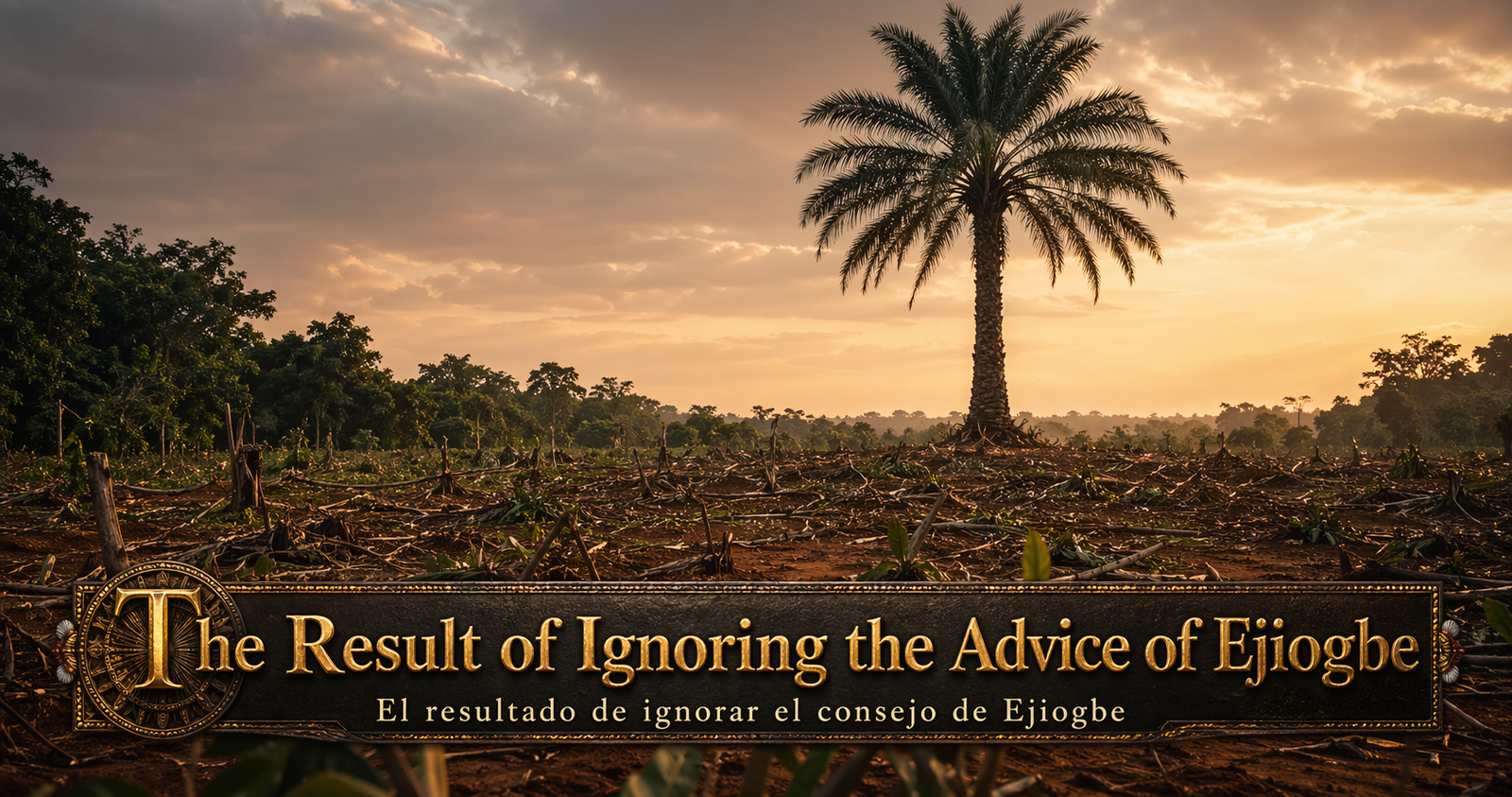
    The Result of Ignoring the Advice of Ejiogbe

    Odù Context

    This story belongs to Èjìogbè, the Odù that often reveals how sacred truth appears before visible consequence. In this narrative, danger is not allowed to arrive without warning, and destruction does not come without prior instruction. The squirrel is warned. The boa is warned. The thick bush is warned. The palm-tree is warned. What separates them is not access to knowledge, but the way each one responds to it.

    One of the deepest teachings of this Èjìogbè pattern is that warning is already mercy. Sacred counsel comes before open disaster. Correction is prescribed before exposure occurs. Because of that, the story is not merely about punishment. It is about the seriousness of divine instruction, the danger of delay, and the consequences of failing to respond when help has already been given.

    Story Reference

    This narrative is drawn from the Baba Ejìogbè section of IFISM: The Complete Work of Orunmila by Mr. C. Osamaro Ibie. In this article, the story is presented within the framework of traditional Ifá practice, sacred study, and cultural preservation.

    This adaptation treats the account not as fiction, but as part of the living wisdom of Ifá. It is respectfully presented for spiritual education, reflective study, and the continuity of Yoruba sacred knowledge.

    Introduction

    Some Ifá stories begin with visible crisis. Others begin earlier, at the hidden moment when mercy has already spoken but consequence has not yet arrived. This story belongs to the second kind. Its weight lies not only in what happens later, but in the fact that instruction is clearly given before danger becomes visible.

    In this account, Ejiogbe encounters several beings on the road and tells each one what must be done. The squirrel is warned. The boa is warned. The thick bush is warned. The palm-tree is warned. Yet their endings are not the same, because their responses are not the same. One acts in time and is preserved. Others refuse, delay, or fail to maintain the sacred condition that was required.

    The story reaches even deeper than a lesson about sacrifice alone. It places two powers of speech side by side. In one moment, sacred utterance helps a woman safely give birth. In another, speech exposes concealment, breaks protection, and leads directly to death. In this way, the narrative teaches not only about ritual obedience, but also about the spiritual responsibility of the mouth.

    Quick Takeaway

    In Èjìogbè, warning becomes protection only when it is obeyed in time. Timely sacrifice preserves, while refusal, delay, and careless speech turn hidden danger into open destruction.

    The Story

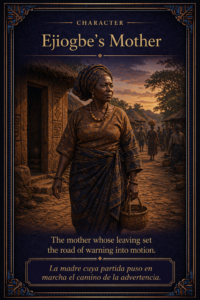
    On the way home from the market, Ejiogbe was left behind by his mother. As he continued alone on the road, he first came upon the squirrel, known as OTAN in Bini and Okere in Yoruba. He warned the squirrel to make sacrifice to Esu with a he-goat so that the words from its own mouth would not become the cause of its destruction. The squirrel rejected the warning and treated it lightly.

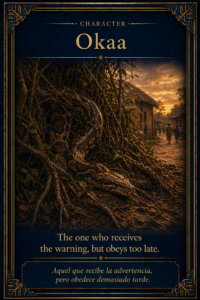
    Ejiogbe then met the boa, called Okaa in Yoruba and Aru in Bini. He warned the boa that death was near and that it would come through a talkative neighbour. To prevent that calamity, he instructed the boa to serve his head privately with a snail and not to allow anyone to answer “Amen” while he was praying. This was not a general instruction. It was exact, guarded, and conditional.

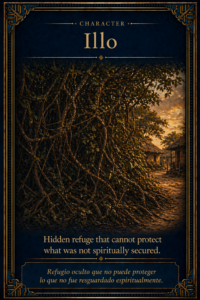
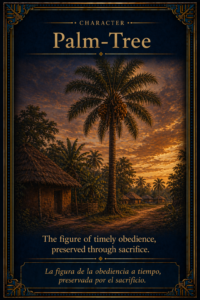
    After this, Ejiogbe met the thick bush, known as Eti in Bini and Illo in Yoruba, and instructed it to offer a he-goat to Esu so that it might avoid unwarranted trouble. He also met the palm-tree and told it to make sacrifice so that another being’s problem would not break its neck. The palm-tree obeyed immediately. Illo did not. From the beginning, the story establishes the difference between timely obedience and neglected counsel.

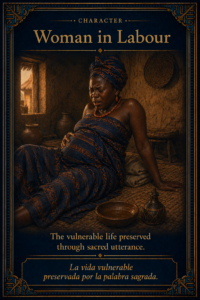
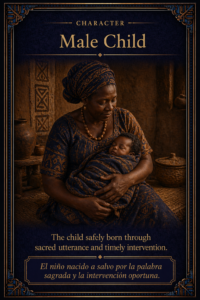
    When Ejiogbe returned home, he received word that the woman he had earlier met on the way to the market was in labour. He went quickly to her house and delivered her through sacred utterance. The source notes that the exact incantation is not reproduced. The woman safely gave birth to a male child. This episode is important because it shows speech functioning as life-giving power before the narrative later shows speech functioning as exposure and destruction.

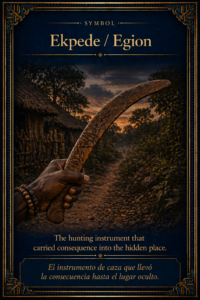
    As soon as the woman delivered, her husband took his hunting boomerang, called Ekpede in Bini and Egion in Yoruba, and went into the forest looking for the boa and for meat to feed his wife. When the boa heard that the woman had delivered, he understood that the danger Ejiogbe had foretold was now close at hand. Only then did he go into the house of Illo so that he could serve his head in secret. His obedience came, but it came late.

    While the boa was there praying to his head, the squirrel entered Illo. As the boa prayed, the squirrel repeatedly answered, ASE, ASE. The boa objected, because he had been instructed not to allow any Amen response during the ritual. The squirrel then changed its voice and began to sing: “Okaa, Jokoo Kpekpe re kpe.” The source preserves the line but does not provide a translation. The effect, however, is unmistakable: the boa’s hidden location was being made known.

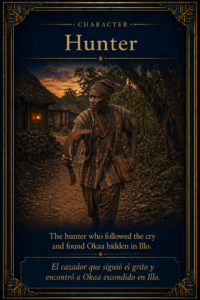
    The hunter heard the squirrel’s shouting and followed the sound to its location. As the squirrel continued to cry out, the boa killed it. But the hunter then cut a fork-stick, cleared the thick bush, found the boa on the ground, and killed him also. Beside the boa lay the dead squirrel and the snail with which the boa had intended to serve his head. Hidden ritual had become public exposure, and delayed correction had failed to preserve life.

    After the weeds were cut away, the palm-tree rejoiced and received relief, because it alone had made sacrifice at the proper time. For that reason, the story explains that the mouth of the squirrel is what kills it, and that the same mouth reveals where the boa is hiding and brings death upon him as well. The account then extends into divinatory teaching, showing that the narrative is meant to instruct future interpretation, not merely retell an old event.

    Main Characters

    Ejiogbe

    Ejiogbe is the sacred warning-giver and revealer of hidden danger. He sees what is coming before others do, and he gives exact instructions for correction. His role also goes beyond warning, since he delivers the woman in labour and shows that sacred authority can preserve life as well as diagnose disorder. Spiritually, he represents revealed truth joined to corrective wisdom.

    The Squirrel / OTAN / Okere

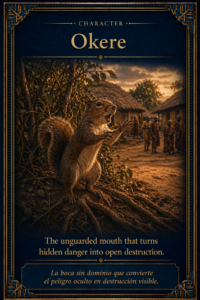
    The squirrel is the clearest figure of refusal and destructive speech. It rejects sacrifice outright, later interrupts the boa’s prayer, and finally reveals the boa’s location through its own voice. In spiritual terms, it represents the ungoverned mouth, the careless tongue, and speech that turns protection into exposure.

    The Boa / Okaa / Aru

    The boa is warned clearly, but he delays action until danger is already near. He does not entirely reject the instruction, yet his correction comes too late. He stands as a figure of delayed obedience, showing that knowing the remedy is not the same as applying it in time.

    Illo / The Thick Bush

    Illo is both a being in the story and a place of concealment. It receives warning, fails to sacrifice, and later becomes the hiding place where the boa attempts protection. In the end, it is cut open. Spiritually, Illo shows that concealment cannot protect what sacrifice has failed to secure.

    The Palm-Tree

    The palm-tree is the story’s positive contrast. It hears, obeys, and sacrifices at once. Later, when the bush is cleared away, it alone receives relief and rejoices. It stands as the clearest proof that timely obedience changes outcome.

    The Woman and the Hunter

    The woman in labor introduces the life-preserving side of sacred utterance. Her husband, the hunter, becomes the worldly agent through which neglected warning turns into visible consequence. Together, they connect healing, need, provision, and judgment in a single narrative movement.

    Moral and Spiritual Teachings

    One major teaching in this story is that warning is mercy. None of the figures are overtaken without prior instruction. The squirrel is told. The boa is told. Illo is told. The palm-tree is told. The difference lies in how each responds. The story therefore rejects the idea of random fate. Outcome unfolds through response.

    A second teaching is that timing matters. The palm-tree obeys at once and is preserved. The boa acts only when danger is already approaching. The squirrel rejects the warning outright. These are not treated as equal failures. The narrative carefully distinguishes refusal, delay, and immediate obedience.

    A third teaching concerns the moral power of speech. Sacred utterance helps deliver the woman safely in childbirth, yet careless utterance later exposes the boa and brings death. Speech in this story is not neutral. It can protect life, or it can destroy it. The mouth is therefore treated as a spiritual responsibility.

    A fourth teaching is that ritual protection depends on proper condition. The boa’s instruction is not simply to pray or to offer a snail. He is told to do it privately and without interruption. The failure of that guarded condition becomes part of the collapse. The story makes clear that sacred action must be done rightly, not merely attempted.

    Finally, the narrative teaches that one may suffer from another being’s disorder. The palm-tree is warned so that another problem will not break its neck. This is one of the story’s subtler lessons: not every burden begins from one’s own direct wrongdoing. Some dangers come through surrounding disorder unless protection is made in time.

    Symbols and Sacred Elements

    The mouth is one of the strongest symbols in the story. In the squirrel, it becomes the cause of destruction. It reveals what should have remained hidden and turns danger into death. The narrative treats careless speech not as a minor fault, but as a spiritually serious act.

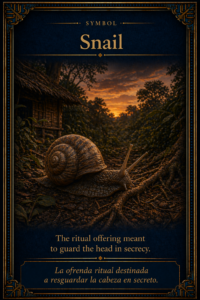
    The snail represents ritual precision. It is the exact material prescribed for the boa’s private head-service. Its presence beside the dead boa at the end is especially powerful, because it shows that knowing the ritual material is not enough when the time and condition have already been broken.

    The head-service represents guarded destiny. The instruction to serve the head privately shows that sacred correction sometimes requires protected boundaries, not public participation. What is holy is not always meant to be interrupted, echoed, or exposed.

    The palm-tree symbolizes preserved stability through obedience. It stands upright when others fall because it responded while warning was still mercy and before danger became visible.

    The fork-stick and the cutting open of Illo symbolize forced exposure. What was hidden is laid bare once sacred protection has failed. Concealment is shattered, and the truth of neglected instruction becomes visible in the open world.

    Divinatory Pattern

    This Èjìogbè teaching leaves a clear divinatory pattern. First, danger may already be present even before it appears on the surface. Second, the correction may already be known, but response may still be delayed. Third, outcome depends not only on hearing the remedy, but on carrying it out in time and under the right sacred condition.

    The story also suggests warnings about destructive speech, broken ritual privacy, delayed correction, and burdens that come through surrounding disorder. In that sense, it functions as more than narrative memory. It becomes practical spiritual instruction, showing how hidden danger becomes visible consequence when sacred counsel is neglected.

    When This Odù Appears

    When Èjìogbè appears through this teaching, it may point to a condition in which a person already knows what must be done but has not yet acted. The danger may still be hidden, yet the story suggests that hidden trouble is often already moving before it becomes visible.

    This appearance of Èjìogbè may warn against ignored counsel, delayed sacrifice, careless or destructive speech, broken boundaries around private healing work, and burdens entering one’s life through the disorder of others. It also teaches that the difference between preservation and destruction is not knowledge alone, but timing, obedience, and the faithful keeping of sacred condition.

    Reflection Questions

    Why does the story treat warning as mercy rather than fear?
    What is the difference between refusing instruction and obeying too late?
    Why is the squirrel’s speech treated as spiritually dangerous rather than merely troublesome?
    What does the boa’s failure reveal about timing and ritual condition?
    Why is the palm-tree the only one left in relief?
    How can another being’s disorder become a burden in one’s own life?
    What does this story teach about the responsibility of the mouth?

    Conclusion

    The power of this Èjìogbè story lies in its clarity. Warning is given. Instruction is made plain. The outcomes differ because the responses differ. One obeys and is preserved. Others refuse, delay, or violate the condition that was required. The lesson is not hidden: sacred knowledge must be answered.

    It is also a story about the seriousness of speech. The same narrative world that allows sacred utterance to deliver life also shows how careless utterance can expose and destroy. In the end, the teaching is unmistakable: warning is already grace, but grace must be answered. What is corrected early may still be preserved. What is ignored often returns later in visible consequence. 

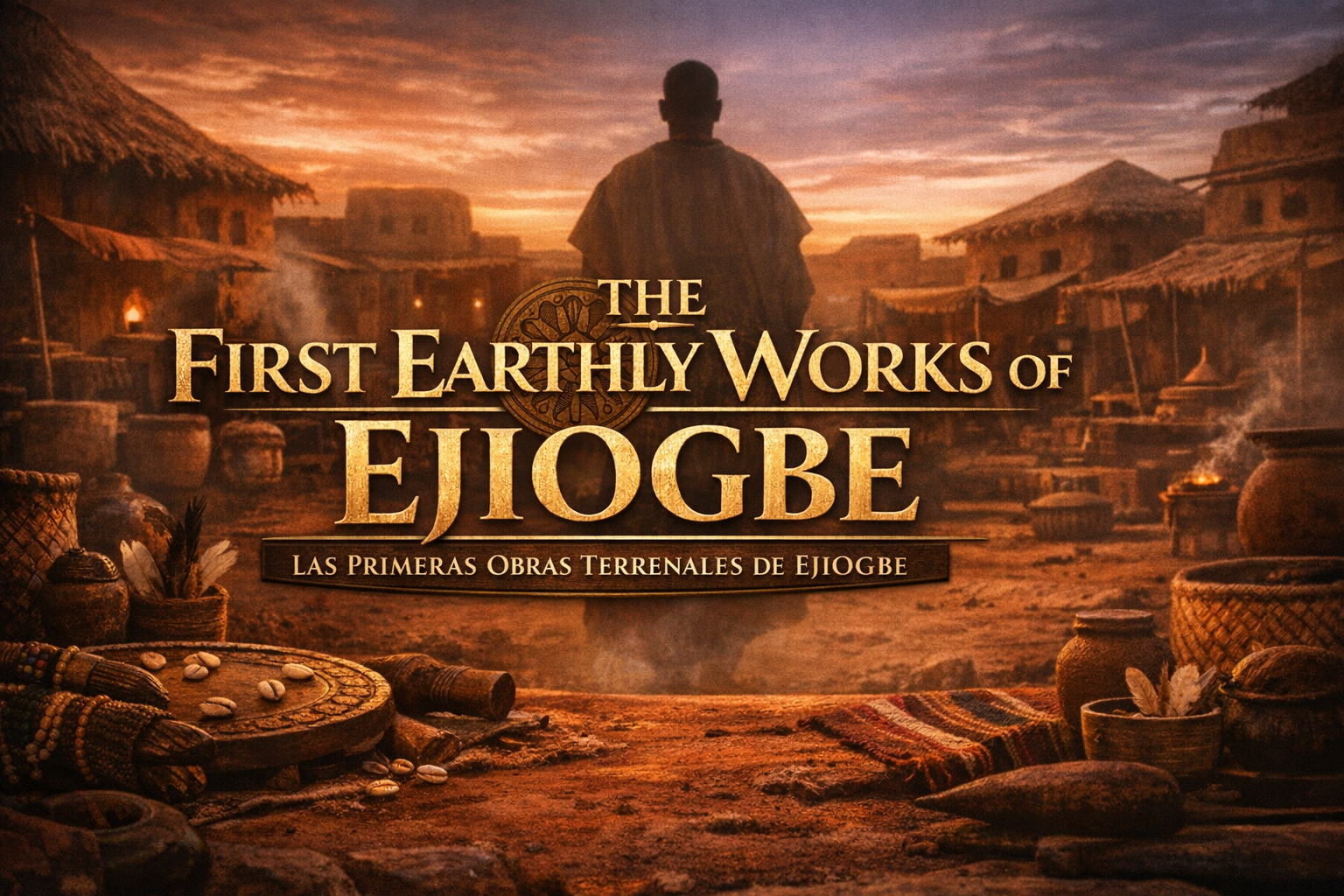
  • The First Earthly Works of Ejiogbe

    The First Earthly Works of Ejiogbe

    Odù Context

    This narrative belongs to Baba Ejìogbè and reveals one of the foundational patterns associated with that sacred Odù: before great power is publicly recognized, it is first brought into the proper field of manifestation. In this account, Ejiogbe’s first earthly works do not begin with spectacle for its own sake. They begin with placement, revelation, correction, and the restoration of order.

    A central law of the story is that sacred authority does not only solve visible problems. It exposes what is hidden, corrects what is disordered, and returns life to right alignment. That is why this narrative moves from sacred setting into revealed affliction, and from revealed affliction into healing, gratitude, and instruction. Ejiogbe does not simply perform wonders on the road. He establishes a pattern of sacred correction that joins truth, sacrifice, thanksgiving, and moral order.

    Story Reference

    This article combines three linked narrative units preserved in the Baba Ejìogbè stream of the Ejiogbe traditions: The Earthly Works of Ejiogbe, The Miracle at the Market, and The Miracle of the Cripple and the Blind. Together, these accounts show the beginning of Ejiogbe’s public earthly manifestation: his entry into the shared world where heaven and earth meet, his revelation of a hidden affliction, and his healing of denied suffering on the way to the market.

    Introduction

    The First Earthly Works of Ejiogbe is a story about sacred emergence, hidden suffering, and the kind of correction that restores more than the body. It begins quietly. Before there is a public miracle, there is a setting. Before there is intervention, there is entry into the right world.

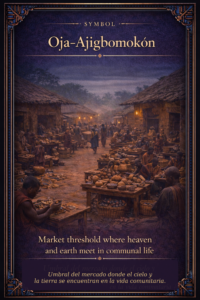
    That is what gives this account its depth. The story first places Ejiogbe in Oja-Ajigbomokon, the only market that existed at that time, a place where heaven and earth met and where goods, arts, skills, technologies, and divination were all part of one shared communal order. The narrative is already teaching before the first healing appears: sacred life is not outside human life. It moves within it.

    From there, the story becomes more urgent. A woman carrying a hidden burden is stopped and diagnosed before she can speak. A cripple and a blind man are healed after denying their own condition. Yet the story is not merely about wonder. In each case, Ejiogbe does more than intervene. He directs, warns, and reorders. That is why these linked episodes matter in living Ifá understanding. They show that sacred correction is not only about relief. It is about truth, obedience, gratitude, and alignment after help has been given.

    Quick Takeaway

    Sacred power becomes visible in the proper field, not in random disorder. In this story, hidden affliction is revealed, denied suffering is corrected, and healing is completed through gratitude, instruction, and right alignment.

    The Story

    At the age of fifteen, Ejiogbe was taken by his mother to Oja-Ajigbomokon. He had already done many mysterious things while growing up, but this journey marked the first major public phase of his earthly works. The market itself was no ordinary place. It was the only market in existence at that time, and in it, traders from heaven and earth carried out many kinds of exchange. Goods were sold there, but so were arts, skills, technologies, and divination. In this way, the story first establishes the world in which Ejiogbe’s works would become visible. He was not simply traveling. He was entering the field where hidden force would begin to take public form.

    But before he even reached the market, the work had already begun.

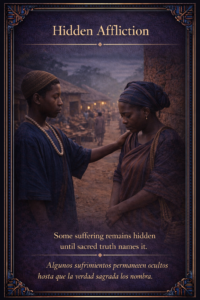
    On the way, Ejiogbe met a woman and stopped her. He told her that she had a problem. Before she could explain herself, he told her not to speak, because he already knew the matter better than she did. He then revealed the burden she had been carrying in silence: she had been pregnant for three years, yet the pregnancy had not developed.

    Ejiogbe prescribed sacrifice with sixteen snails, one hen, one pigeon, five laughing kolanuts, and honey. He also directed that a he-goat, akara, and eko be offered to Esu. The woman obeyed, brought the required materials, and the sacrifice was performed. After this, Ejiogbe declared that her problem had come to an end. Yet he did not allow the story to end with immediate relief alone. He instructed her that after she had safely delivered, she must bring a small boa in thanksgiving to Orunmila, together with a snail and whatever else she could afford. The serpent was called Oka in Yoruba and Arumwotan in Bini. In this way, the narrative makes one of its deepest points: blessing received through sacrifice must be completed through gratitude.

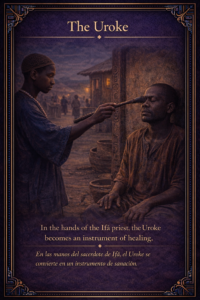
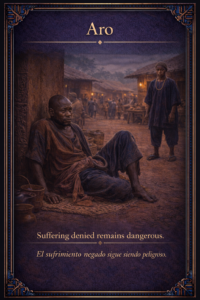
    After this, Ejiogbe continued on his way and met a cripple called Aro. He told Aro that he had a problem, but Aro denied it and answered that it was Ejiogbe who had the problem. Ejiogbe then brought out his Uroke and pointed it at Aro’s hands and legs. At once, Aro rose and began to walk. Only then did he realize that Ejiogbe was not an ordinary boy, but a priest, and he knelt in gratitude for the healing of the deformity with which he had been born. Ejiogbe then instructed him to serve Orunmila and warned him never again to conceal his problems, because one does not know when God will answer prayer. He added that if a person concealed an ailment, that ailment might bury the sufferer in the ground. The healing, then, was not only physical. It was moral and spiritual instruction.

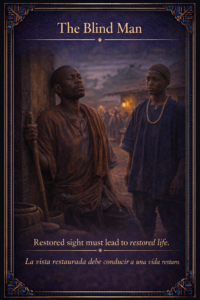
    Soon after, Ejiogbe met a blind man and asked him whether he had a problem. The man also denied it. Ejiogbe then stretched out the Uroke toward his eyes, and immediately the man regained his sight. He was filled with joy. But again, Ejiogbe did not leave the matter there. He instructed the man to become a follower of Orunmila so that his troubles with mankind might be reduced, and he told him that when he got home, he should serve his head with a cock. Only after these things did Ejiogbe finally reach the market. And the story carefully notes that he performed these miracles without asking for reward. His acts were not trade. They were sacred correction joined to truth and right order.

    Main Characters

    Ejiogbe

    Ejiogbe is the central sacred figure of the story. He appears first as a youth already marked by mysterious force, then as revealer of hidden affliction, healer of denied suffering, and authoritative guide who joins intervention to instruction. Spiritually, he represents sacred correction that does not stop at outward change, but restores life to right order.

    Ejiogbe’s Mother

    His mother plays a brief but essential role. She is the one who brings him into Oja-Ajigbomokon, making the movement from hidden formation to public manifestation possible. Spiritually, she represents transitional mediation: the force that carries hidden destiny into the place where it can be seen.

    The Woman on the Road

    The woman represents hidden affliction carried in silence for too long. Her role is important because her case shows that some conditions require revealed diagnosis, exact ritual order, and remembered thanksgiving. Her story teaches that relief may begin with sacrifice, but it is completed by gratitude.

    Aro

    Aro is the cripple healed on the road. His condition is visible, but he still denies it. This makes him a powerful figure of resisted truth. After healing, he becomes a figure of recognition, gratitude, and warning, because his story shows that denied suffering remains dangerous until it is exposed and corrected.

    The Blind Man

    The blind man confirms and deepens the pattern already established with Aro. He also denies his condition, is healed through the Uroke, and is then instructed to reorder his life through service, following Orunmila and serving his head. His role shows that healing is not self-sufficient. It must be followed by alignment.

    Esu and Orunmila

    Esu and Orunmila show that sacred correction has direction and order. Esu receives a specific offering within the woman’s sacrificial sequence, while Orunmila receives thanksgiving and becomes the axis of life after healing. Their presence prevents the story from being reduced to general spirituality. It is structured, relational, and exact.

    Moral and Spiritual Teachings

    One major teaching in this story is that sacred destiny often exists before public proof. Ejiogbe is already a wonder-child before his public works fully appear. The story therefore teaches that hidden force may already be active long before the world knows how to name it.

    A second teaching is that some afflictions require revealed diagnosis. The woman’s condition is not corrected by guesswork, vague sympathy, or general desire. It is named clearly and treated through precise sacrifice. The story insists that sacred order matters.

    A third teaching is that gratitude completes restoration. Ejiogbe does not allow the woman’s relief to stand by itself. Safe delivery must be followed by thanksgiving to Orunmila. In this way, the story teaches that blessing should not end in forgetfulness.

    A fourth teaching is that denial deepens danger. Both Aro and the blind man deny having a problem. Ejiogbe’s warning is severe: concealed ailment does not become harmless because it is denied. It may instead bury the sufferer in the ground.

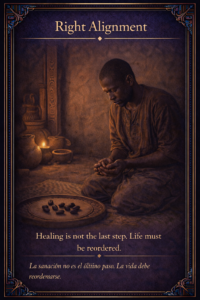
    Finally, the story teaches that healing must lead to alignment. Both healed men are directed toward Orunmila, and the blind man is told to serve his head with a cock. Restoration is therefore not the final step. It is the beginning of reordered life.

    Symbols and Sacred Elements

    One of the strongest sacred symbols in this narrative is Oja-Ajigbomokon. It is more than a market. It is a threshold where heaven and earth meet within communal life, the field in which destiny becomes publicly legible. By placing Ejiogbe there, the story teaches that sacred manifestation does not occur outside the world, but within an ordered communal setting.

    The woman’s undeveloped pregnancy symbolizes hidden blockage, prolonged delay, and suffering that cannot be resolved without revelation and order. It is not only a personal affliction. It becomes an image of a condition that remains suspended until sacred diagnosis and correction are given.

    The Uroke symbolizes direct sacred intervention. In both healings, it is the focused instrument through which bodily restoration takes place. Its repeated use shows that correction is not vague or accidental. It is deliberate, exact, and authoritative.

    The later thanksgiving offering shows that blessing should not end in forgetfulness. It embodies remembered obligation and the completion of received help. In this way, the story teaches that relief alone is not the final step. Gratitude is part of restoration.

    Finally, service to Orunmila and service to the head show that healing is not the last step. The restored life must be reordered. What is corrected outwardly must also be aligned inwardly and spiritually.

    Divinatory Pattern

    This narrative does not preserve a single ritual law in the same direct form as some other Baba Ejìogbè stories, but it does leave a clear divinatory pattern.

    First, it shows that proper placement matters. What is hidden may already be real, but it still requires the right environment in order to become visible and effective.

    Second, it shows that long-standing blockages may require exact instruction. The woman’s affliction is not treated casually. Diagnosis, sacrifice, offering, and thanksgiving each have their place.

    Third, it shows that correction must be followed by ordered life. Healing is not treated as spectacle. It creates obligation: gratitude, service to Orunmila, truthfulness about one’s condition, and alignment of the head. In that sense, the story functions divinatorily as a warning against delay, concealment, forgetfulness, and disorder after help has already come.

    When This Odù Appears

    When this Odù appears, this story may point to something important that is present but has not yet entered the proper field of recognition. It can suggest hidden ability, hidden calling, or sacred formation that is real even before it becomes publicly visible.

    It may also warn about a condition that has lasted too long without proper diagnosis. One lesson drawn from the woman’s story is that long unresolved burdens may require revealed order, exact obedience, and seriousness rather than general effort alone.

    This story may also confront denied vulnerability. A person may be suffering openly and still refuse the truth of the condition. The story warns that denial does not remove danger.

    Finally, it may indicate that relief is not the same as completion. Help may come, but what follows still matters: thanksgiving, service, truthfulness, and the reordering of life after intervention.

    Reflection Questions

    Why does the story begin with sacred setting before it moves into miracle?

    What does Oja-Ajigbomokon represent beyond being a market?

    Why is it important that the woman’s condition is revealed before she speaks?

    What is the difference between immediate relief and completed restoration in the woman’s story?

    Why do both Aro and the blind man deny having a problem?

    Why is Ejiogbe’s warning against concealment so severe?

    What does the Uroke represent in these acts of healing?

    Why does healing in this story always lead into service, gratitude, or alignment afterward?

    How does this narrative show that sacred power restores order, not just conditions?

    Conclusion

    The First Earthly Works of Ejiogbe is not a random collection of wonders. It is a structured beginning.

    First comes placement. Then comes revelation. Then a warning. Then sacrifice. Then relief. Then gratitude. Then healing. . Then right alignment.

    That sequence is the wisdom of the story. Ejiogbe does not reveal sacred power merely by changing outward circumstances. He reveals it by restoring life to order. Hidden destiny is brought into the proper field. Hidden affliction is exposed. Denied suffering is corrected. And healing becomes complete only when it is joined to gratitude, instruction, and spiritual reordering.

    That is why this story matters in living Ifá understanding. It teaches that truth must interrupt what is hidden, that blessing must be remembered, and that sacred correction is not only about rescue. It is about making life rightly ordered again.

    Source Reference

    This narrative is drawn from the Baba Ejìogbè material preserved in IFISM: The Complete Work of Orunmila by Mr. C. Osamaro Ibie. In this article, the combined account is presented within the framework of traditional Ifá practice, sacred study, and cultural preservation.

    This adaptation treats the account not as fiction, but as part of the living wisdom of Ifá. It is respectfully presented for spiritual education, reflective study, and the continuity of Yoruba sacred knowledge.

  • The Birth of Ejiogbe

    The Birth of Ejiogbe

    Odù Context

    This narrative belongs to Baba Ejìogbè and reveals one of the clearest sacred patterns associated with that foundational Odù: life is preserved when hidden destruction is interrupted by timely truth. In this account, the birth of the child does not simply mark a beginning. It becomes the moment in which concealed danger is exposed, mutual retaliation is stopped, and salvation is transformed into lasting ritual memory.

    A central law of the story is that sacred warning can preserve life before catastrophe is completed. The child later named Ejiogbe does not arrive merely to be born. He arrives to save. That is why the story moves beyond household conflict and ends in ritual instruction. What was rescued in the moment becomes something remembered in sacred form.

    Story Reference

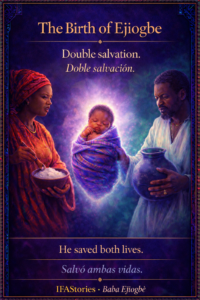
    This article is based on a narrative preserved in the Baba Ejìogbè section of IFISM: The Complete Work of Orunmila by Mr. C. Osamaro Ibie. The account tells how a day-old child saves both parents from hidden retaliation, reveals the truth behind their actions, and becomes the reason a lasting ritual instruction is remembered in doubled form.

    Introduction

    The Birth of Ejiogbe is a story about danger inside the household, sacred warning at the threshold of destruction, and the way one moment of salvation becomes lasting ritual law. It begins with a husband and wife already living under strain. Their child is born into that tension, but the birth does not calm the house. Instead, it becomes the moment in which what was hidden is brought to light.

    What makes this account especially powerful is that the danger does not first come from an enemy outside the home. It comes from two people already bound to one another. Each carries a personal prohibition. Each becomes vulnerable through that prohibition. And each, in turn, becomes willing to use the other’s vulnerability as a weapon.

    Yet the story does not end in mutual destruction. A day-old child intervenes before either parent can complete the act. Through that intervention, the story reveals one of its deepest teachings: sacred warning can preserve life before catastrophe is finalized. What is saved in the moment is later preserved in ritual, so that the lesson is not forgotten.

    This is why the story matters in living Ifá tradition. It is not only a narrative about a miraculous child. It is an account of how truth interrupts hidden violence, how order returns after disorder, and how a birth event becomes ritual instruction.

    Quick Takeaway

    Hidden retaliation destroys order, but sacred warning can preserve life before the damage is complete. In this story, the saving of two lives becomes the reason Ejiogbe is remembered through doubled ritual materials.

    The Story

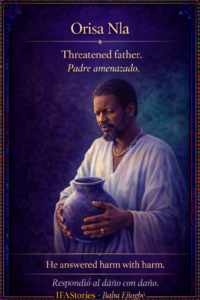
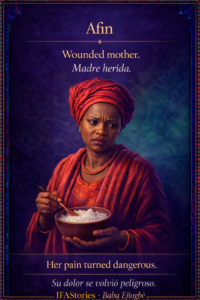
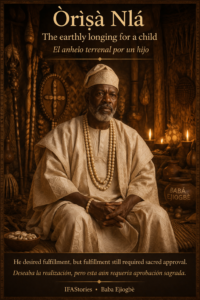
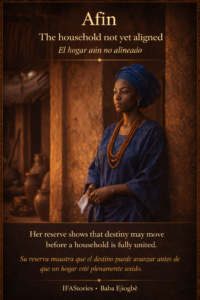
    Afin, the wife of Orisa Nla, became pregnant on earth. Orisa Nla forbade palm wine, while Afin forbade salt. The pregnancy did not remove the tension between them, and Afin became more pugnacious as the months advanced.

    After nine months, she gave birth to a male child. Soon after the delivery, Orisa Nla saw that there was no food in the house for the nursing mother. He went to the farm to bring back yams, okro, and vegetables. He returned later than expected, and this angered Afin. She complained that he had left her hungry on the very day she delivered and took it as proof that he had no love for her.

    Afin then resolved to end the marriage by ending his life. Knowing that Orisa Nla forbade palm wine and that drinking it could end his life, she put palm wine into his drinking water pot. After doing so, she left the day-old child on the bed and went out to visit her neighbours.

    When Orisa Nla returned from the farm, he began to prepare food for his wife. While the yam was on the fire, he went into the room and used his traditional cup, a snail’s shell, to take water from the pot into which palm wine had been put. As he was about to drink, the day-old child spoke and warned him not to drink the water because his mother had added palm wine to it. Orisa Nla was surprised that a child of one day could speak, but he obeyed the warning.

    He finished the cooking, but in retaliation he added salt to the soup, knowing that salt was forbidden to his wife. He then kept the food for her and went out to play Ayo with his friends.

    When Afin returned, she went to the place where her food had been kept. As she was about to eat, the child spoke again and warned her not to eat the food because her father had added salt to the soup. After hearing this, Afin became hysterical and called on the neighbours to save her from a husband who was trying to kill her for bearing him a child. Her cries drew spectators from the neighbouring houses.

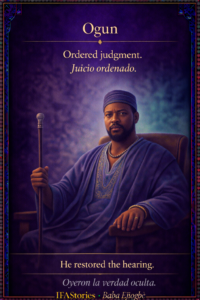
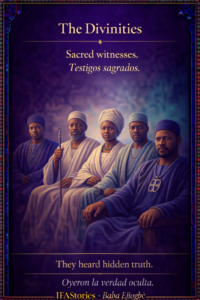
    A meeting of the divinities was then convened in the house of Orisa Nla. He was called back from where he was playing Ayo, and he remained calm even while Afin held onto him and tore at him. Ogun took the chair at the conference because Orisa Nla, who would ordinarily preside, was himself the one being accused.

    Ogun invited Afin to state what had happened. She said that her husband had added salt to her food even though he knew that salt was forbidden to her. When she was asked how she knew that salt had been added and how she knew that he was the one who had done it, she said that her day-old infant child had told her. The divinities thought she was mad because they could not understand how a child of one day could speak to its mother.

    Orisa Nla was then invited to answer the accusation. He confirmed that he had indeed added salt to the soup, but said that he had done so in retaliation for what his wife had already done to him that same day. He accused Afin of putting palm wine into his drinking water pot even though she knew that palm wine was forbidden to him. When he was asked how he knew this, he said that his day-old child had warned him not to drink from the water pot because his mother had added palm wine to it.

    All eyes then turned to the child, who was already being regarded as a mysterious being. Without being directly asked, the child supplied the missing explanation by declaring why he had come. The meaning of his declaration was that he had come into the world to save the lives of both of his parents, and that this was why he warned each of them and prevented their mutual destruction.

    Seven days later, when the child was to be named, his parents called him EJIOGBE, that is, Double Salvation.

    Sacred Lines

    Orisa koi mu emo. Afin koi je iyo.
    Eji mogbe mi ogbe enikon.

    Translation of the Sacred Declaration

    He came to the world to save the lives of his two parents, and that is why he gave each of them the warning that preserved them from mutual destruction.

    Divinatory Instruction

    Because this was the first earthly work of Ejiogbe, when Ejiogbe comes out during initiation ceremony at Ugbodu, all sacrificial materials are required to be produced in doubles.

    The prescribed materials are:

    • 2 goats
    • 2 hens
    • 2 snails
    • 2 fishes
    • 2 rats

    When Ejiogbe comes out at Ugbodu, salt and palm wine are also added to the initiation materials in commemoration of the events that took place on the day Ejiogbe was born.

    Main Characters

    Afin
    Afin is the wife of Orisa Nla and the mother of the newborn child. Her anger after childbirth becomes the first active movement toward destruction. Spiritually, she reveals how emotional injury can become dangerous when it is not restrained. Her role in the final outcome is essential because one half of the child’s double salvation is her own life.

    Orisa Nla
    Orisa Nla is both husband and father, and in the story he appears first as provider, then as endangered husband, then as retaliator, and finally as respondent in the hearing. His significance lies in showing that status and authority do not remove vulnerability or moral exposure. He helps complete the story’s meaning because he is the second life preserved.

    The Child Later Named Ejiogbe
    This miraculous child is the central figure of the story. Though only one day old, he speaks, reveals hidden acts, saves both parents, and explains the reason for his coming. Spiritually, he stands as the vessel of timely salvation and truth. His function in the final outcome is decisive: without him, there is no rescue, no naming, and no ritual continuation.

    Ogun
    Ogun serves as the presiding authority when the case is brought before the divinities. Because Orisa Nla is himself implicated, Ogun takes the chair. His significance lies in restoring order and making formal hearing possible. He represents structured judgment rather than chaos.

    The Divinities
    The divinities gather as the hearing body. They are witnesses, evaluators, and part of the public sacred recognition of the event. Their role helps move the story beyond a private quarrel into a matter of communal and spiritual significance.

    Moral and Spiritual Teachings

    One of the clearest teachings in this story is that hidden violence destroys order from within. The danger does not come first from war, strangers, or open enemies. It comes from inside the household, through secrecy and retaliation. This makes the story especially serious, because it shows how the place meant for nourishment and continuity can become the place of danger.

    The story also teaches that suffering does not automatically make a person righteous. Afin’s pain is real, but her pain does not justify her action. Orisa Nla is endangered, but even that does not justify his retaliation. The story does not flatten moral responsibility into a simple innocent-versus-guilty pattern. It shows both parents entering disorder.

    Another major teaching is that sacred warning can preserve life before destruction is complete. The child does not save one parent against the other. He saves both. This matters. His role is not partisan. It is corrective, revelatory, and life-preserving.

    The final teaching is that true sacred events do not remain at the level of memory alone. They become ritual instruction. The doubled materials at Ugbodu, along with salt and palm wine, preserve the meaning of the story in repeated form. Ifá remembers not only by telling but also by doing.

    When This Odù Appears

    When this Odù appears, this story may warn about conflict inside close relationships that has moved beyond complaint and toward hidden retaliation. It can point to a condition in which each side has become vulnerable, injured, or reactive, and where silence is no longer safe because danger may already be prepared.

    This story may also point to a situation in which the real threat is not open hostility but concealed action. One lesson drawn from this account is that what destroys a household is not always the visible quarrel. Sometimes it is the hidden act carried out in the middle of ordinary life.

    It can also suggest that timely warning is present but must be obeyed quickly. In the story, salvation comes before consumption, not after. So when this Odù appears, it can point to the need to listen carefully to correction before consequences become irreversible.

    It may further indicate that a matter requires reordering through witness, authority, or formal truth. What begins inside the house may need to be examined in a wider moral or spiritual frame. Above all, this story warns against mirrored retaliation and points toward preservation of life over revenge.

    Reflection Questions

    Why does the story begin by emphasizing the prohibitions around palm wine and salt?

    What does the story reveal about the danger of turning emotional injury into hidden retaliation?

    Why is the child’s role more than simply miraculous speech?

    How does the story change once the conflict moves from the household into public and divine hearing?

    Why is “Double Salvation” the right name for the child in structural terms?

    What is the significance of the story continuing into Ugbodu rather than ending with the child’s naming?

    How do palm wine and salt function both as dangerous substances and as ritual memory?

    What kinds of modern situations reflect the pattern of hidden mutual destruction found in this story?

    Conclusion

    The Birth of Ejiogbe is a story of severe household danger, but it is also a story of timely rescue. Two parents move toward destruction through secrecy and retaliation. A child, one day old, stands between them and interrupts what neither of them can see clearly enough to stop alone.

    Its lesson is not shallow comfort. The story is stern. It shows that pain does not excuse wrongdoing, and that being wronged does not justify revenge. But it also shows that sacred warning can arrive before life is lost, and that obedience in that moment matters.

    What was saved on the day of the child’s birth did not remain a private memory. It entered ritual law. That is why the story continues to matter. It teaches that truth can expose hidden harm, preserve life, and turn one moment of rescue into lasting sacred remembrance.

    Source Reference

    This narrative is drawn from the Baba Ejìogbè section of IFISM: The Complete Work of Orunmila by Mr. C. Osamaro Ibie. In this article, the story is presented within the framework of traditional Ifá practice, sacred study, and cultural preservation.

    This adaptation treats the account not as fiction, but as part of the living wisdom of Ifá. It is respectfully presented for spiritual education, reflective study, and the continuity of Yoruba sacred knowledge.

  • Ejiogbe Leaves for Earth

    Ejiogbe Leaves for Earth

    Odù Context

    This story belongs to Baba Ejìogbè, one of the foundational Odù of Ifá, and reflects themes of origin, manifestation, sacred order, and divinely sanctioned transition. In this surviving account, destiny is not presented as a merely human process. Instead, the movement begins in the unseen realm before becoming visible on earth.

    A central pattern of Baba Ejìogbè appears clearly here: what is meant to enter the world may first require heavenly approval, proper alignment, and guarded passage. Desire exists on earth, but fulfillment advances only when higher authorization has been given.

    Although this portion of the account does not preserve a formal divination scene, a named priest, or listed ebó materials, it still reveals a strong spiritual law. Manifestation does not unfold by longing alone. It moves through permission, timing, and sacred order.

    Story Overview

    This sacred narrative begins before birth itself. Rather than opening with the child already in the world, the story first reveals an unseen process taking place in heaven. It teaches that some lives are not brought into the world by human desire alone, but are first prepared, approved, and released through sacred order.

    On earth, Òrìṣà Nlá was already married to Afin, yet they were not united in one desire regarding childbirth. Òrìṣà Nlá deeply wanted a child, while Afin did not appear inclined toward having one. That difference creates the first tension in the story. It is not shown as open household conflict, but as a condition of incompletion.

    At the same time in heaven, Omonighogorobo desired to come into the world as the child of Afin and Òrìṣà Nlá. He did not seek birth merely for existence. He wished to enter the world in order to show benevolence, kindness, and goodwill.

    Though brief, the surviving account leaves behind a strong teaching: what is meant to appear on earth may first require sacred approval above.

    The Story

    Òrìṣà Nlá was already in the world and was married to Afin. Although they were joined in marriage, they were not joined in one desire concerning childbirth. Òrìṣà Nlá strongly wished for a child, while Afin was not inclined toward having one.

    At the same time in heaven, Omonighogorobo went to the altar of Olódùmarè with the desire to come into the world as the child of Afin and Òrìṣà Nlá. He also wished to show the world benevolence, kindness, and goodwill.

    Olódùmarè granted the request. Even then, the descent was not immediate. Omonighogorobo still had to receive clearance from his guardian angel. Only after that final permission was given did he depart from heaven for earth.

    This is where the surviving portion of the story ends. The birth itself is not yet described, nor does the narrative show the later household outcome on earth. But the fragment leaves behind a clear law: some destinies are first named, sanctioned, and released in heaven before they become visible in the human world.

    Story Structure Explained

    The structure of the fragment is brief, but highly ordered.

    The first movement establishes the earthly condition: marriage is present, but shared desire is not. A household exists, yet a child has not come forth.

    The second movement shifts to heaven. Omonighogorobo does not simply appear in the world by impulse. He approaches the altar of Olódùmarè and makes a sacred request to descend through a specific earthly lineage.

    The third movement is authorization. The request is granted by Olódùmarè, showing that the descent has received divine approval.

    The fourth movement is guarded passage. Even after approval, there is still another threshold: clearance from the guardian angel.

    The final movement is departure. Omonighogorobo leaves heaven for earth, but the surviving account stops before the birth itself is shown.

    The governing pattern of the fragment is therefore clear: earthly longing, heavenly petition, divine authorization, guarded passage, descent.

    Main Characters

    Òrìṣà Nlá

    Òrìṣà Nlá represents earthly desire within the story. He longs for a child, yet his longing alone does not produce fulfillment. His role shows that sincere human desire may remain incomplete until it is brought into alignment with a larger sacred order.

    Afin

    Afin represents non-alignment within the household. The story does not condemn her, nor does it explain her reasons. Her importance lies in the fact that she does not share the same desire for childbirth. Through her, the story reveals that destiny may be connected to a household that is not yet fully united within itself.

    Omonighogorobo

    Omonighogorobo is the most active figure in the fragment. He desires to descend into the world and expresses a benevolent purpose before birth itself. His role reveals that manifestation may begin with intention long before it appears in visible life.

    Olódùmarè

    Olódùmarè is the supreme divine authority before whom the petition is made and by whom the request is granted. This confirms that entry into the world is not treated as an ordinary occurrence, but as something subject to sacred approval.

    Guardian Angel

    The guardian angel provides final clearance before descent. This is one of the most important details in the fragment. It shows that even after divine approval, passage into the world is still watched, ordered, and protected.

    Human Conditions Revealed

    One of the clearest conditions in the story is the longing for fulfillment. Òrìṣà Nlá desires a child, but the story makes clear that desire by itself does not complete destiny.

    Another condition is non-alignment within human life. The household is not internally united, yet the sacred process is already moving beyond what can be seen on earth.

    A third condition is purpose before manifestation. Omonighogorobo expresses a benevolent mission before entering the world. This gives the story spiritual depth, suggesting that some lives are linked to purpose before they become visible.

    A fourth condition is dependence on sacred order. The path to earth passes through petition, approval, and clearance. Destiny here is not impulsive. It is governed.

    Spiritual Teachings

    A major teaching of this fragment is that desire alone does not complete destiny. Human longing may be real, but fulfillment may still depend on a higher order.

    Another teaching is that manifestation is governed by sacred permission. Omonighogorobo does not enter the world simply because he wishes to. He enters through approval and orderly passage.

    The story also teaches that purpose can exist before visible life. Omonighogorobo’s intention toward benevolence is declared before his earthly arrival. This presents existence not as random arrival, but as mission-bearing descent.

    Finally, the fragment teaches that transition is structured and protected. Even after approval is granted, there is still guardian clearance. Sacred movement is layered, not rushed.

    Symbols and Sacred Elements

    The Altar of Olódùmarè

    This is the site of petition. It represents reverent access to divine authority and shows that descent begins through sacred approach rather than self-assertion.

    Heaven

    Heaven is the unseen realm where intention, permission, and order are established before visible life unfolds.

    Earth

    Earth is the realm of manifestation, household life, longing, and eventual fulfillment. It is where what has been prepared above becomes visible below.

    Guardian Clearance

    This symbolizes watched and regulated passage. The movement from heaven to earth is not unguarded, but spiritually overseen.

    Ritual Logic

    No explicit divination, sacrifice, prohibition, or ritual prescription is preserved in this surviving portion of the account. That absence should be respected.

    What the fragment does preserve is a sacred sequence: petition, sanction, clearance, descent.

    That sequence is the ritual logic of the story. Its spiritual intelligence lies not in a listed ebó here, but in the law of ordered permission. The account teaches that what enters the world in truth may first pass through sacred approval before taking earthly form.

    When This Odù Appears

    In the light of this fragment, Baba Ejìogbè may speak to situations in which fulfillment has not yet appeared, even though the movement toward it has already begun.

    It may reflect moments when desire exists, but manifestation depends on alignment, sanction, and timing beyond immediate human control.

    It may also speak to family or household conditions in which unity is incomplete, yet destiny is still moving through the unseen layers of life.

    The deepest counsel here is not haste, but order. When something important has not yet appeared, this fragment advises patience, alignment, and respect for sacred timing.

    Reflection Questions

    Why does the story begin with a divided household condition before shifting to heaven?

    What does Omonighogorobo’s mission teach about purpose before birth?

    Why is divine approval followed by guardian clearance instead of immediate descent?

    What does this fragment reveal about the difference between longing and manifestation?

    How should incomplete sacred narratives be read without adding details the surviving text does not provide?

    Closing Reflection

    This fragment is short, but its teaching is enduring. What is meant to appear in the world may first be prepared elsewhere. What is longed for on earth may require approval beyond earth. And what carries true destiny may need not only desire, but also order, sanction, and sacred passage before it becomes visible in human life.

    Source Reference

    This narrative is drawn from the Baba Ejìogbè section of IFISM: The Complete Work of Orunmila by Mr. C. Osamaro Ibie. In this article, the story is presented within the framework of traditional Ifá practice, sacred study, and cultural preservation.

    This adaptation treats the account not as fiction, but as part of the living wisdom of Ifá. It is respectfully presented for spiritual education, reflective study, and the continuity of Yoruba sacred knowledge.

  • Why Òrúnmìlà does not descend upon anyone’s head

    Why Òrúnmìlà does not descend upon anyone’s head

    Odù Context

    Odù: Oyekun-Odi

    This story is associated here with Oyekun-Odi, whose liturgical opening and thematic field align with a teaching about witness, sacred order, human disorder, and doctrinal boundary. The narrative reveals a world in which divine influence reaches human beings, yet that influence becomes corrupted through pride, rivalry, and misuse. The story is remembered because it explains a specific spiritual law: why Òrúnmìlà does not descend upon the head in the same manner as the possessing powers described in the account.

    Source Reference

    This story is drawn from an Afro-Cuban Ifá source tradition, specifically Caminos de Ifá: Baba Eyiogbe y Omoluos, from Caminos de Ifá, associated with Ernesto Valdés Jane and Proyecto Orúnmila. In this article, the story is presented for spiritual education, cultural preservation, and reflective study within the living wisdom of Ifá.

    Introduction

    Some Ifá stories do not begin with a personal dispute, but with a transformation in the structure of the world itself. This is one of those stories. It opens with Olófin establishing the earth and granting power and àṣẹ to the Òrìṣà, yet what begins as sacred order gradually turns into conflict among human beings.

    At the heart of this narrative lies a serious spiritual question: what happens when divine influence reaches people who do not carry it with humility? The story answers by showing how sacred force, rather than producing balance, can become a cause of rivalry, arrogance, and war when it is misunderstood.

    This account matters because it does more than explain a conflict. It preserves a doctrinal distinction. It teaches why Òrúnmìlà does not descend upon the head in the same way other powers in the story are described as doing. That teaching is not presented as an abstract rule, but through a sequence of creation, corruption, investigation, warning, failed correction, and sacred declaration.

    For readers and students of Ifá, this story remains important because it brings narrative, ritual, and teaching together in one place. It is not only a memory of what happened. It is also a guide to spiritual order, authority, restraint, and sacred difference.

    Quick Takeaway

    Sacred power without humility becomes dangerous. This story teaches that when divine influence is turned into superiority and rivalry, disorder follows, and Òrúnmìlà responds not by joining that confusion, but by establishing a boundary.

    The Story

    After establishing the earth, Olófin gave power and àṣẹ to all the Òrìṣà. He granted them the capacity to send their presence to the earth as a spiritual emanation, and by that power they could extend influence to several people at the same time under the protection of the Òrìṣà who sent it.

    Those who received that sacred force no longer remained as they had been before. Under divine influence, they spoke words and knowledge that did not originate from themselves, because they were under the power of the divinity.

    For a time, this condition unfolded without open disturbance. Later, however, those who received such force began to regard themselves as greater than others, and war arose among the inhabitants of the earth. The conflict took both armed form and the form of rivalry rooted in knowledge, whether open or secret, and the earth came near to destruction through that division.

    When the condition became severe, Olófin sent Elegbá to inspect the earth and report on the state of its inhabitants. Elegbá went among them and asked one of those who claimed wisdom what had led to the war. The man answered that he was a child of Ozáìn, that his father had granted him privilege above others, and that Ozáìn came upon his head and supplied him with knowledge. Because of this, he considered himself the wisest among them.

    Elegbá rebuked him and declared that Olófin would not approve of such conduct, nor would the Òrìṣà accept it, because such a war could not be allowed to continue. The man answered that he was king and would not allow anyone to remove him from his position.

    Elegbá continued his investigation among the inhabitants of the earth and found nearly the same answer everywhere. He then returned to Olófin and reported all that he had seen and heard.

    After hearing the report, Olófin decided to send the Òrìṣà to the earth so that they might speak to their respective children and correct their conduct. Obatalá was sent first, but he failed in that task. After him, the other Òrìṣà were sent, and they also failed.

    When no other Òrìṣà remained to be sent, Olófin remembered Òrúnmìlà and called him. When Òrúnmìlà came, Olófin told him that all the other Òrìṣà had already been sent to correct the condition on earth, but the inhabitants remained trapped in a war that could bring about their destruction, because those under the sacred force of an Òrìṣà believed themselves exalted above others. Olófin then asked Òrúnmìlà to see whether he could correct that war.

    Òrúnmìlà answered that he would set himself to correcting that conflict and restoring human beings, but that until the disorder could be amended, he would not descend upon anyone’s head.

    Olófin then said, “to iban eshu.”

    That is the reason given in this story for why Òrúnmìlà does not descend upon anyone’s head.

    Rezo

    1.  Oyèkùn Dì Èlérì Ní Bógno Òtídàs Pínu Ní Olófin Kúri Latíwò Bógbo Orísha Lérí,
    2.  Bógbo Kè Kówa Lérí Èlérì Ní Omó Orúnmìla Ósì Lérí Ní Omó Nína Olóddùmarè,
    3.  Móddu Kuésun Le Alórdo Iré.

    Translation

    1. Oyekun Di bears witness. Before Olófin, in the matter concerning all the Òrìṣà and the head, witness is established.
    2. Witness to the child of Òrúnmìlà; witness to the child of Olódùmarè.
    3. May it settle in blessing.

    The Prayer and Its Meaning in the Story

    The rezo is deeply connected to the central teaching of this narrative because it frames the matter of the head not as a field of rivalry, but as a matter of witness, order, legitimacy, and rightful settlement before Olófin.

    The opening phrase, “Oyèkùn Dì Èlérì,” places the prayer in the mode of witness. That is important because the crisis of the story begins when sacred influence is no longer carried with humility. Human beings do not remain content with divine contact; they turn that contact into superiority, privilege, and conflict. The prayer responds to that disorder by grounding the entire matter in testimony. Before anyone claims greatness, before anyone exalts himself above others, the issue is first brought into the domain of witness. In that sense, the rezo immediately opposes the spiritual vanity that drives the plot.

    Its reference to Olófin, all the Òrìṣà, and the head is especially significant. The story is not simply about possession or manifestation. It is about the spiritual meaning of the head, who has authority in relation to it, and what happens when that authority is misunderstood. In the narrative, the head becomes the place where divine association is turned into a claim of superiority. In the prayer, however, the head is returned to sacred order. It is no longer treated as a ground for ego, but as a matter subject to witness, hierarchy, and divine recognition.

    The lines that establish witness to the child of Òrúnmìlà and witness to the child of Olódùmarè further deepen the lesson. They shift attention away from human boasting and back toward sacred lineage, accountability, and rightful source. In the story, the son of Ozáìn makes knowledge into a reason for self-exaltation. The prayer moves in the opposite direction. It reminds the listener that true legitimacy is not seized by rivalry; it is confirmed within a higher spiritual order. This is one reason the prayer fits the narrative so closely: both the rezo and the story reject the idea that sacred contact automatically justifies personal supremacy.

    The prayer also helps clarify why Òrúnmìlà’s role is different from that of the other forces described in the narrative. Òrúnmìlà does not enter the story by joining the same pattern that has already corrupted the earth. He does not intensify the struggle for spiritual dominance. Instead, he answers the crisis through discernment, law, and restraint. The rezo supports that doctrinal distinction by presenting the matter of the head in terms of witness and sacred order rather than competitive possession. In this way, the prayer prepares the same truth that the narrative concludes: Òrúnmìlà stands in a different relation to the head.

    Its final movement, “May it settle in blessing,” carries the closing wisdom of the account. What the earth lacks is not power, but proper settlement. Disorder came because sacred force was turned into rivalry. Blessing can return only when that confusion is corrected and the sacred order surrounding the head is restored. The prayer therefore does not stand beside the story as a decorative liturgical fragment. It expresses in ritual language the same lesson the narrative teaches through conflict: witness must replace arrogance, order must replace rivalry, and blessing depends on rightful spiritual alignment.

    For that reason, the rezo belongs organically to the story’s doctrinal meaning. It is not merely attached to the narrative; it interprets it. The prayer turns the lesson inward. It reminds the reader or practitioner that the head is not to be approached as a site of vanity or conquest, but as a sacred domain governed by divine order, truthful witness, and the possibility of blessed settlement.

    Story Structure

    The story unfolds through a clear sequence of escalation.

    It begins with sacred order. Olófin establishes the earth and delegates power to the Òrìṣà. This creates a legitimate spiritual arrangement rather than a chaotic beginning.

    That power then enters human life. The Òrìṣà extend their force into human beings, and a cosmic structure begins to operate within society itself.

    What was originally sacred then becomes socially distorted. Human beings mistake received force for personal superiority, and war emerges.

    At that point, investigation becomes necessary. Elegbá is sent to determine the true cause of the disorder. The story narrows from a broad social conflict to a representative figure, the son of Ozáìn, whose arrogance reveals the deeper problem.

    Warning follows, but warning is rejected. Obatalá and the other Òrìṣà are then sent to restore order, yet all fail. This repeated failure shows that the crisis cannot be solved by ordinary intervention alone.

    Only after those efforts fail does Òrúnmìlà enter. His response does not dramatize external conquest. Instead, it establishes a spiritual law.

    The story closes by linking his declaration to an enduring doctrinal truth: this is why Òrúnmìlà does not descend upon the head in this manner.

    Main Characters

    Olófin

    Olófin is the supreme authority in the story. He establishes the earth, grants power to the Òrìṣà, sends Elegbá to investigate, commissions the corrective missions, and finally calls Òrúnmìlà. Spiritually, he represents governing order above the conflict.

    The Òrìṣà

    The Òrìṣà are the divine collective empowered by Olófin. They first transmit sacred force into human life, and later they are sent to correct the resulting disorder. Their significance lies in showing that divine power is real, varied, and active, but not identical in function.

    Elegbá

    Elegbá is the messenger and investigator. He goes to the earth, questions the proud claimant, and exposes the human condition causing the conflict. Spiritually, he represents truthful diagnosis, threshold knowledge, and necessary confrontation.

    The Son of Ozáìn

    This unnamed figure is the clearest embodiment of the disorder in the story. He claims superiority because Ozáìn comes upon his head and gives him knowledge. His role reveals how sacred association can be distorted into pride.

    Ozáìn

    Ozáìn appears indirectly through the claim made by his son. His narrative function is to stand behind the idea of head-based sacred knowledge and thus frame the contrast with Òrúnmìlà’s later refusal.

    Obatalá

    Obatalá is the first named Òrìṣà sent to correct the disorder, yet he fails in that mission. His role shows that even sacred authority does not operate identically in every condition.

    Òrúnmìlà

    Òrúnmìlà is the final authority called after all previous attempts fail. His significance lies in witness-knowledge, restraint, order, and right relation to the head. He does not enter the disorder by imitating it. He answers it by establishing law.

    Human Beings on Earth

    The human collective receives sacred influence but mishandles it. Their role is to show that divine contact alone does not guarantee humility, wisdom, or peace. Humanity is the field in which the whole teaching unfolds.

    Human Conditions Revealed

    Arrogance appears when those touched by divine influence begin to believe themselves superior. It teaches that sacred access does not justify self-exaltation.

    Possession without discipline appears when people speak beyond themselves under divine force, yet that experience is not governed by humility or law. It shows that altered states are not the same as wisdom.

    Rivalry appears in the struggle for supremacy, kingship, and privileged status. It reveals how competition corrupts what should have remained sacred relationship.

    Resistance to correction appears when Elegbá’s warning is rejected and the wider population remains unchanged. It teaches that truth must be received, not merely spoken.

    Collective disorder appears as the social form of spiritual imbalance. It shows that inner corruption eventually becomes communal suffering.

    Moral and Spiritual Teachings

    The story teaches that sacred power is not the problem in itself. The problem lies in how that power is received, interpreted, and embodied. Olófin’s original delegation is legitimate, but human beings turn that gift into a ground for superiority and war.

    It also teaches that divine functions are not interchangeable. The Òrìṣà who influence, possess, or intervene are real powers, yet Òrúnmìlà stands in a different relation to the head. His authority is not presented as competitive possession, but as corrective wisdom and principled restraint.

    A further teaching concerns the sequence of restoration. First there must be diagnosis. Then warning. Then attempted correction. Only after repeated failure does the deeper law emerge. This means that spiritual order is not restored by force alone, but by right discernment.

    Finally, the account teaches that restraint can itself be sacred action. Òrúnmìlà’s refusal is not absence. It is a boundary that protects spiritual order from further confusion.

    Symbols and Sacred Elements

    The Head

    The head is the central symbol of the story. It is the place where divine influence is claimed and later refused. Spiritually, it signifies authority, receptivity, destiny, and the danger of illegitimate descent.

    Àṣẹ

    Àṣẹ is the foundational sacred power given by Olófin to the Òrìṣà. It shows that sacred authority originates in ordered divine delegation.

    Sacred Force

    The spiritual force extended by the Òrìṣà into human beings represents transmission that requires moral containment. Without humility and discipline, what should sustain order becomes a cause of division.

    War

    War is the visible social result of inner spiritual disorder. It reveals what happens when sacred contact is turned into ego and rivalry.

    Animals, Cloths, and Offerings

    The sacrificial materials ground the narrative in ritual action. They show that the story belongs to living divinatory and sacrificial practice, not abstract theology alone.

    Cultural and Divinatory Context

    This story preserves an important distinction within Ifá understanding: not every sacred power manifests through the same form of descent. The narrative is not merely explaining conflict; it is clarifying hierarchy, function, and sacred difference.

    It also reflects a world in which divine-human contact is socially consequential. Power, speech, ritual authority, and communal order are bound together. When sacred force enters human life without humility and discipline, the result is not enlightenment, but instability. That is why investigation, warning, and correction are all necessary stages in the narrative.

    The story further preserves a concern with order and sequence. Elegbá investigates before judgment is made. Obatalá and the other Òrìṣà are sent before Òrúnmìlà is called. This layered progression reinforces the seriousness of the crisis and the distinctiveness of Òrúnmìlà’s final role.

    Within the Afro-Cuban practice and textual transmission of Ifá, this story also functions as a preserved doctrinal explanation. It does not simply recount an event. It teaches why a ritual and spiritual distinction is remembered and maintained.

    When This Odù Appears

    When this Odù appears, the story may warn about spiritual pride, especially where people confuse access, charisma, knowledge, or influence with true wisdom. It can point to conditions in which sacred language or sacred association is being used to justify rivalry and domination.

    It may also point to conflict within a group, family, house, or community, especially when multiple people believe they alone carry authority. One lesson drawn from this account is that disorder often grows where correction has been resisted for too long.

    The story can further indicate that the deeper issue is not only external conflict, but misuse of force, status, or recognition. In such a case, its counsel is to restore humility, receive warning, accept proper hierarchy, and return to disciplined ritual alignment.

    It also teaches that not every problem is solved by more visible power. Some situations require a different kind of authority: witness, interpretation, boundary, and restraint.

    Reflection Questions

    1. How does the story distinguish between sacred power and rightful wisdom?
    2. Why does the narrative place investigation before correction?
    3. What does the son of Ozáìn reveal about the danger of spiritual privilege without humility?
    4. Why do the earlier corrective missions fail before Òrúnmìlà is called?
    5. What does Òrúnmìlà’s refusal to descend upon the head teach about spiritual boundaries?
    6. How does the story transform a doctrinal rule into a narrative explanation?
    7. In what ways can communal conflict begin from private spiritual arrogance?
    8. How should a practitioner handle a rezo that is preserved and transmitted with instability in wording?

    Conclusion

    This story preserves a hard teaching: sacred contact does not automatically produce humility, wisdom, or peace. When divine influence is turned into superiority, the result is rivalry, war, and spiritual confusion.

    Its final lesson is not merely about manifestation. It is about order. Òrúnmìlà’s authority appears here through refusal, limit, witness, and discernment. He does not join the confusion already consuming the earth. He answers it by establishing a law.

    That is why the story remains important. It teaches that true spiritual authority is measured not only by manifestation, but by right function, right boundary, and right relation to sacred power.

  • The Head as a Divinity

    The Head as a Divinity

    Introduction

    Some Ifá stories explain why life is difficult. Others explain why life is ordered the way it is. This story does both. Under Ejiogbe, “The Head as a divinity” reveals how the Head, which was itself a sacred being, came to have a permanent place upon the body and why that placement matters. At first, the world of the story is incomplete. The divinities exist, but the Head has not yet taken its place as the governing center.

    What follows is not a random miracle. It is a sacred sequence. Divination is performed. Sacrifice is prescribed. A warning is given. A ritual object is protected. Many come forward, but none of them is the right one. Only after preparation, cleansing, prayer, and the appearance of the appointed being does the hidden purpose of the sacrifice become fulfilled.

    This story matters because it teaches a law of order. Not everything becomes complete by force. Not every powerful figure is the one chosen to carry out the decisive act. What is meant to become central must be recognized, prepared, and established according to sacred instruction.

    It also matters because it does not remain only in heaven. Like many Ifá narratives, it ends by turning toward human life. The story closes with guidance for the son of Ejiogbe, showing that the account is not only about cosmic origins, but also about practical divinatory teaching.

    QUICK TAKEAWAY

     What is reserved by sacrifice reaches fulfillment only through the one appointed for it. When the rightful center is established, the rest can finally take their proper place.

    THE STORY

    This story explains how the Head, which was itself a divinity, came to dwell permanently upon the body. It is set in heaven and centers on the divination performed for Orunmila and for ORI, the preservation of a ritual object, and the act through which the Head was established above the other parts of the body. It also ends with an instruction for those who come under Ejiogbe.

    The account begins with the statement that the Head was originally one of the divinities and that the divinities had not yet possessed the bodily form they later came to have. Amure, awo eba ono, was the Awo who made divination for ORI in heaven. When Orunmila sought to know how he might obtain complete physical form, he invited Amure to divine for him, because at that time the divinities had no head. Amure instructed Orunmila to raise his palms and pray to receive a head. He also prescribed sacrifice with four kolanuts, a clay bowl, a sponge, and soap. Orunmila was told to place the kolanuts upon his Ifa shrine without breaking them, because another visitor, not yet arrived, would later break them.

    ORI also called Amure for divination. He was told to serve his guardian angel with four kolanuts and was informed that prosperity would begin for him only after that service had been made, though he did not have the means to buy the kolanuts. Orunmila, for his part, completed the sacrifice that had been prescribed for him and left the four kolanuts on his shrine exactly as he had been told.

    After this, Esu proclaimed in heaven that Orunmila had four beautiful kolanuts at his shrine and sought one fit to break them. Then the divinities came to Orunmila one after another, with Ogun leading them. To each one Orunmila said that he was not strong enough to break the kolanuts. Because of this, they felt slighted and withdrew in annoyance. Even Orisa Nla came, but Orunmila received him with other and better kolanuts, telling him that the ones in question were not meant for him. Orisa Nla accepted the fresh kolanuts and departed.

    At last ORI resolved to go to Orunmila, being the only divinity who had not yet tried to break the mysterious kolanuts, and still unable to afford the ones required for service to his guardian angel. He rolled to the house of Orunmila. When Orunmila saw ORI approaching, he went out to meet him, lifted him up, and brought him inside. He took the clay bowl, filled it with water, and washed ORI with the sponge and the soap. After drying him, Orunmila carried ORI to the shrine and asked him to break the kolanuts that had long been kept for him.

    ORI gave thanks for the honor shown to him. With the kolanuts he first prayed for Orunmila, that whatever he undertook would come to fulfilment and manifestation. Then he prayed for himself, that he would obtain a permanent abode and many followers. After this, ORI rolled backward and hurled himself against the kolanuts. They split open with a loud report that was heard throughout heaven.

    When the other divinities heard the sound, they knew that the kolanuts on Orunmila’s shrine had at last been broken. Esu then declared that ORI had broken them, and the divinities agreed that the Head was the one rightly fitted to do it. Immediately afterward, the hand, the feet, the body, the stomach, the chest, the neck, and the rest, each of which had formerly stood with its own separate identity, gathered together and chose to live with the Head. They lifted the Head above themselves, and there at the shrine of Orunmila the Head was established as king of the body. Because Orunmila had a decisive part in the fortune of the Head, the head is said to bow to the ground in deference to him. It is for the same reason that Orunmila, though counted among the younger divinities, is held to be greater and more widely honored than the others.

    STORY STRUCTURE

    Initial Condition
    The story opens in a state of incompleteness. The divinities exist, but the Head has not yet taken its permanent place on the body.

    Divination
    Orunmila and ORI both receive divination from Amure. This establishes that the problem will be resolved through revealed sacred procedure, not accident.

    Sacrifice and Warning
    Orunmila is told to sacrifice with four kolanuts, clay bowl, sponge, and soap. He is also warned not to break the kolanuts because they are reserved for another being yet to come.

    Conflict and Testing
    Esu announces the existence of the kolanuts. Many divinities come to try to break them, but Orunmila refuses all of them. Even Orisa Nla is not the one appointed for the act.

    Transformation
    ORI arrives, is washed and prepared, prays over the kolanuts, and then breaks them with a great explosion heard across heaven.

    Divine Reordering
    After ORI succeeds, the body parts gather around the Head and the Head is established as king of the body. The story moves from incompleteness into ordered hierarchy.

    Lasting Instruction
    The account ends with guidance for the son of Ejiogbe, showing that the story continues into lived divinatory practice.

    MAIN CHARACTERS

    Orunmila
    Orunmila is the divinity who seeks completion and then becomes the guardian of the sacred process. He receives the divination, performs the sacrifice, preserves the kolanuts, receives ORI, washes him, and places him at the shrine. Spiritually, he represents obedience, discernment, and the wisdom to recognize the proper moment and the proper agent.

    Amure
    Amure is the Awo who performs divination in heaven. His role is not dramatic in the emotional sense, but it is essential. He reveals the ritual path for both Orunmila and ORI. He represents the authority of correct divination before manifestation.

    ORI
    ORI is the Head itself, treated here as a divinity and not merely a body part. At first ORI appears vulnerable and unable to afford the required offering. Yet ORI is the one appointed to complete the decisive act. Spiritually, ORI represents rightful centrality, governing authority, and the point through which order becomes visible.

    Esu
    Esu announces the challenge and later announces the outcome. His function is to expose what is hidden and make it visible in the public field. He serves as the force through which destiny is tested and later confirmed.

    All the divinities
    The divinities as a group first appear as unsuccessful claimants. They want access to the reserved act, but they are not the ones chosen for it. Later, they become the witnesses who recognize that the Head was the proper one. They reveal the difference between power and sacred suitability.

    Orisa Nla
    Orisa Nla appears as an honored divine visitor, yet even he is redirected away from the reserved kolanuts. His place in the story shows that spiritual rank alone does not override sacred appointment.

    Ejiogbe
    Ejiogbe is the Odù force under which the story is framed. The closing instruction identifies Ejiogbe as patron divinity of the head and links the heavenly account to earthly divinatory practice. Ejiogbe here represents foundational order, rightful installation, and sacred correction.

    HUMAN CONDITIONS REVEALED

    Incompleteness
    The story begins with a world that lacks proper form. This is not a minor inconvenience but a foundational disorder. It teaches that some problems are structural and require sacred correction.

    Obedience
    Orunmila does exactly as instructed. He keeps the kolanuts unsplit even when many others come forward. This obedience preserves the story’s outcome.

    Vulnerability
    ORI cannot afford the prescribed kolanuts and arrives rolling to Orunmila’s house. The future center first appears in a humble and exposed condition.

    Premature claim
    Many divinities want to perform the act, but none of them is the rightful one. The story reveals how easily visible strength can be mistaken for sacred fitness.

    Public exposure
    Esu’s announcement takes something protected and places it into public awareness. This creates pressure, testing, and the need for stronger discernment.

    Recognition
    The story does not end with ORI acting alone. It ends when others also recognize that ORI was the right one. This shows that order becomes more stable when it is publicly acknowledged.

    Reordering
    The body parts gather around the Head once it has been properly established. The final condition is not chaos, but hierarchy and harmony through correct placement.

    MORAL AND SPIRITUAL TEACHINGS

    This story teaches that not every sacred purpose is fulfilled immediately. A thing may already be destined, yet still require sacrifice, protection, and proper timing before it can manifest.

    It also teaches that rank, visibility, and eagerness do not equal appointment. Many divinities came forward, but only ORI was right for the task. In this way, the story warns against confusing prominence with suitability.

    Another major teaching is that obedience protects destiny. Orunmila does not surrender the reserved kolanuts to the wrong claimants. Because he holds the ritual boundary, what was intended reaches its rightful fulfillment.

    The story also teaches that cleansing and preparation are part of installation. ORI is not simply allowed to act at once. He is washed, carried, and placed at the shrine before the decisive moment. Sacred elevation is shown as something that must be prepared.

    Finally, the story insists that real order is not only personal victory. The final movement is collective reordering. The body parts gather around the Head, and harmony is created through the establishment of the right center.

    SYMBOLS AND SACRED ELEMENTS

    A. Symbols

    Head / ORI
    The Head is the central symbol of the story. It represents governing authority, rightful centrality, manifestation, and the principle around which the rest must align.

    Body parts gathering around the Head
    This is the story’s final image of harmony. The many do not disappear; they take proper place around the true center.

    Heaven
    The setting in heaven signals that the story is explaining a foundational law of order, not just an individual event.

    B. Sacred / Ritual Elements

    Four kolanuts
    These are the key ritual objects of the story. They are protected, reserved, prayed over, and finally broken by the appointed being. They reveal sacred suitability.

    Clay bowl
    The bowl is part of the ritual preparation of ORI. It serves as the vessel through which cleansing is performed.

    Sponge and soap
    These are not incidental objects. They show that purification is necessary before the decisive act can occur.

    Water
    Water functions as a cleansing medium. It marks the transition from unprepared condition to readiness.

    Ifa shrine
    The shrine is where the reserved kolanuts are kept and where the final act occurs. It is the place of guarded destiny and sacred fulfillment.

    Guardian angel
    This element appears in ORI’s divination and links prosperity to service. It reminds the reader that blessing is tied to ritual obligation.

    Skull of any animal
    This appears in the closing divinatory instruction. It shows that the story continues into applied practice.

    Special bathing soap
    This is the final prescription for long life on earth. It connects heavenly narrative to practical ritual guidance.

    CULTURAL AND DIVINATORY CONTEXT

    In this story, divination comes before action. That is an important mark of Ifá seriousness. The story does not present order as something improvised. Sacred correction begins with consultation, instruction, and correctly prescribed materials.

    Sacrifice also matters because it prepares what will only later be understood. The kolanuts are set aside before their purpose becomes visible. This reflects a traditional logic in which offerings do not always produce immediate results; sometimes they establish a field that must be protected until the proper moment arrives.

    The narrative also shows how authority is installed and protected. Orunmila does not allow everyone access to the sacred object. The story therefore teaches that spiritual authority includes guarding boundaries, recognizing appointed roles, and refusing premature claims.

    Most importantly, this account is more than memory. It continues into practice. The final instruction for the son of Ejiogbe shows that the narrative still functions in ordinary divination. The story is not only about what happened in heaven. It becomes counsel for how life on earth may be corrected.

    WHEN THIS ODÙ APPEARS

    When this Odù appears, this story may warn about a condition in which the proper center has not yet been established. A person, family, role, or community may be active, but still lacking the ordering principle that allows everything else to align.

    This story may also point to situations where something important is being prepared but must not be forced too early. One lesson drawn from this account is that what has been reserved by sacrifice should not be given away to every claimant who appears strong, senior, or ready.

    When this Odù appears, it can point to rivalry around responsibility, leadership, honor, or recognition. The narrative warns that many may come forward, but not all are meant to carry the decisive work.

    It may also diagnose a condition in which the rightful center appears weak, under-resourced, or easily overlooked. ORI arrives without grandeur, yet becomes king of the body. The story therefore counsels patience, discernment, protection of what is appointed, and respect for ritual preparation before manifestation.

    Finally, this Odù may indicate the need for cleansing, reordering, and practical correction. The account closes with a concrete instruction for long life, reminding the reader that the sign does not only reveal a condition; it may also call for action.

    REFLECTION QUESTIONS

    1. Why does the story insist that the kolanuts remain unsplit until the right being arrives?
    2. What is the difference in this story between strength and sacred suitability?
    3. Why is ORI shown first in a vulnerable condition rather than in immediate power?
    4. What does Orunmila’s obedience teach about protecting destiny?
    5. Why is cleansing necessary before ORI performs the decisive act?
    6. What does it mean that the body parts gather around the Head rather than compete with it?
    7. How does this story help us think about leadership, order, and rightful placement in modern life?
    8. Why does the narrative end with practical instruction instead of stopping at the cosmic explanation?

    CONCLUSION

    “The Head as a divinity” is a story of sacred installation. It begins with incompleteness and ends with order, but that order is not produced by chance. It comes through divination, sacrifice, warning, protection, cleansing, prayer, and the recognition of the one truly appointed for the act.

    Its deepest lesson is that what belongs at the center must still be prepared, guarded, and brought forth at the right time. Not every claimant is the rightful bearer. Not every delay is failure. Sometimes what is being preserved is the very condition needed for proper fulfillment.

    In the end, the story teaches that harmony does not come when everything struggles equally for prominence. Harmony comes when the true center is established and the rest can finally take their place around it.

     DOWNSTREAM SUMMARY BLOCK

    Core Story Tension: A world without the Head in its proper place can only be corrected through protected ritual fulfillment.
    Core Ritual Dynamic: Divination, sacrifice, restriction, cleansing, sacred speech, and the breaking of the reserved kolanuts lead to installation.
    Core Character Dynamic: Orunmila guards the process, ORI fulfills the destined act, and the divinities move from failed claim to public recognition.
    Core Teaching: Rightful centrality is established through sacred alignment, not mere status or force.
    Core Divinatory Warning: Do not force what has been ritually reserved, and do not confuse visible power with appointed suitability.

error: Content is protected !!