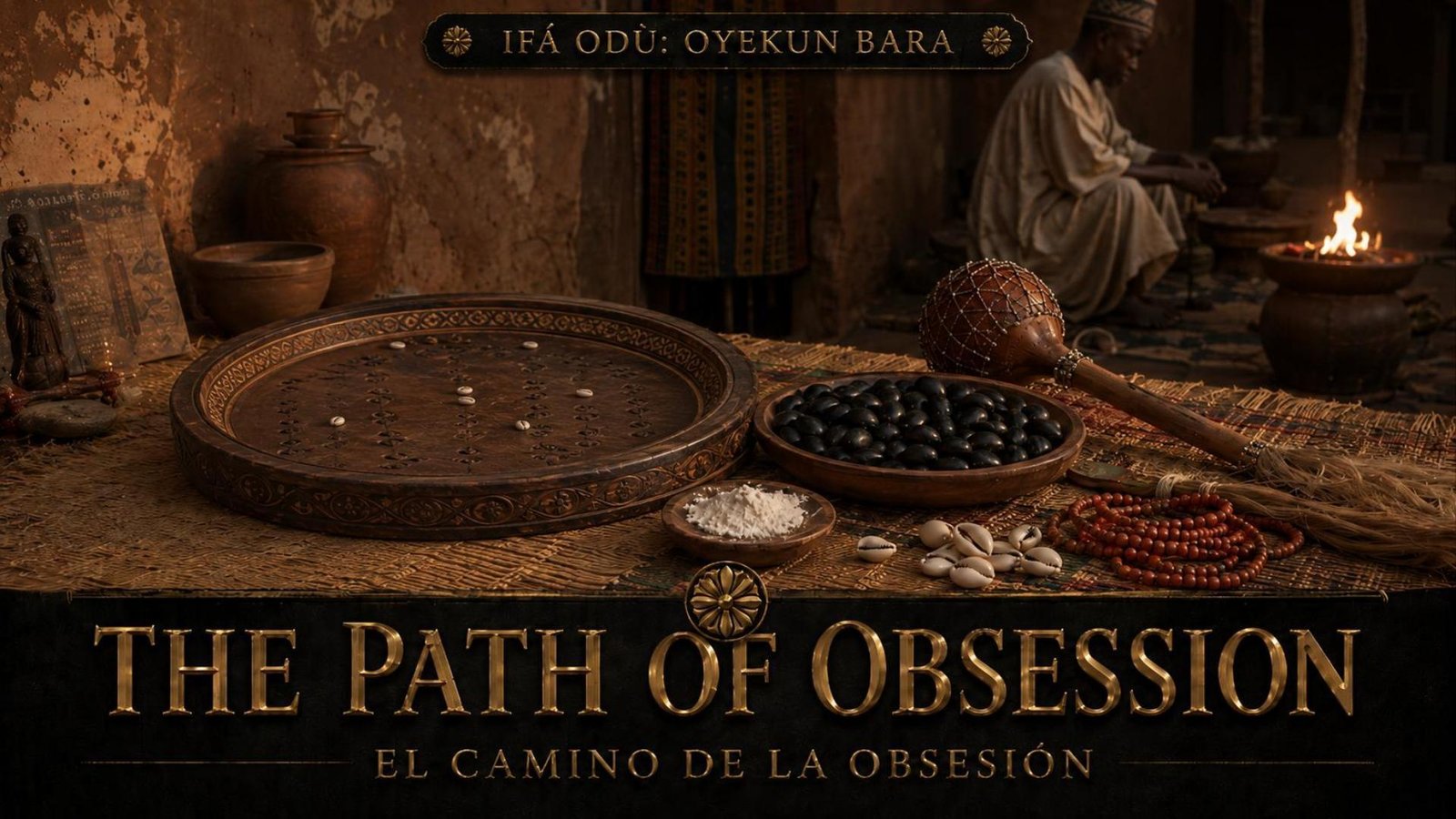
The Path of Obsession
Introductory Note
This retelling draws on a traditional account preserved in Caminos de Ifá, edited by Ernesto Valdés Jane under Proyecto Orunmila, a collaborative Cuban project dedicated to collecting, comparing, preserving, and publishing Osha-Ifá source materials.
The narration, adaptation, educational framing, and commentary presented here are original to IFAStories.
This article is offered as a public educational adaptation of the story under Oyekun Bara. It preserves the sacred narrative, ritual meaning, divinatory teaching, and spiritual warning while maintaining a clear boundary: the story explains the significance of the ritual and spiritual correction, but it does not teach ritual procedure.
Introduction
There are Ifá stories where power arrives before peace. A person may gain force, influence, spiritual capacity, and fortune, yet begin to lose the order that protects the head, the house, and the road.
This sacred Ifá narrative of Oyekun Bara teaches through that danger. It tells of an Awó whose life became tied to Egun Inkan Buruku Intori Ogú: harmful, unsettled Egún connected through ogú. In the story, this connection becomes the object of Oyekun Bara’s obsession until his judgment, household, spiritual protection, and fortune begin to collapse.
This story should not be treated as terror, fantasy, or spectacle. It is a sacred teaching about spiritual responsibility. It explains what can happen when an Awó moves away from the disciplined road of Ifá and becomes absorbed in another spiritual direction connected here to ogú, things of Ikú, unsettled Egún, and forces that disturb the lerí.
At its deepest level, this story is about the relationship between power and order. It is about the head. It is about the house. It is about family. It is about the difference between honoring Egún in proper ancestral order and becoming attached to harmful Egún connected through ogú.
Quick Takeaway
The final lesson is not fear of Egún. The final lesson is respect for balance.
Egún in proper ancestral order must be honored. Ogú-connected Egún must be approached with caution. The head must be protected, the house must be guarded, and an Awó must never confuse spiritual force with spiritual alignment.
The Story
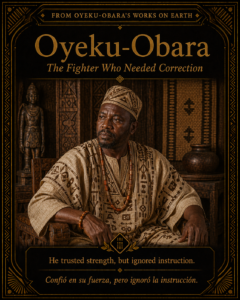
Oyekun Bara was an Awó of great fortune in life. The source says he had luck with women and lived well. But in this story, that fortune is not shown only as personal success. It is shown through the life of a household.
Oyekun Bara lived with his first wife, Abeyawo, and they had a son together. He was not only a man with luck. He was a husband, a father, and an Awó whose fortune was connected to a family structure.
But something had already weakened inside the household. Oyekun Bara no longer had affection for Abeyawo. The relationship that should have been protected with care and responsibility was beginning to lose its place in his heart.
At the same time, another disorder was growing around him.
Oyekun Bara lived in Inle Tana, a land of Ikupa. There, he began to prefer ogú more than Ifá.
In this passage, ogú is best understood as brujería: spiritual work performed through hidden force, manipulation, or operative power, especially as it appears here in connection with things of Ikú, negative Egún, and the cazuela de brujo.
Here, ogú is not presented as disciplined Ifá work. It is connected to things of Ikú, negative Egún, and the cazuela de brujo. This means Oyekun Bara began moving away from the ordered road of Ifá and into another kind of spiritual work, one that brought him power but also opened the way for disturbance.
He began keeping things of Ikú. Because of this work, death-related influence began to manifest inside his house. The source says Ikú began to pass through the house and wanted to dance with Awó Oyekun Bara.
This should be heard as sacred narrative language. It does not need to be reduced to a literal image of Ikú as an ordinary person walking through the house. It shows that the energy and presence of Ikú were no longer distant from his life. Through the things he was keeping and the work he was doing, the influence of Ikú began to touch the house, the family, and the spiritual environment around him.
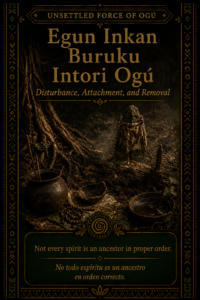
Then Oyekun Bara began to become obsessed with Egun Inkan Buruku Intori Ogú.
This means he became spiritually absorbed by negative Egún connected through ogú. The phrase does not mean that the Egún themselves were obsessed. Rather, the source says Oyekun Bara became obsessed with them. For public reading, these Egún can be understood as harmful, unsettled, or troubled spirits within the context of the story. They are not presented as honored ancestors in proper order.
Oyekun Bara gave himself to working with the cazuela de brujo. This detail must be treated carefully. The source is not presenting this as normal Ifá practice. It is showing that Oyekun Bara, although he was an Awó, began working through another spiritual path, one connected in this story to ogú, things of Ikú, and negative Egún.
His power increased. But his tranquility decreased.
The more he worked with these negative and unsettled Egún influences, the more his inner peace began to fail. His lerí became vulnerable. His judgment began to weaken. His reasoning became clouded. His peace of mind began to break.
This does not mean his head was damaged in a simple way. The better interpretation is that his lerí became easily influenced, unstable, and disturbed, while his orí — his deeper spiritual alignment, destiny, and true inner direction — became misaligned.
The warning first appeared inside the house.
His wife had power in her sight. She saw Ikú entering and leaving the house. His son also saw it. At night, the child cried out because of what he saw.
This shows that the consequence of Oyekun Bara’s work did not remain private. It did not stay only in the ritual space. It entered the home. His wife perceived it. His child reacted to it. The house became the place where the disturbance around Oyekun Bara was revealed.
But Oyekun Bara did not return to order. Instead, he threw his wife and his son out of the house.
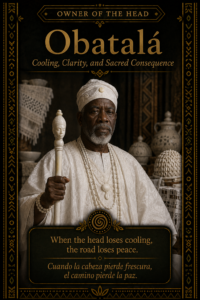
This action carried sacred consequence because they were children of Obatalá. Obatalá is the owner of the head. He is associated with white cloth, calmness, peace, clarity, cooling, protection, and the order that helps a person’s head remain steady.
Because Oyekun Bara’s wife and son were children of Obatalá, Obatalá had always given Oyekun Bara good fortune through them. So when Oyekun Bara rejected his wife and son, he was not only rejecting his family. He was rejecting the very relationship through which Obatalá had been supporting his luck, his peace, and the protection around his life.
When Obatalá saw how Oyekun Bara had treated his children, Obatalá placed a curse upon him.
From that moment, the decline became deeper. Things began to go badly for Oyekun Bara. His affairs became disturbed. His road turned against him. He began to suffer hunger. He could barely live. The blessing that had supported him was no longer holding him in the same way.
The negative Egún work had already begun to weaken his tranquility. But after Obatalá’s curse, the condition became worse. Because Obatalá is connected to the head, peace, and cooling, the loss of Obatalá’s support left Oyekun Bara more vulnerable.
The source says that he continued occupying himself only with the things of Ikú, and there his lerí began to become disturbed. His judgment became more vulnerable. His reasoning became more clouded. His inner peace became weaker. In spiritual interpretation, his lerí was no longer properly cooled or aligned with his orí.
So his decline came through both sides: the spiritual work with negative Egún and things of Ikú, and the consequence from Obatalá after he mistreated Obatalá’s children. Together, these conditions brought down his luck, his peace, his protection, his household, and his well-being.
One day, Eshu Mako passed through that land. When he saw that the land was populated by Egun Inkan Buruku, he became afraid.
This fear is important. It shows that the condition of the land was serious. These were not peaceful Egún in proper order. They were negative, unsettled, or disturbed Egún whose presence had begun to affect the land itself.
What began through Oyekun Bara’s private spiritual work had now spread beyond him. Because Oyekun Bara was the Awó of that place, his actions carried consequence beyond himself. His work should have helped guard spiritual balance. But because he had become absorbed in negative Egún, things of Ikú, and ogú, the land itself now required correction.
So Eshu Mako went in search of Osain.
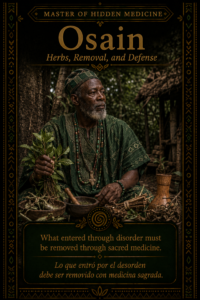
Eshu Mako appears here as the path of Eshu connected to this Odù, the one who recognizes the danger and seeks the force needed for correction. Osain is the force of herbs, forest knowledge, spiritual medicine, cleansing, and hidden power. Osain is needed because the disorder is not ordinary. It requires removal, cleansing, spiritual medicine, and protection.
Eshu Mako and Osain came together. Each one carried osiadié. And as they arrived, they sang:
Egun Laboguede Labera Unlo Osain.
Laboguede Ikú Unlo.
Egun Buruku Unlo.
A cautious prayer gloss may be heard this way:
Egún, by the force and road of Osain, depart.
The influence joined to Ikú, depart.
Harmful Egún, go away.
These words are not decorative language. They belong to the moment of removal. They call for the harmful Egún influence to leave. They invoke Osain as the sacred force of cleansing and separation.
Eshu Mako and Osain performed sarayeye. The story does not give this as a public procedural manual. It does not teach the listener how to perform the work. It shows what the work means inside the story.
The ceremony begins to displace the negative Egún from the land. It exposes the influence that had been occupying the place. It moves against the spiritual disturbance that had gathered through Oyekun Bara’s actions.
And all the Egun Inkan Buruku began to foam at the mouth. This image shows the Egún being disturbed, exposed, and forced out. Their foaming reveals that the influence being removed was not peaceful. It resisted correction.
Then Eshu Mako and Osain came beside Oyekun Bara. The correction now had to move from the land to the person. They performed sarayeye over him with the osiadié. The osiadié were given to Osain. And as this ritual action continued, they sang again:
Egun Baloku Lole.
Egun Baloku Lole.
Unlo Unlo.
Egun Buruku Abeye Ni Ikú.
Osain Lele Ikú Olokun.
Egun Buruku Unlo.
A cautious prayer gloss may be heard this way:
Egún bound to death, leave this place.
Go away, go away.
Harmful Egún, affliction of Ikú, withdraw.
By the force of Osain, Ikú Olokun, harmful Egún, depart.
This second chant continues the work of removal. It commands the harmful Egún to leave. It calls the influence of Ikú away from Oyekun Bara. It places the correction under the force of Osain.
When the influence of the Egún left Oyekun Bara, Eshu Mako and Osain bathed him with ewefá. They rogated his lerí with eyelé meyi funfún. Then they gave those two white pigeons to Obatalá.
This moment is important. The story does not only cleanse the land. It cleanses the person. It does not only confront the negative Egún. It restores attention to the head.
The lerí had become disturbed. The head had lost peace. The reasoning had become clouded. So the correction had to reach the head. The rogation of the lerí shows that Oyekun Bara needed more than power. He needed calm, cooling, restored judgment, and renewed alignment with orí.
After this, they placed Oyekun Bara to sleep. While he slept, Oyekun Bara dreamed of his wife. Then he woke because Obatalá had given him instruction. He had to make ebó with what he had of Ikú. And he had to ask forgiveness from his wife and his son.
This dream reveals the full correction. The ritual work addressed the spiritual condition. But the apology had to address the household rupture. The negative Egún influence had to be removed. But the wound against his wife and son also had to be repaired.
Oyekun Bara woke startled. He performed osorde. In the osorde, the sign Oyekun Bara appeared, and this was his Ifá. Then he made ebó with what he had of Ikú. He had to separate himself from the things that had disturbed his peace, his household, and his fortune.
After that, he went toward the land of Obatalá to ask forgiveness. On the road, Oyekun Bara met his wife and his son. He asked them for forgiveness. He gave them owó.
The story does not treat this as a small detail. The correction had to reach the human relationship that had been broken. It was not enough for Oyekun Bara to be cleansed. It was not enough for the negative Egún to be removed. It was not enough for his head to be cooled. He also had to face the people he had wounded.
When Oyekun Bara arrived at his house, Obatalá was waiting for him. With Obatalá were Elegbá, Shangó, and Osain.
Oyekun Bara knelt before Obatalá. He asked forgiveness. He repented of everything he had done.
Then Obatalá spoke:
In English, Obatalá’s words mean:
You will always have, as a memory of this in your life, stages of poverty and stages of wealth, and you will always have to rely on me and on Shangó for your fortune. Also, you will always have to defend yourself from your enemies with Osain, and Eshu Mako will live with you, guarding the door of your house.
Obatalá’s words establish the final condition of the story. Oyekun Bara would not simply return to power as if nothing had happened. His life would carry memory. He would experience stages of poverty and stages of wealth. He would have to rely on Obatalá and Shangó for his fortune. He would have to defend himself from enemies with Osain. And Eshu Mako would live with him, guarding the door of his house.
There, Osain swore Oyekun Bara in his secret. And Oyekun Bara returned to being an Awó of great power. He returned to fortune.
But the ending was not simple. The memory remained. The conditions remained. The obligation remained. Oyekun Bara remembered that he could not leave his wife and his son from his hand.
The road that began through attachment to negative Egún ended only through cleansing, humility, apology, ebó, and divine correction. The correction did not erase what had happened. It restored power under sacred order.
Story Structure
The Fortune Before the Fall
The story begins with Oyekun Bara as an Awó of great fortune. He has luck, influence, a wife, a son, and a household. His life appears strong, but the story soon reveals that his spiritual and domestic order has already begun to weaken.
The Turn Toward Ogú
Oyekun Bara begins to prefer ogú more than Ifá. He keeps things of Ikú and works with the cazuela de brujo. This movement does not appear as ordinary Ifá discipline. It appears as a turn toward hidden force, negative Egún, and death-related influence.
The Disturbance of the Head
His power increases, but his tranquility decreases. His lerí becomes disturbed. His judgment weakens. His reasoning becomes clouded. This is the inner collapse beneath the outer events.
The Household Reveals the Disorder
Abeyawo and the son see what is passing through the house. Their perception shows that the disturbance has entered the family space. They are not the cause of the disorder. They are witnesses to it.
The Sacred Rupture
Oyekun Bara throws out his wife and son. Because they are children of Obatalá, this action becomes more than domestic rejection. It becomes a sacred rupture with the force that had supported his luck, cooling, peace, and protection.
Eshu Mako and Osain Enter
Eshu Mako sees the land populated by Egun Inkan Buruku and becomes afraid. He seeks Osain. Together, they begin the correction through removal, cleansing, sacred speech, and spiritual medicine.
Correction of the Land and the Person
The harmful Egún influence is removed from the land and from Oyekun Bara. His lerí is rogated. He is bathed with ewefá. The story returns to the head because the head had become disturbed.
Apology and Final Condition
Oyekun Bara must make ebó with what he has of Ikú and ask forgiveness from his wife and son. He kneels before Obatalá, repents, and is restored. But his restoration comes with conditions: memory, alternating poverty and wealth, reliance on Obatalá and Shangó, defense through Osain, and Eshu Mako guarding the doorway.
Main Characters and Relationship Roles
Oyekun Bara
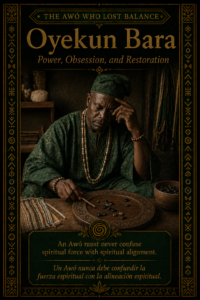
Oyekun Bara is the central Awó of the story. He begins with fortune, household, and influence, but becomes absorbed in Egun Inkan Buruku Intori Ogú. His path shows how spiritual force can become dangerous when it loses order, cooling, and responsibility.
His role is not simply that of a fallen man. He is the one through whom the story teaches the danger of confusing power with alignment.
Abeyawo
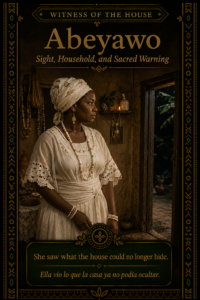
Abeyawo is Oyekun Bara’s first wife. She sees Ikú entering and leaving the house. Her sight reveals that the disorder has reached the household.
She should not be blamed for the collapse. She is affected by what Oyekun Bara has allowed into the house. Her rejection by Oyekun Bara becomes one of the central ruptures that must be repaired.
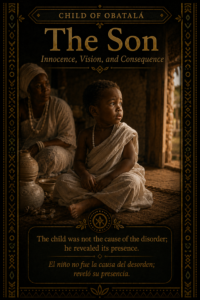
The Son
The son also sees the disturbance and cries at night because of what he perceives. He is innocent in the story. He is not the cause of the disorder. His suffering shows that spiritual imbalance can reach those who did not create it.
Because he is a child of Obatalá, his rejection deepens the sacred consequence of Oyekun Bara’s action.
Obatalá
Obatalá is owner of the head and the sacred force of cooling, clarity, steadiness, and white calmness. In this story, Obatalá’s children are mistreated, and his support withdraws from Oyekun Bara.
Obatalá is also part of the restoration. The rogation of the lerí, the white pigeons, the dream instruction, and the final declaration all return the story to Obatalá’s authority over the head and spiritual steadiness.
Eshu Mako
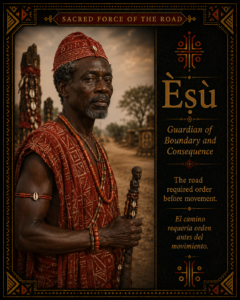
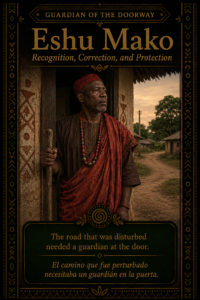
Eshu Mako is the path of Eshu connected to this Odù. He recognizes the danger in the land, sees the presence of Egun Inkan Buruku, and seeks Osain for correction.
In this story, Eshu Mako is not demonic, evil, random chaos, or a fantasy trickster. He is the Eshu of this road: witness, opener, corrector, and protector of the doorway.
At the end, he remains with Oyekun Bara to guard the door of the house. This means the doorway that once allowed disorder to enter now requires sacred protection.
Osain
Osain carries the force of herbs, forest knowledge, spiritual medicine, hidden power, removal, cleansing, and defense. He is needed because the disorder is not ordinary.
Osain helps remove the harmful Egún influence, cleanse the land, cleanse Oyekun Bara, and later becomes part of Oyekun Bara’s ongoing protection against enemies.
Shangó
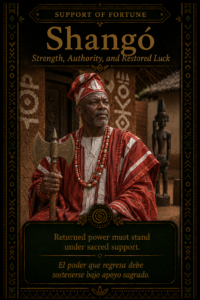
Shangó appears in the final condition given by Obatalá. Oyekun Bara must rely on Obatalá and Shangó for his fortune. Shangó’s presence shows that restored fortune requires sacred support and continued alignment.
Ikú and Egun Inkan Buruku Intori Ogú
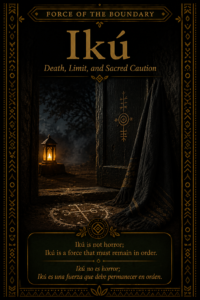
Ikú should not be turned into horror. Ikú has a place in the order of Olódùmarè. But attachment to death-related forces, unresolved spirits, or harmful spiritual work becomes dangerous when it pulls a person away from orí, household responsibility, and sacred order.
Egun Inkan Buruku Intori Ogú are presented here as negative and unsettled Egún connected through ogú. They are not honored ancestors in proper order.
Human Conditions Revealed
Obsession
The root condition is obsession. Oyekun Bara does not merely show interest in spiritual work. He becomes absorbed in harmful Egún connected through ogú. His attention becomes attachment.
Power Without Peace
The story shows that power can increase while peace decreases. Oyekun Bara gains force, but his tranquility weakens. This is one of the most important warnings of the story.
Disturbed Judgment
As Oyekun Bara continues with things of Ikú, his lerí becomes disturbed. His judgment weakens. His reasoning becomes clouded. His decisions no longer come from a cooled and aligned place.
Household Rupture
The disorder reaches the house. Abeyawo and the son perceive what Oyekun Bara does not correct. When he rejects them, the spiritual problem becomes a family rupture.
Sacred Accountability
Oyekun Bara must answer for what he has done. The story does not reduce everything to punishment. It shows that spiritual imbalance, mistreatment of Obatalá’s children, and broken responsibility all require correction.
Restoration with Memory
Oyekun Bara is restored, but not as if nothing happened. His future carries memory. He will know stages of poverty and wealth. He will rely on Obatalá and Shangó. He will defend himself with Osain. Eshu Mako will guard his door.
Moral and Spiritual Teachings
This story teaches that spiritual power must remain under sacred order. Power by itself is not enough. Force by itself is not alignment. An Awó may possess knowledge and still become vulnerable if the head is not cooled, the house is not protected, and the work is not governed by Ifá.
The source names Oyekun Bara’s obsession with Egun Inkan Buruku Intori Ogú. The story’s unfolding shows how that obsession affects his peace, judgment, household, land, and fortune.
The story also teaches the difference between Egún in proper ancestral order and harmful Egún connected through ogú. It does not teach fear of all Egún. It does not reject ancestral reverence. It warns against dangerous attachment to unsettled forces outside proper order.
Another teaching is that spiritual correction must also become human correction. Oyekun Bara cannot only be cleansed. He must ask forgiveness. He must face his wife and son. He must repair the relationship he broke.
Finally, the story teaches that restoration may come with conditions. Oyekun Bara returns to power, but his life carries the memory of what happened. His fortune is restored, but it must remain supported by Obatalá, Shangó, Osain, and Eshu Mako.
Symbols and Sacred Elements
The Head: Lerí and Orí
The lerí is the head. In this story, it is connected to judgment, reasoning, spiritual steadiness, and the ability to remain clear.
The orí is the deeper spiritual head, the destiny-bearing center and inner alignment that guides the road of a person’s life. When the lerí becomes disturbed, the person may still have power, but the power may no longer be guided by clarity.
The House
The house is not only a physical home. It is the place where Oyekun Bara’s spiritual disorder becomes visible. His wife and son see what he does not correct. The house becomes a measure of his imbalance.
The Doorway
The doorway becomes central through Eshu Mako. At the end of the story, Eshu Mako lives with Oyekun Bara and guards the door. This shows that the entrance must be protected after disorder has entered.
Ewefá
Ewefá appears in the cleansing of Oyekun Bara. It belongs to the story’s healing and removal work, but the article does not teach how to use it.
Eyelé Meyi Funfún
The two white pigeons are connected to the rogation of Oyekun Bara’s lerí and are given to Obatalá. Their whiteness belongs to the story’s return to cooling, clarity, and Obatalá’s authority over the head.
Osiadié
The osiadié are carried by Eshu Mako and Osain and used in the correction. They are ritual elements within the story, not decorative details.
Cazuela de Brujo
The cazuela de brujo marks the path of work into which Oyekun Bara has entered. In this story, it is connected to ogú, things of Ikú, and harmful Egún influence. It must be handled as source-specific and not generalized against every spirit-working tradition.
Owó
Owó appears when Oyekun Bara asks forgiveness from his wife and son. It marks the human side of correction. He must not only speak repentance; he must act toward repair.
Ritual / Ceremony Public Education Layer
This story contains ritual material, but it does not provide a public ritual manual.
It names things of Ikú, cazuela de brujo, sarayeye, osiadié, ewefá, rogation of the lerí, eyelé meyi funfún, osorde, ebó, Osain’s secret, and Eshu Mako’s protection of the doorway.
For public education, the important point is not procedure. The important point is what the ritual work does inside the story.
The ritual work removes harmful influence. It cleanses the land. It cleanses Oyekun Bara. It cools the head. It restores relationship with Obatalá. It addresses the things of Ikú. It creates the condition for apology, repentance, and renewed protection.
This story preserves ritual importance, but it does not teach ritual procedure.
It shows what the ritual, offering, ceremony, or sacred work means within the story.
It does not provide a complete ritual manual.
Any practical ritual explanation would require source verification and practitioner review.
Prayer / Rezo / Chant / Sacred Speech Status
This story preserves two chants connected to the ritual moment of removal.
The first chant appears when Eshu Mako and Osain arrive to confront the harmful Egún influence in the land:
Egun Laboguede Labera Unlo Osain.
Laboguede Ikú Unlo.
Egun Buruku Unlo.
A cautious prayer gloss may be heard as:
Egún, by the force and road of Osain, depart.
The influence joined to Ikú, depart.
Harmful Egún, go away.
The second chant appears when Eshu Mako and Osain perform sarayeye over Oyekun Bara:
Egun Baloku Lole.
Egun Baloku Lole.
Unlo Unlo.
Egun Buruku Abeye Ni Ikú.
Osain Lele Ikú Olokun.
Egun Buruku Unlo.
A cautious prayer gloss may be heard as:
Egún bound to death, leave this place.
Go away, go away.
Harmful Egún, affliction of Ikú, withdraw.
By the force of Osain, Ikú Olokun, harmful Egún, depart.
Because these lines are preserved in liturgical and source-based spelling, their meanings should be heard as cautious prayer glosses, not strict word-for-word translations, unless a verified literal translation is provided.
The chants are not poetic decoration. They belong to the moment of removal, cleansing, separation, and correction.
Cultural and Divinatory Context
This story operates within a divinatory world where spiritual work, Egún, household responsibility, the head, sacred protection, and ritual correction are linked.
It should not be read as a general rejection of Egún. In Afro-Cuban Ifá practice, Egún are not automatically negative. Ancestors are honored, remembered, and approached with respect. They belong to religious life, lineage, household memory, and spiritual foundation.
The warning here is more precise. The story speaks about harmful or unsettled Egún connected through ogú, not honored ancestors in proper order.
This distinction matters. The story does not say that Ifá has no relationship with Egún. It shows why Ifá requires order, protection, offering, ceremony, and discipline when dealing with spiritual forces connected to the dead.
The story also preserves the religious function of Eshu Mako in this Odù. Eshu Mako recognizes dangerous imbalance, opens the road toward Osain’s corrective force, helps remove harmful Egún influence, and remains at the doorway as protection.
This story also requires care when terms like ogú, cazuela de brujo, and things of Ikú appear. These terms should not be used to condemn every spirit-working tradition or every religious system that works with the dead. The article remains inside the specific logic of this Ifá narrative and this Odù.
When This Odù Appears
When Oyekun Bara appears in relation to this story, it may warn about spiritual force that has lost balance.
It may point to obsession, disturbed judgment, dangerous attachment to harmful forces, or a condition where the head is no longer cooled and aligned.
It may also point to a household affected by something the central person has not corrected. The story shows that spiritual disorder does not always remain private. It can move into the house, affect family members, touch the land, and damage fortune.
Within this Odù and story frame, the counsel may involve returning to disciplined Ifá order, correcting harmful spiritual attachment, cooling the head, repairing the household, and seeking proper guidance for ritual correction.
This should not become rigid fortune-telling. The story does not say every household problem comes from Egún or ogú. It shows one specific sacred road in which Oyekun Bara’s obsession, his mistreatment of Obatalá’s children, and his continued occupation with things of Ikú lead to collapse and correction.
Because the story contains ritual material, any practical application must remain under proper source verification and practitioner review.
Modern Ethical Explanation
Modern readers should hear this story responsibly.
It contains family rupture, the rejection of a wife and child, spiritual obsession, death-related influence, poverty, loss of judgment, and sacred consequence. Because of this, the story should not be used carelessly.
It should not be used to blame a wife. It should not be used to blame a child. It should not be used to silence people who perceive danger in a household.
Abeyawo and the son are not guilty because they see what is happening. They are affected by the disorder. They are witnesses to it. The responsibility belongs to Oyekun Bara.
He is the one who allows his balance with the spiritual world to become disturbed. He is the one who becomes attached to harmful Egún connected through ogú. He is the one who keeps things of Ikú. He is the one who rejects the wife and child connected to Obatalá’s protection.
A modern listener should hear this as a warning about responsibility. When spiritual work begins to disturb the lerí, affect the household, and weaken judgment, correction is required. Obsession that clouds judgment must not be mistaken for wisdom. Power that disturbs the house must not be mistaken for spiritual authority.
At the same time, this story should not be turned into a universal rule for every modern relationship. It belongs to this Odù, this sacred Ifá narrative, and this specific condition.
The traditional warning remains serious, but it must be heard with care. When safety is involved, safety must come first. When harm is present, harm should not be hidden. When family members are affected by spiritual disorder, they should not be blamed for revealing what the disorder has done.
What Must Not Be Misunderstood
This story should not be reduced to fear of Egún.
It should not be used to say all ancestors are dangerous.
It should not be used to condemn every tradition that works with spirits.
It should not be used to blame Abeyawo or the child.
It should not be used to excuse harm inside a household.
It should not be used to turn spiritual power into spectacle.
It should not present Èṣù or Eshu Mako as demonic, evil, random chaos, or a fantasy trickster.
It should not present Ikú as horror. Ikú has a place in the order of Olódùmarè, but attachment to death-related forces becomes dangerous when it pulls a person away from orí, family, and sacred responsibility.
It should not turn the ritual details into public procedure.
It should not treat the prayer glosses as verified literal translations unless they are reviewed by qualified practitioners and language authorities.
Reflection Questions
- What is the difference between spiritual force and spiritual alignment in this story?
- How does Oyekun Bara’s obsession affect his lerí, his judgment, and his household?
- Why is it important to distinguish Egún in proper ancestral order from harmful Egún connected through ogú?
- What does Abeyawo’s sight reveal about the condition of the house?
- Why should the wife and child not be blamed for the disorder?
- How does Obatalá’s role connect the head, the household, and fortune?
- Why does Eshu Mako seek Osain instead of correcting the condition alone?
- What does the doorway mean at the end of the story?
- How does Oyekun Bara’s restoration remain connected to memory and obligation?
- How can this story be taught without turning ritual material into public ritual instruction?
Conclusion
The Path of Obsession teaches that power without order can disturb the head. Spiritual force without balance can enter the house. And restoration requires both sacred correction and human responsibility.
Oyekun Bara’s power returns, but it returns with conditions. His fortune returns, but it returns with memory. His road reopens, but it reopens under the protection of Obatalá, Shangó, Osain, and Eshu Mako.
The story does not teach fear of Egún. It teaches discernment. It teaches that Egún in proper ancestral order must be honored, while ogú-connected Egún must be approached with caution.
The head must be cooled. The house must be repaired. The road must return to sacred order.
Downstream Summary Block
Core Story Tension:
Oyekun Bara becomes obsessed with Egun Inkan Buruku Intori Ogú, and this obsession disturbs his head, household, land, protection, and fortune.
Core Ritual Dynamic:
Harmful Egún influence is removed through the corrective work of Eshu Mako and Osain, followed by cleansing, rogation of the lerí, ebó, apology, and restored sacred protection.
Core Character Dynamic:
Oyekun Bara loses balance through ogú-connected Egún and things of Ikú. Abeyawo and the son reveal the household consequence. Obatalá withdraws and later restores under condition. Eshu Mako recognizes the danger and guards the doorway. Osain removes and protects. Shangó supports future fortune.
Core Teaching:
Spiritual power must remain governed by Ifá, cooled through the head, protected in the house, and corrected through responsibility when harm has occurred.
Core Divinatory Warning:
This story may warn about obsession, disturbed judgment, harmful spiritual attachment, household disorder, weakened fortune, and the need for proper correction under the guidance of qualified elders.
Prayer / Sacred Speech Status:
Two chants are preserved. English meanings are cautious prayer glosses, not verified literal translations.
Ritual / Ceremony Boundary:
The story preserves ritual importance but does not teach ritual procedure. Practical ritual explanation requires source verification and practitioner review.
Modern Ethical Flag:
Do not blame Abeyawo or the child. Do not use the story to silence household danger or harm. Do not universalize this Odù-specific warning into a rule for every modern relationship.
Terms Requiring Diacritic Review:
Oyekun Bara, Abeyawo, Inle Tana, Ikupa, Egun Inkan Buruku Intori Ogú, ogú, Ikú, cazuela de brujo, lerí, orí, Obatalá, Eshu Mako, Osain, sarayeye, osiadié, ewefá, eyelé meyi funfún, osorde, ebó, owó, Elegbá, Shangó, Ikú Olokun, Egun Laboguede Labera, Laboguede Ikú, Egun Baloku Lole, Egun Buruku Abeye Ni Ikú, Osain Lele Ikú Olokun.
IFAStories Website Story Article Complete